Naruko in Autumn: Stay by the Station or in Nakayamadaira?
Stay near Naruko Onsen Station for bags, dinner and flexible transport; choose Nakayamadaira for the gorge and Shintoro-no-yu. Compare 2026 connections.
“Nakayamadaira is closer to Naruko Gorge” is not enough to choose where to stay. The important differences are where your bags will be, where the first trip starts in the morning, whether you can reach the gorge before it opens at 9 a.m., and whether you want to ride the replacement bus again after the paths close at 4 p.m.
For a first visit without a car, with luggage and foliage as one part of the trip, the Naruko Onsen Station area is usually the steadier base. If the gorge and Nakayamadaira’s hot springs are the whole reason for the trip—and you are happy with fewer dinner and transport options—staying in Nakayamadaira becomes more attractive. The 2026 gorge paths are listed open through late November, weather permitting. The seasonal shuttle and parking information have been updated since early September; check current notices before departure.
The short answer: station area for a first visit; Nakayamadaira if foliage comes first
| Your priority | Better base | Why |
|---|---|---|
| First Naruko trip, no car, travelling with luggage | Naruko Onsen Station area | Arrival, luggage, dinner, public baths and departure are clustered |
| Get to Naruko Gorge early the next morning | Nakayamadaira | The first westbound leg is shorter |
| Dinner followed by a bathhouse or a walk through town | Naruko Onsen Station area | Takinoyu and the hot-spring town are close together |
| Gorge and Shintoro-no-yu are the main purpose | Nakayamadaira | The gorge and a representative bath are on the same side of the trip |
| One night, then back toward Furukawa or Sendai | Naruko Onsen Station area | The eastbound departure is more direct |
This is about removing one awkward move, not ranking the inns. In peak foliage season, Route 47 traffic, replacement-bus delays or a sudden trail closure can undo a tightly packed itinerary. Keeping luggage or a transfer out of the way may be more useful than adding one more stop.
See the Naruko guide to the five accommodation districts for a wider comparison.
First trade-off: arriving with bags is easier by the station
For car-free travellers arriving from Furukawa, Naruko Onsen Station is a natural first stop. You can check in or leave bulky luggage, then decide whether the afternoon is for a bath, a short walk or rest.
That matters more in foliage season. The JR East section from Naruko Onsen toward Shinjō remains suspended, and the western leg to Nakayamadaira uses a replacement bus. If you have already travelled a long way from Sendai, Tokyo or elsewhere, adding another wait and a luggage transfer on arrival makes the remote base less effortless than it looks on a map.
With an older traveller, young child or large suitcase, the number of changes is worth more than the distance in kilometres. See the family and older-traveller mobility guide. If rain changes the plan, the Naruko rainy-day plan explains how to stay near the station.
The station base has a clear downside: you need to make a westbound trip to the gorge the next morning. If foliage is the whole reason for coming, that may be the one transfer you most want to avoid.
Second trade-off: Nakayamadaira removes the first morning transfer
The value of staying in Nakayamadaira is not simply that it is “nearby.” It lets you start the morning already on the gorge side of the valley. The Nakayamadaira-side trail is scheduled to open at 9 a.m.; the short route to Kaerimibashi is about 350 metres one way, and the Ofukazawa loop is around 2.2 kilometres.
Osaki City warns that Route 47 can get congested during the autumn rush, including for road-based transport. Being in Nakayamadaira before 9 a.m. may do more for the main foliage outing than using the previous evening for another bathhouse in central Naruko.
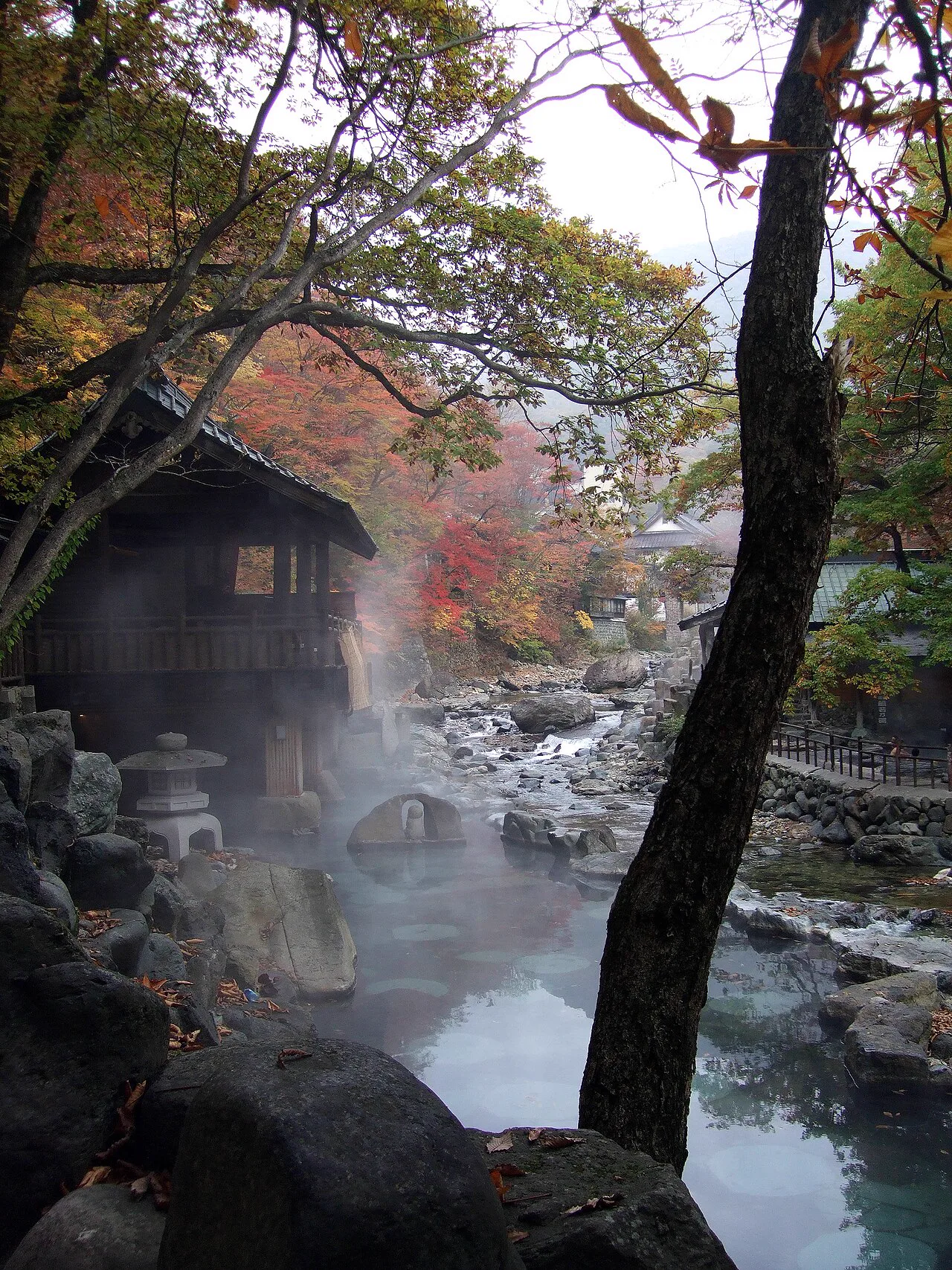
The Naruko tourism association describes Nakayamadaira as a hot-spring area close to the gorge and suited to autumn nature trips. It is a destination-focused base, not just a remote version of the station district. The car-free Nakayamadaira day-trip guide explains the replacement-bus logistics.
Third trade-off: after 4 p.m., which kind of evening do you want?
The gorge paths close at 4 p.m. After the walk, the two bases lead to different evenings.
Naruko Onsen Station: keep the hot-spring town in the evening
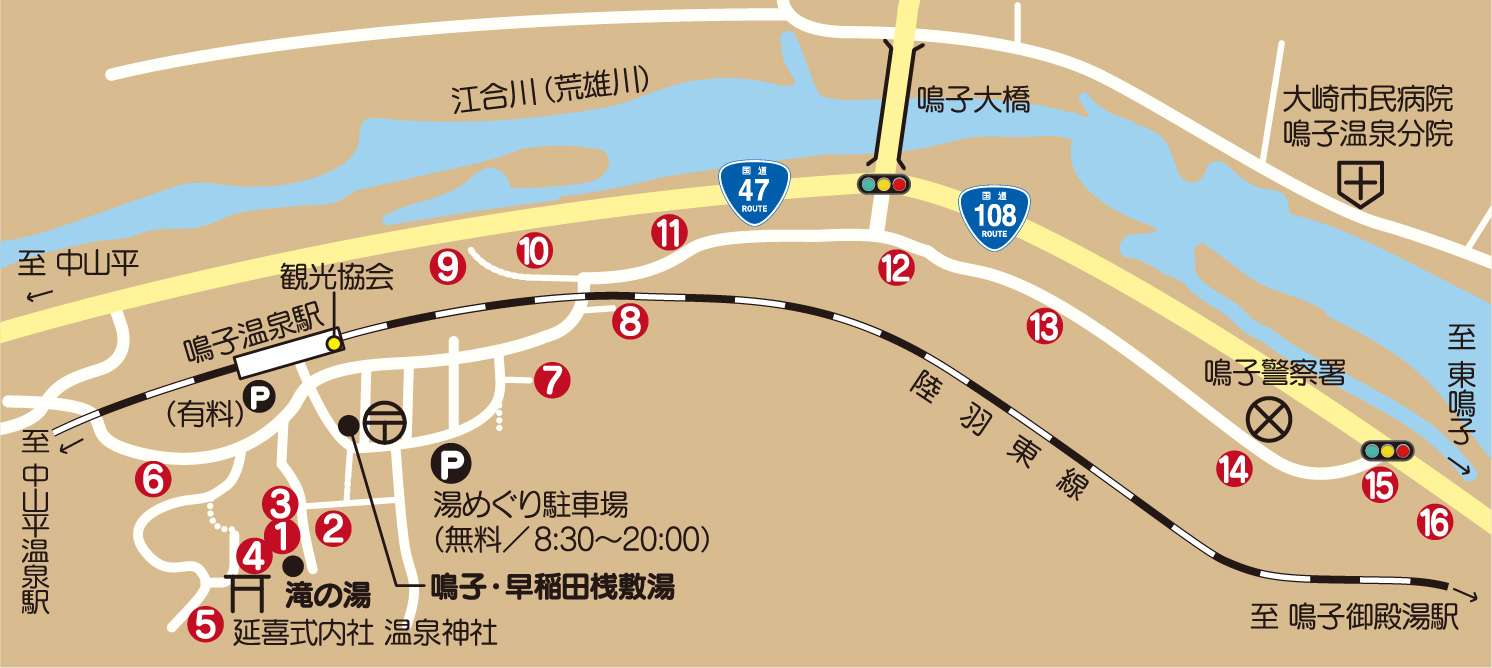
Back in the station district, Takinoyu is listed open from 7:30 a.m. to 9 p.m., with last admission at 8:30 p.m. Admission is ¥300 for adults and ¥100 for children. It is easy to separate the day’s foliage from an evening soak: use the daylight for the gorge and transport, then bathe near the station.
Waseda Sazikiyu normally stays open later and has a rest area, but as of September 8, 2026, the latest notice showed a temporary closure from September 3–10 for spring maintenance, with a possible extension. Confirm that it has reopened before relying on it for an autumn evening. For an arrival-night and next-morning bathing plan, see the Naruko morning-versus-evening guide.
Nakayamadaira: make the inn and local spring the evening plan
Staying in Nakayamadaira is not a good fit if you assume you can return to central Naruko after dinner to visit another public bath. Treat the inn, nearby hot spring and next morning’s gorge visit as the evening’s shape.
Shintoro-no-yu is listed open from 9 a.m. to 8:30 p.m., last admission at 8 p.m. Admission is ¥500 for adults and ¥250 for elementary-school children. If you finish the gorge while still in Nakayamadaira and have enough time and energy, it makes a natural local stop. Its listed closing time alone does not tell you whether the bath is reachable from your inn or whether a return connection is available. For the bath comparison, see Naruko’s day-use onsen guide.
Fourth trade-off: Naruko Station regains an advantage on an eastbound checkout day
A common plan is to stay in Naruko, visit the gorge the next morning, then return toward Furukawa or Sendai. If the next stop is east, your base determines whether you need to move bags across the replacement-bus section.
From the station area, you can ask the inn to hold your luggage, travel light to Nakayamadaira and the gorge, return for your bags and then head east. It adds a westbound round trip, but you do not have to carry luggage on it.
From Nakayamadaira, ask whether the inn can store bags while you visit nearby, or plan to take them east with you after checkout. The second option may be fine on an ordinary day; during peak foliage, a delayed bus or road transfer leaves less room to recover when you have bags in tow.
For one night and a definite return toward Sendai the next afternoon, the station is usually more balanced. Nakayamadaira’s location pays off more fully for a two-night stay or a day without a tight eastbound departure.
Sixth trade-off: where is a rainy-day closure less wasteful?
This difference is easy to miss when the forecast looks clear. If you stay by Naruko Station and heavy rain, wind or a trail closure cancels the gorge, you still have the hot-spring town, public baths, your accommodation and kokeshi culture as alternatives. The rainy-day Naruko plan is built around those central options.
In Nakayamadaira, the inn and local spring remain part of the stay if the gorge closes, but the premium you paid to be close to the foliage loses some of its purpose. That does not make Nakayamadaira a bad base; its value is simply more concentrated in nature and the local baths, while the station district offers denser alternatives.
If the forecast is stable and foliage is the top priority, Nakayamadaira is easier to justify. If the weather is uncertain, it is a one-night trip or you want a stronger fallback, the station area is more resilient.
Miyagi’s accommodation tax applies in both districts
| Miyagi accommodation tax | Current rule |
|---|---|
| Effective date | January 13, 2026 |
| Tax | ¥300 per guest per night (about HK$15 / NT$61) |
| Applies when | Pre-tax room-only charge is at least ¥6,000 per person per night |
The tax applies across the prefecture, not specifically to the Naruko station area or Nakayamadaira, so it usually does not change which district wins.
The more consequential comparison is whether one extra replacement-bus ride, luggage move and more limited evening choice are worth waking closer to Naruko Gorge. Before booking, also confirm dinner time, pickup, luggage storage and cancellation terms with the inn.
Three itineraries: choose the base that fits
One night, first visit, arriving from Sendai or Furukawa
Stay near Naruko Onsen Station. Arrive in the afternoon, leave your bags, bathe and have dinner. Go west to the gorge the next morning, return for your luggage and continue toward Furukawa or Sendai. You make one extra morning trip, but move your luggage only once.
Two nights, with foliage as the main purpose
Consider spending one or both nights in Nakayamadaira. You can give the gorge a full morning without squeezing it into a day trip. Use the second day for Shintoro-no-yu, another local bath or a slower stay. If the next leg heads west rather than east, the location penalty is also smaller.
Travelling with an older guest or young child, or facing uncertain weather
The station district is usually the safer base. It has more alternatives if the gorge closes, and reduces the number of luggage transfers and cross-district moves. If anyone uses a wheelchair or has substantial mobility needs, first check the mobility guide’s details on JR station facilities.
The decision in five lines
For a first foliage trip and one night, the Naruko Station area is usually the easier base. If autumn scenery is the whole purpose and you want to remove the first morning transfer, Nakayamadaira offers more value. Choose the station district for an evening bathhouse and a walk through town. It is also simpler with large bags before an eastbound departure. For Nakayamadaira, confirm the replacement bus, inn pickup and return transfer before booking.
If you are still deciding between the 350-metre gorge path and the longer Ofukazawa walk, use the 2026 Naruko autumn guide. For all five districts outside foliage season, return to the Naruko stay-area guide.
Tattoo policy
Not clearly published. Confirm with the specific inn and bathhouse before booking if this affects your stay.
Further reading
Naruko autumn foliage guide · Five Naruko accommodation areas · Car-free Naruko to Nakayamadaira · Day trip or overnight? · Morning or evening bath? · Rainy-day plan · Naruko in winter · Family and older-traveller mobility · Budget baths · Tattoo rules · Day-use baths · Takinoyu · Naruko or Zao? · Naruko or Ginzan? · Choosing a Tohoku onsen
Sources
- Osaki City: Naruko Gorge
- JR East: Riku-East Line service information and replacement-bus timetable effective April 1, 2026
- Naruko Onsen-kyo Tourism Association: accommodation in Naruko Onsen and accommodation in Nakayamadaira
- Naruko Onsen-kyo Tourism Association: Nakayamadaira hot springs
- Miyagi accommodation tax information
- Images: Naruko Onsen Station, Naruko accommodation, and Nakayamadaira scenery
Tags: Tohoku onsen, ryokan, car-free travel, onsen transport, seasonal bathing, Naruko autumn stay, Naruko Onsen Station or Nakayamadaira