Which Day-Use Onsen Should You Choose in Naruko?
Compare Naruko’s ¥300 acidic Takinoyu, alkaline Shintoro-no-yu and Waseda’s private bath. Check current closures, spring details and transport.
If you can visit only one bath, start with Takinoyu: it is inexpensive, distinctive and in the station district. Shintoro-no-yu is a separate trip, but the alkaline water makes it a worthwhile contrast. Waseda Sazikiyu would normally suit a longer visit or a private outdoor soak; as of September 27, 2026, it remains closed for source maintenance until further notice.
The place names can be misleading. Naruko Onsen, Nakayamadaira Onsen and Higashi-Naruko are all part of Naruko Onsen-kyo, but not one walkable strip. Takinoyu and Waseda are in the station area; Shintoro-no-yu is in Nakayamadaira.
HKD and TWD figures are approximate conversions; the yen amount is the admission charged.
Start with the kind of visit you have in mind
| What you want | Best fit | Current practical note |
|---|---|---|
| One inexpensive, distinctive first bath | Takinoyu | Acidic, cloudy public bath in the station district |
| A sharp contrast between acidic and alkaline water | Takinoyu plus Shintoro-no-yu | pH 2.9 versus 9.3, but they are in different districts |
| The most noticeably alkaline, silky-feeling water | Shintoro-no-yu | 100% source-flowing alkaline spring in Nakayamadaira |
| Private outdoor bathing for a couple or family | Waseda Sazikiyu | Available for an extra fee when open; currently closed |
| Two or three hours without a car | Takinoyu and the station district | Do not treat Shintoro as a quick walk from the station |
| Save with the bath-hopping ticket | Not currently available to new visitors | New sales stopped on April 30, 2026 |
Two current details can change the plan
Waseda Sazikiyu is closed until further notice
Osaki City and the Naruko Onsen-kyo Tourism Association posted notices about maintenance to Waseda’s spring supply. The September 18, 2026 update says the bath is temporarily closed until further notice and does not give a reopening date. The regular page still shows its normal hours and admission, but that schedule does not override the closure notice. Confirm an official reopening before going.
New bath-hopping tickets are no longer sold
The tourism association suspended new sales of the yumeguri bath-hopping ticket on April 30, 2026. Tickets purchased earlier remain valid for their original six-month period; seeing an existing holder does not mean new tickets are available. New visitors should plan around each facility’s cash admission instead of an old pass-discount calculation.
Takinoyu: the clearest first answer in Naruko
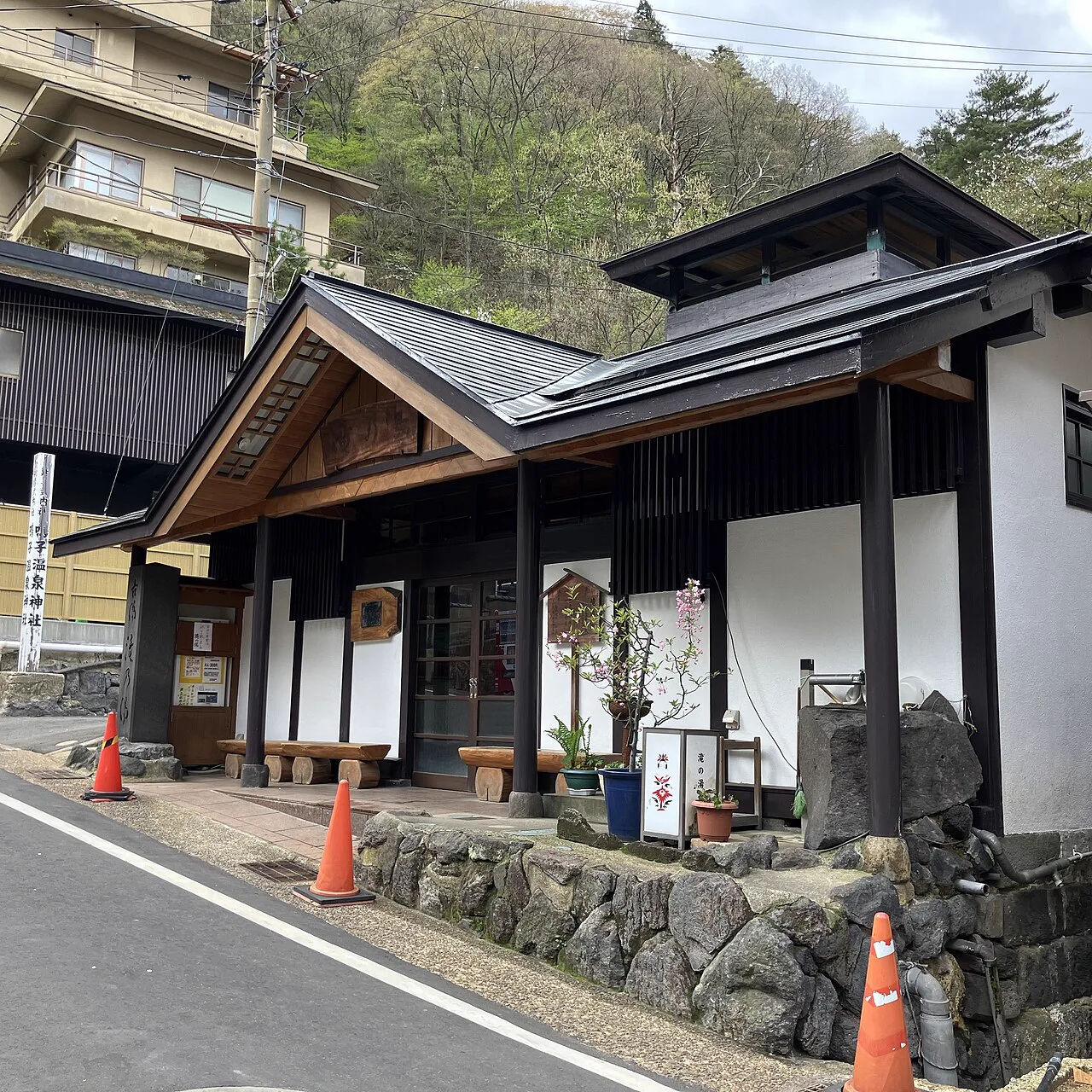
Osaki City lists Takinoyu open from 7:30 a.m. to 9 p.m., with last admission at 8:30 p.m. The city describes it as the sacred bath of Naruko Onsen Shrine, with a history of about a thousand years. Its wooden interior and cloudy water belong to a traditional communal bath, not a large spa.
| Takinoyu admission | Price |
|---|---|
| Adult | ¥300 (about HK$15 / NT$61) |
| Child | ¥100 (about HK$5 / NT$20) |
Its appeal is the combination of price, spring character, history and central location. Visitors can experience an acidic, sulfur-bearing natural spring in the station-area walking district. If you want to understand what makes Naruko different, that is a more direct first stop than paying for a large hotel bath.
It is also a small facility. There is no public outdoor bath or private bath. Osaki City warns that when it is busy, visitors may be asked to shorten their soak or wait outside. If you have a tight train connection, do not treat 8:30 p.m. last admission as a guarantee of an immediate, leisurely entry.
Takinoyu spring and analysis details
| Detail | Current information checked September 9, 2026 |
|---|---|
| Natural hot spring | Yes; listed by Osaki City as an active public bath |
| Source name and location | Naruko natural spring; a precise official source name and extraction point are not fully published |
| Formal spring type | Sulfur, sodium, aluminium, calcium and iron–sulfate spring; hypotonic, acidic, high-temperature classification |
| Source temperature | “High-temperature” is a classification, not an exact source reading |
| Bath temperature | No fixed year-round tub temperature is confirmed; do not use old analyses or guest impressions as a current constant |
| pH | 2.9, per the tourism association’s current individual-facility information |
| Flow rate | Not published for this bath; Naruko’s total spring count is not a substitute for a facility-specific litres-per-minute figure |
| Water supply and treatment | A natural public bath; complete treatment details by tub are not published |
| Where the spring is used | Indoor communal bath; no current listing of an outdoor or private bath |
| Bathing indications / drinking | Not clearly published in the checked material |
| Caution | The strongly acidic water may irritate sensitive skin; keep the first soak short |
Takinoyu: seven-point scorecard
| Category | Score |
|---|---|
| Bathing comfort | 70 |
| Bath variety | 35 |
| Cleanliness and upkeep | 80 |
| Scenery and atmosphere | 80 |
| Quiet | 60 |
| Access | 90 |
| Overall value | 100 |
Waseda Sazikiyu: best for rest and a private bath when it reopens
During normal operation, guests can rest in the large communal room after bathing and receive a same-day re-entry ticket. Waseda suits a longer stay in one facility better than Takinoyu.
| Waseda admission and private-bath costs | Amount |
|---|---|
| Adult admission | ¥660 (about HK$33 / NT$134) |
| Child admission | ¥330 (about HK$17 / NT$67) |
| Regular hours | 9 a.m.–9:30 p.m.; last admission 9 p.m. |
| Private outdoor bath, 50 minutes | ¥1,100 (about HK$55 / NT$224), plus admission for each person |
| Two adults including the private bath | ¥2,420 (about HK$122 / NT$492), before other costs |
For now, this is a description of its regular product, not a recommendation to visit: Waseda remains closed for spring maintenance as of September 27, with no confirmed reopening date.
Waseda Sazikiyu spring and analysis details
| Detail | Current information checked September 9, 2026 |
|---|---|
| Natural hot spring | Yes; Osaki City lists it as a natural public bath |
| Source name and location | Natural Naruko Onsen source; exact facility-specific source name is not fully published |
| Formal spring type | Sodium-sulfate/chloride spring; hypotonic, neutral, high-temperature classification |
| Source temperature | Not clearly stated in the checked material |
| Bath temperature | Do not infer a fixed tub temperature from the spring classification or an older analysis |
| pH | 6.6, per the tourism association’s current facility listing |
| Water supply | Natural public bath; the September closure is for maintenance related to the spring supply |
| Dilution, heating, circulation and disinfection | Not fully published by tub |
| Where the spring is used | Public bath; private outdoor bath is normally available when operating |
| Bathing indications | Osaki City lists information for arteriosclerosis, cuts, burns and chronic skin conditions, among other uses |
| Contraindications and drinking | Not clearly published in the checked material |
Waseda Sazikiyu: seven-point scorecard
| Category | Score |
|---|---|
| Bathing comfort | 85 |
| Bath variety | 80 |
| Cleanliness and upkeep | 85 |
| Scenery and atmosphere | 80 |
| Quiet | 70 |
| Access | 85 |
| Overall value | 85 |
Shintoro-no-yu: a reason to go to Nakayamadaira for pH 9.3 water
Shintoro-no-yu operates year-round, with a separate maintenance closure arranged in July. Check its current notice before travelling.
| Shintoro-no-yu admission | Price |
|---|---|
| Adult | ¥500 (about HK$25 / NT$102) |
| Elementary-school child | ¥250 (about HK$13 / NT$51) |
| Preschool child | Free |
| Regular hours | 9 a.m.–8:30 p.m.; last admission 8 p.m. |
The distinctive feature is 100% source-flowing water cooled naturally through roughly 200 metres of wooden trough before it reaches the bath. The source is hot; the distance cools it without adding water for cooling. Source temperature and the temperature a guest actually enters are not the same measurement.
The tourism association lists pH 9.3 and a sulfur-bearing sodium-bicarbonate/chloride spring, classified as hypotonic, alkaline and high-temperature. Its alkaline, bicarbonate-rich water has a noticeably smooth feel, making it a useful contrast with Takinoyu’s pH 2.9 acidic bath.
There is a tattoo restriction: current visitor information says guests with large, conspicuous tattoos will be refused entry. That does not guarantee that smaller tattoos, cover stickers or fully covered tattoos are accepted; ask before travelling if this matters.
Shintoro-no-yu spring and analysis details
| Detail | Current information checked September 9, 2026 |
|---|---|
| Natural hot spring | Yes; identified as 100% source-flowing |
| Source name and location | Nakayamadaira natural spring; no well number is fully published as a formal facility-specific source name |
| Formal spring type | Sulfur-bearing sodium-bicarbonate/chloride spring; hypotonic, alkaline, high-temperature classification |
| Source temperature | Described as high-temperature; no fixed Celsius reading is currently published on the facility page |
| Bath temperature | Water is naturally cooled through about 200 m of wooden trough; no fixed tub temperature is stated |
| pH | 9.3, per the tourism association’s current individual-facility listing |
| Extraction details | Specific well information is not fully published; the main description focuses on conveyance and wooden-trough cooling |
| Water supply and treatment | 100% source-flowing, naturally cooled in the trough; no added water for cooling. Current details on heating and disinfection are not fully published |
| Where the spring is used | Public bath; no private bath or public outdoor bath is listed as a core facility |
| Bathing indications | Introduced through its spring character and bathing experience; no specific current indication was confirmed |
| Caution and drinking | Wet floors can be slippery. Visitors are expressly told not to drink or take away the spring water |
Shintoro-no-yu: seven-point scorecard
| Category | Score |
|---|---|
| Bathing comfort | 90 |
| Bath variety | 45 |
| Cleanliness and upkeep | 85 |
| Scenery and atmosphere | 75 |
| Quiet | 85 |
| Access | 45 |
| Overall value | 95 |
Without a car, treat Nakayamadaira as a separate transfer
JR East still lists the Naruko Onsen–Shinjō section as suspended after the 2024 heavy rain, with replacement buses operating instead. Nakayamadaira lies on that section. Do not plan the trip as if it were a few ordinary rail stops from the station.
If you have only two or three hours, stay in central Naruko and visit Takinoyu. Once Waseda has officially reopened, you can consider adding it in the same district. To compare the spring character of Takinoyu and Shintoro, treat them as two transport stops and plan around the replacement-bus timetable. The car-free Naruko-to-Nakayamadaira day guide lays out the transfer.
Three useful half-day plans
First visit, no car: Naruko Onsen Station → Takinoyu → walk around the hot-spring town → return to the station. Add Waseda only after it officially reopens; do not leave a gap for a closed facility.
Most interested in spring contrast: Takinoyu plus Shintoro-no-yu. Comparing pH 2.9 with pH 9.3 is more meaningful than rushing through as many baths as possible, but include the replacement-bus travel in the plan.
A private soak for two: Consider Waseda’s private outdoor bath only when the facility is operating. Confirm its reopening and the full cost: the private-session fee is in addition to each person’s admission.
Tattoo rules, older guests and sensitive skin
Shintoro-no-yu may refuse guests with large or conspicuous tattoos; its rules do not promise an exception for small or covered designs. Waseda is currently closed, and its tattoo rule is unstated. Check the selected facility’s policy before planning a visit, since Naruko’s baths set their own conditions.
Older guests or anyone who wants to reduce transfers may prefer the central Naruko baths. Takinoyu is small and traditional, and may be busy; Waseda’s large rest room could help once the bath reopens, but confirm its access and mobility conditions first.
Sensitive skin should not treat stronger spring character as automatically better. Takinoyu’s pH 2.9 is distinctly acidic; Shintoro’s pH 9.3 is strongly alkaline and can leave wet floors slippery. Start with a short soak, take a break and drink water. For spring temperature versus bath temperature, see how to read onsen water temperatures; for formal classifications, see Japanese onsen spring types.
Which bath should you choose?
For one bath today, choose Takinoyu: it costs ¥300, is central and gives you a clearly distinctive acidic, cloudy spring. Choose Shintoro-no-yu if you want the pH 9.3 alkaline spring and can manage the separate trip to Nakayamadaira. Waseda is normally the best fit for a longer rest or a private outdoor soak, but it remains closed as of September 27, 2026. New bath-hopping tickets have not been sold since April 30, so compare cash admissions instead.
If you have decided on Takinoyu only, use the Takinoyu single-bath guide. For tattoo rules, see the Naruko tattoo guide; for a winter visit, see Naruko in winter.
Sources
- Osaki City: Takinoyu and Waseda Sazikiyu
- Naruko Onsen-kyo Tourism Association: public baths, news and event notices, bath-hopping ticket information, and sales suspension notice
- Shintoro-no-yu: official site, spring information, and prices and access
- JR East: Riku-East Line service status and replacement-bus information
- Images: Naruko public bathhouse, Takinoyu, and Naruko Onsen Station