Which Tohoku Onsen Should You Choose? A First-Trip Guide
Choose a Tohoku hot-spring town by route, bathing style and winter plans. Compare Akiu, Naruko, Nyuto, Zao, Ginzan, Hakkoda and more.
The right Tohoku onsen depends on where you are travelling from. Akiu and Sakunami are practical from Sendai; Asamushi is a rail-linked seaside stop near Aomori. Naruko suits bath-hopping, while Nyuto is a mountain stay centred on its inns and shuttle. Zao combines hot springs with skiing and a ropeway; Ginzan is known for its historic street after dusk. Hakkoda is worth the extra travel if the mountain bath is the main event.
Staying around Sendai: Akiu, Sakunami or Naruko?
Akiu is an easy day trip from Sendai. Buses from Sendai Station take about 30 minutes with Takeya Kotsu or around 50 minutes with Miyagi Kotsu, according to the city’s tourism association. It works well when you want a bath alongside other stops outside the city.
For an overnight, check the pickup point with your inn: Akiu’s properties are spread across more than one cluster. The Akiu day-use guide compares the bathing options.
Sakunami feels more like a valley stay. JR takes about 40 minutes from Sendai Station to Sakunami Station, but the station is not the front door of every ryokan. The final leg may be a local bus, a property shuttle or a taxi, so ask the inn how pickup works before choosing a train. Pick it for a quiet mountain setting; choose Akiu when you want the easier bus-and-city combination. The Akiu and Sakunami comparison lays out that difference.
Naruko suits visitors who want to compare springs and bathhouses. The area has five districts—Naruko, Higashi-Naruko, Kawatabi, Nakayamadaira and Onikobe—with different bathing styles. The train from Furukawa to Naruko Onsen takes about 45 minutes.
JR service from Naruko Onsen to Shinjo remains suspended after the July 2024 heavy rain; replacement buses cover that section. The tourism association stopped selling its Yumeguri Ticket on April 30, 2026, though individual baths still accept cash admission. See the Naruko day-bath guide before planning a multi-district day.
Aomori’s two easy contrasts: Asamushi and Hakkoda
Asamushi is a straightforward coastal extension from Aomori City. The Aoimori Railway reaches Asamushi-Onsen Station in about 25 minutes, leaving you with the beach, a compact hot-spring area and the local aquarium rather than a mountain transfer. It is the practical choice if you want a night by Mutsu Bay or a half-day soak that does not require committing to a remote inn. The Asamushi day-use guide covers bathing choices; the Asamushi–Hakkoda comparison explains why the two should not be treated as substitutes.
Hakkoda’s baths are scattered across a mountain area rather than along one walkable street. JR Bus Tohoku runs to Sukayu from Aomori and Shin-Aomori, and Sukayu says the route operates year-round. A no-car visit is possible, but depends on the timetable and mountain conditions.
Sukayu’s inn shuttle is for overnight guests and requires advance booking; it is not a day-trip bus. Choose a bath and plan around the public bus return. The Sukayu access comparison explains the two services; the Hakkoda onsen guide covers the wider area.
For a bath-hopping trip, compare Naruko with Nyuto
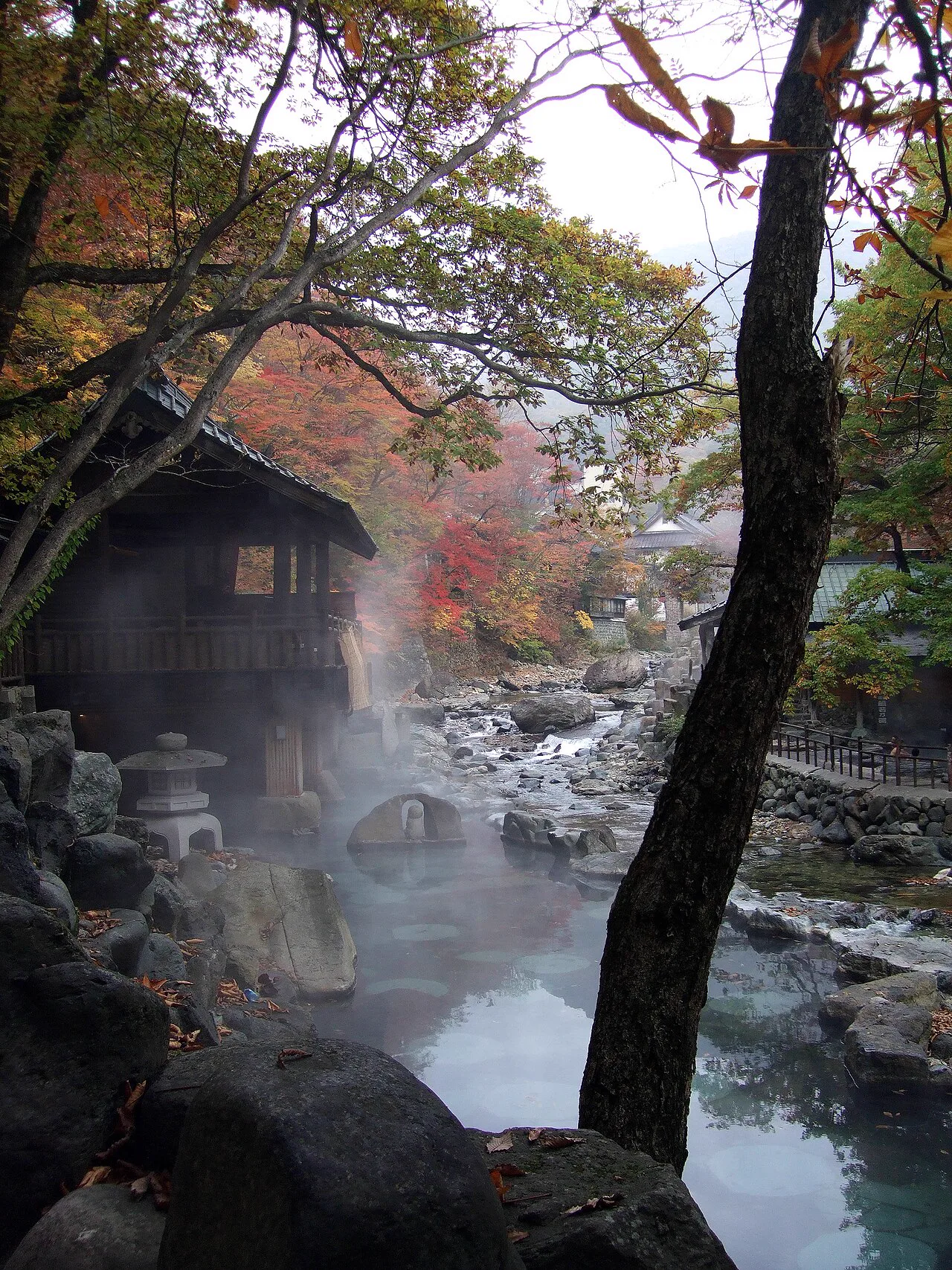
Nyuto Onsenkyo suits an overnight stay for travellers who want forest scenery and several distinct inn baths. Its seven member inns sit along mountain roads, with no central bath street.
Overnight guests can buy the ¥2,500 Yumeguri Book, which covers one bath at each participating inn and rides on the loop bus. Day visitors can buy a ¥1,000 Yumeguri Map for same-day bus rides, but pay each inn’s bathing fee separately. Both passes are cash-only, and the route needs planning. The Nyuto bath guide lists facilities and day-use windows; see Nyuto or Naruko? for a direct comparison.
Naruko is easier to shape around one station-area bath or a selected district, while Nyuto makes more sense when the inns themselves are the reason for travelling. If the goal is to visit every bath in one afternoon, either area can disappoint: distance and opening windows matter more than the number of names on a map.
Zao and Ginzan put scenery in the foreground
Zao Onsen combines public baths with winter skiing and a ropeway toward the juhyo, or snow monsters. The regular bus from Yamagata Station takes about 40 minutes to Zao Onsen Bus Terminal. The village has uphill walks, and ropeway service depends on the weather.
The three communal baths stay open year-round; the large outdoor bath closes for winter. Check the Zao day-use comparison for bathing options. The Yamagata Station day-trip guide covers arrival and the last bus.
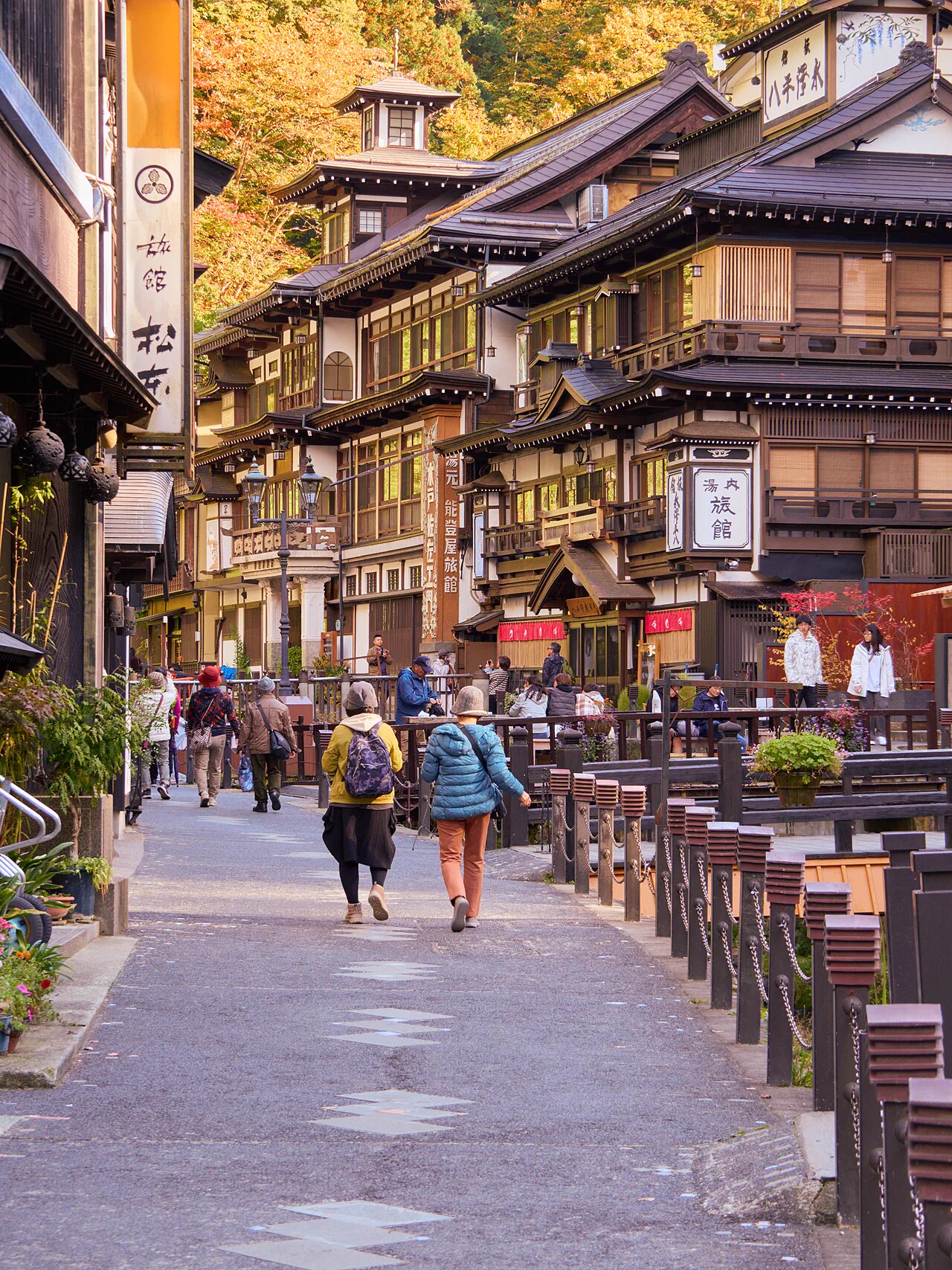
Ginzan Onsen is best known for its compact historic street and evening scenery, rather than a long bath circuit. Public transport connects it with Oishida. In winter, Obanazawa City advises drivers to park at Taisho Romankan and take the shuttle to the onsen entrance; the ride costs ¥500. Snow can disrupt transport, and cars are not allowed on the narrow hot-spring street during winter.
If you want to see the street at night, plan an overnight stay and confirm the return transport. The Naruko–Ginzan comparison weighs bathing variety against the historic townscape.
For snow travel, Zao is easier to pair with active resort plans; Nyuto and Hakkoda are more about staying close to the mountain springs; Ginzan is a street-and-inn experience. A broader winter comparison is available in Nyuto vs Zao for a winter stay.
A quick route-based decision
| If the trip starts or centres on… | First place to compare | No-car fit | The catch |
|---|---|---|---|
| Sendai | Akiu, then Sakunami | Easy to moderate | Sakunami’s inn transfer is property-specific |
| Aomori City | Asamushi | Easy | More coastal resort than deep-mountain escape |
| Hirosaki or southern Aomori | Naruko only if it fits the wider rail route | Moderate | The Naruko–Shinjo rail section uses a replacement bus |
| Yamagata City | Zao | Moderate | Buses fill; check the last return before bathing |
| Tazawako or Akita | Nyuto | Planned, overnight-friendly | Seven inns are spread out and the loop bus is seasonal |
| Aomori or Shin-Aomori | Sukayu in Hakkoda | Possible with a fixed timetable | The inn shuttle is guest-only; mountain buses are not frequent city service |
| Oishida or a Yamagata route | Ginzan | Planned | Winter street access and return transport need checking |
If you only have a spare afternoon in Sendai, Akiu is the cleanest first call. With a free night in Aomori, Asamushi keeps the transfer short. Choose Nyuto, Naruko or Hakkoda when the bath itself deserves a larger share of the itinerary; each asks for more careful planning than adding one nearby soak.
Sources and date checked
- [Sendai Tourism, Convention and International Association: 2025 English guidebook](https://www.sentia-sendai.jp/sentiasys2/wp-content/uploads/2025/08/sendai-guidebook_english_202506.pdf) — Akiu and Sakunami access options from Sendai. - [Asamushi Onsen Association: access](https://www.asamushi.com/access/) and [Aoimori Railway: Asamushi-Onsen Station](https://aoimorirailway.com/lang_en/station_list/asamushi/) — rail access and station location. - [Naruko Onsenkyo Tourism Association: access](https://www.naruko.gr.jp/%E4%BA%A4%E9%80%9A%E3%83%BB%E3%82%A2%E3%82%AF%E3%82%BB%E3%82%B9/) and [shared bath information](https://www.naruko.gr.jp/%E5%85%B1%E5%90%8C%E6%B5%B4%E5%A0%B4/) — area access and current bath information. - [JR East: Rikuu East Line service status](https://traininfo.jreast.co.jp/train_info/line.aspx?gid=4&lineid=riku-eastline) — current Naruko Onsen–Shinjo service suspension and replacement-bus notice. - [Naruko Onsenkyo Tourism Association: Yumeguri Ticket suspension](https://www.naruko.gr.jp/%E6%B9%AF%E3%82%81%E3%81%90%E3%82%8A%E3%83%81%E3%82%B1%E3%83%83%E3%83%88%E8%B2%A9%E5%A3%B2%E4%BC%91%E6%AD%A2%E3%81%AE%E3%81%8A%E7%9F%A5%E3%82%89%E3%81%9B/) — sales stopped from April 30, 2026. - [Nyuto Onsenkyo association](https://www.nyuto-onsenkyo.com/) and [Kyukamura Nyuto Onsenkyo: Yumeguri Book and Map](https://qkamura.or.jp/nyuto/free2/index.asp?p=43) — member inns, current prices and what the passes include. - [Yamagata Kotsu: Yamagata–Zao route timetable](https://www.yamagatakotsu.jp/busroute1/z90/) and [Zao Onsen resort: public baths and facilities](https://zaomountainresort.com/about/) — current bus route and year-round/seasonal bathing distinctions. - [Obanazawa City: Ginzan Onsen visitor information, updated August 17, 2026](https://www.city.obanazawa.yamagata.jp/kanko/kanko-topics/1346) — winter access, vehicle restrictions and shuttle from Taisho Romankan. - [Sukayu Onsen: access](https://sukayu.jp/access/) — year-round JR Bus route, inn shuttle terms and winter road notes.Checked: September 28, 2026. Bus service, winter access and bath operation can change; confirm the specific destination and travel date before booking.