Kaisen-kaku or Hotel Akitaya in Asamushi Onsen?
Kaisen-kaku has a ninth-floor Mutsu Bay bath and Tsugaru performances near the station. Akitaya sits by the beach and offers seasonal family baths.
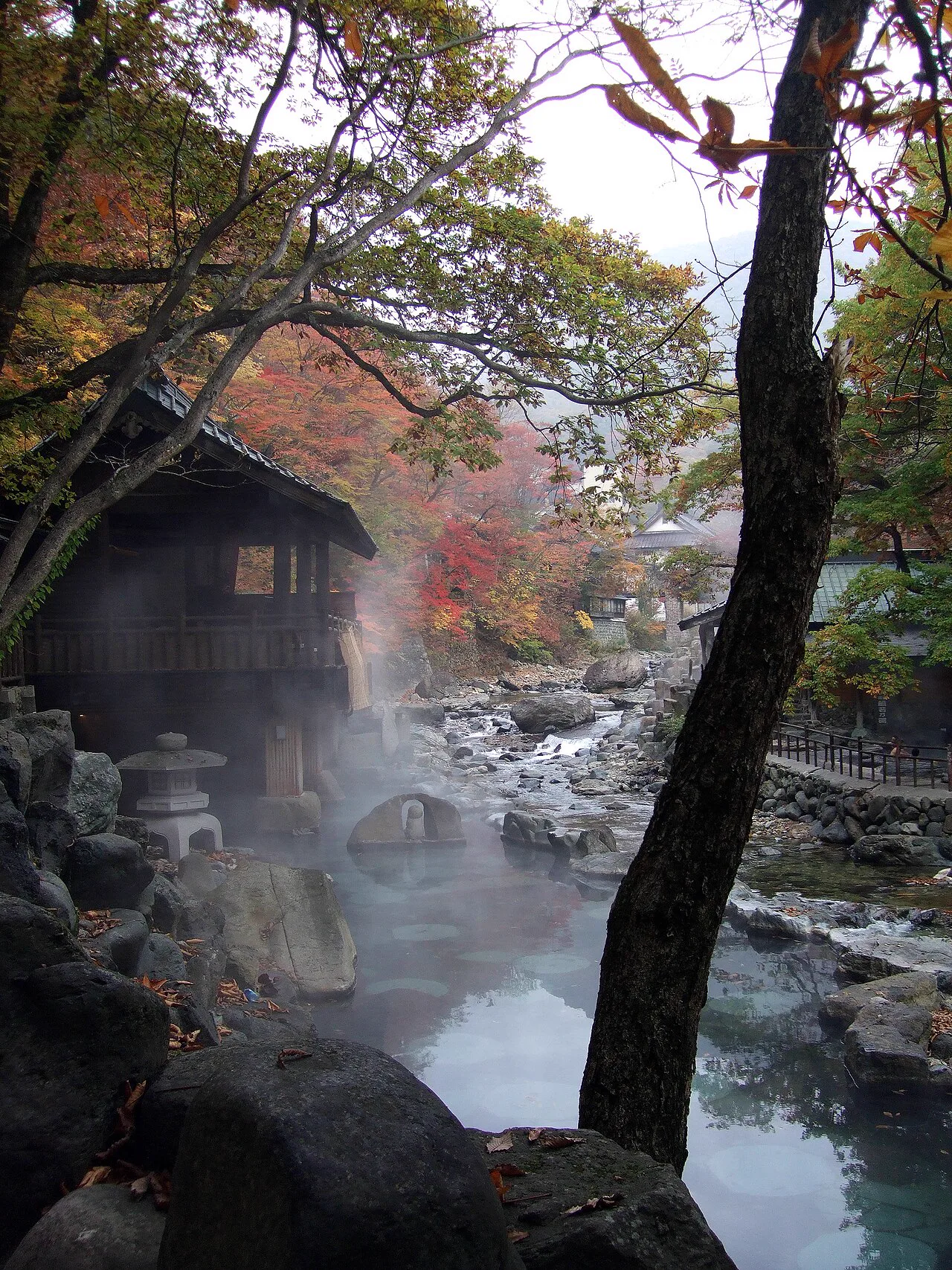
Image: Asamushi Onsen, Wikimedia Commons.
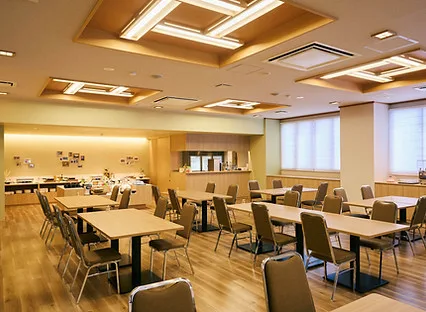

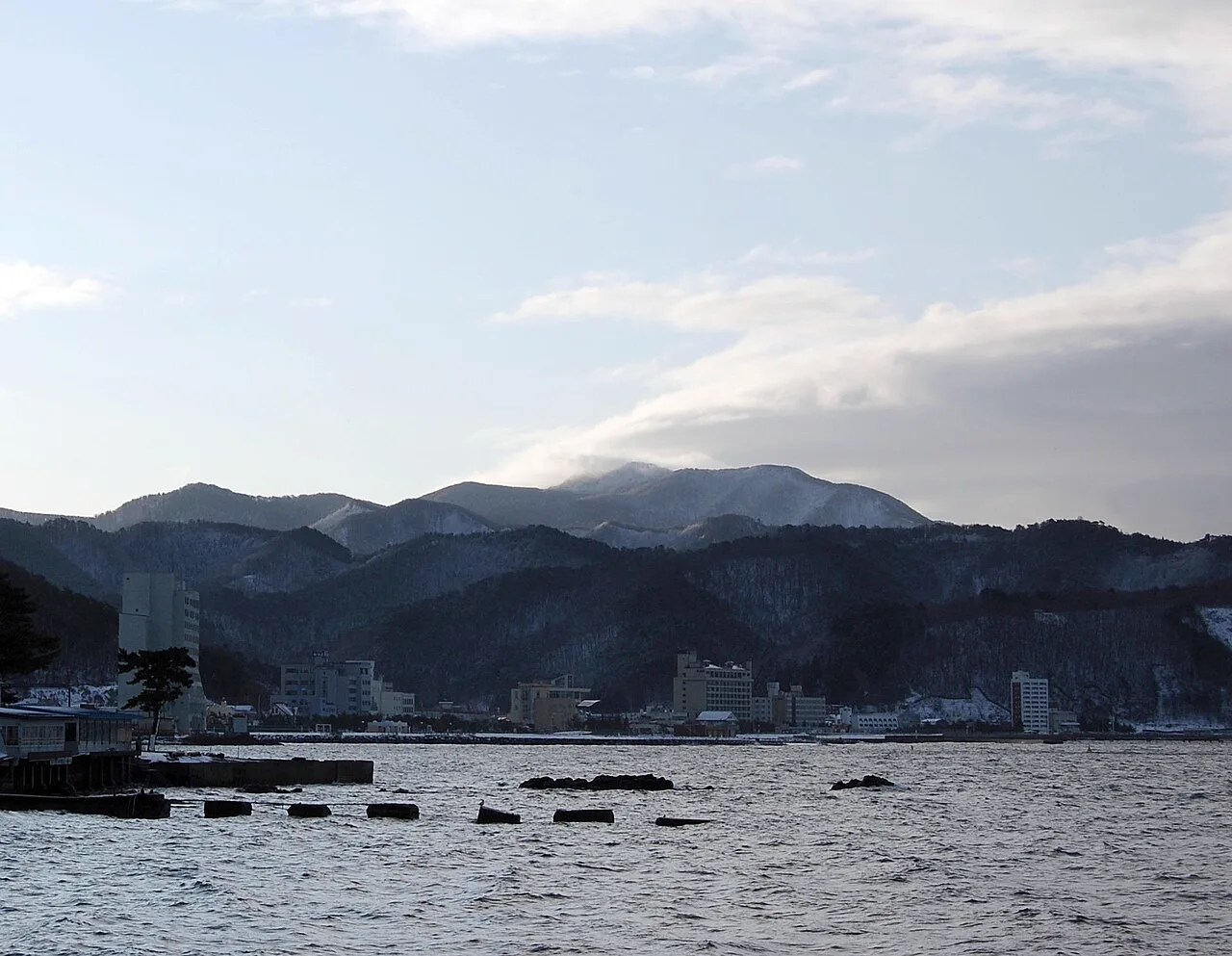
Image: Aomori Bay at Asamushi Onsen, Wikimedia Commons.
Kaisen-kaku pairs a ninth-floor view over Mutsu Bay with an evening program of Tsugaru music and dance; Asamushi-Onsen Station is roughly 140 metres away. Hotel Akitaya sits closer to the beach, and its seasonal private family baths make it easier to travel with small children.
Pick the stay that matches your evening
Kaisen-kaku is built for an easy arrival and a full-service night: the station is close, the ninth-floor bath faces the bay, and Tsugaru performances give you something to do after dinner. Akitaya is more family-oriented, with seasonal private baths and the beach close by. The deciding question is whether you want the hotel itself to fill the evening or prefer a relaxed seaside day with the children.
Kaisen-kaku’s public baths are on the ninth floor. Ocean-side room categories face Mutsu Bay; others face the mountains, so check the room description before booking if the view matters. Dinner comes as kaiseki or a chef’s live buffet at dining Umitsuji. Evening events include Tsugaru shamisen and local performances, with some shows available only on selected plans; check what is included with your booking.
Akitaya is a seaside stay: Sunset Beach is about a minute away on foot, and the top-floor public bath, Nagisa no Yu, looks across the water. Its two shallow open-air family baths are designed for use with children. They usually operate from May through October, weather permitting; reservations are required, and each session lasts an hour. Baby mats and chairs are available too.
The family-bath question
Kaisen-kaku has no general-use private bath. A private soak there means booking a guest room with its own open-air bath, which can raise the cost for a family that simply wants to bathe together.
Akitaya’s family baths are seasonal, not a year-round facility. Winter guests should plan on the public bath unless the hotel confirms otherwise. Baby bathing items are available, though the public bath is shared and separated by gender.
Dinner and getting around
At Akitaya, the buffet gives a group room to choose different dishes and makes dinner easier to fit around young children. Kaisen-kaku also offers kaiseki for a slower, more formal meal. Compare the plans you would actually book; the meal experience changes with the option selected.
Kaisen-kaku is about 140 metres from Asamushi-Onsen Station. Akitaya is a four- to five-minute walk and sits nearer the beach. The difference matters more in snow or with a stroller and heavy luggage; Akitaya’s position helps when the beach or aquarium is part of the day.
The spring classifications do not explain how each bath is supplied and treated. Akitaya’s simple spring has a source temperature of 59.8°C, which varies with outside conditions. Kaisen-kaku uses a sodium-calcium sulfate-chloride spring and flow-through baths on the ninth floor. The clearer difference is the setting and facilities, not which water is “purer.”
| Choose Kaisen-kaku if… | Choose Akitaya if… |
|---|---|
| You want the shortest station walk. | Your day is built around the beach or aquarium. |
| The ninth-floor bay view is a major reason for the trip. | Your children may do better in a private bath. |
| You want a choice of buffet or kaiseki and an evening performance. | You prefer a simpler, family-oriented buffet stay. |
The Asamushi ryokan guide compares more inns. For another sea-view option, see Akitaya versus Sakura Kanko Hotel.
The main differences at a glance
| What matters | Nambuya Kaisen-kaku | Hotel Akitaya |
|---|---|---|
| Station | About 140 m away | About a four-minute walk |
| Public bath | Ninth-floor indoor and open-air baths over the bay | Top-floor Nagisa no Yu overlooking the bay |
| Private bath | No general-use private bath; some rooms have an open-air bath | Two seasonal outdoor family baths |
| Sauna | Not a main facility | The current site does not list one as a core facility |
| Spring details | Sodium-calcium sulfate-chloride; tub-by-tub treatment is not fully documented | Simple spring; source temperature listed at 59.8°C, varying with outdoor conditions |
| Dinner | Kaiseki or live buffet, depending on the plan | Creative buffet centred on Aomori ingredients |
| Evening | Tsugaru shamisen, folk performance and Nebuta-related events | More of a family-and-beach stay than an entertainment program |
| Family equipment | Baby bath, chair, formula kettle and diaper bin are among the loan items | Baby mats and chairs; shallow family baths |
| Tattoo policy | Tattooed guests may not use the public observation bath | No equally clear public rule found; ask the hotel |
| Best suited to | First-time visitors, rail travellers and guests who want an evening program | Families, especially those who want to bathe together |
Bay views: a high-floor panorama or a beachside stay
Kaisen-kaku’s ninth-floor baths, named Yunoshima and Umi, face Mutsu Bay and include open-air sections. Some guest rooms also face the water, but the hotel sells mountain-side rooms too. If the room view matters, select a room category that specifically says bay or ocean view rather than assuming every room faces the sea.
Akitaya is closer to Sunset Beach, about a minute away on foot. Its top-floor bath looks over the bay toward Yunoshima and Aomori; Mount Iwaki may be visible on a clear day. The setting works well if the beach, aquarium and fishing park are part of the daytime plan. The two hotels offer different ways to enjoy the same coastline.
Spring water and bath facilities
Kaisen-kaku identifies its spring as sodium-calcium sulfate-chloride and describes the ninth-floor baths as flow-through. Akitaya lists a simple spring with a 59.8°C source temperature that changes with outdoor conditions. Neither property publishes a complete, tub-by-tub account of heating, circulation or disinfection, so these figures describe the springs, not every pool’s treatment or bathing temperature.
Akitaya lists a simple spring, classed as low-tonicity, mildly alkaline and high-temperature. Its source temperature is 59.8°C and changes with outdoor conditions. The available records give no pH, flow rate or tub-by-tub treatment description for either property.
Dinner and the evening program
Kaisen-kaku offers a chef’s live buffet as well as kaiseki. Tsugaru shamisen and local performances take place in the evening; the separate Nebuta-and-dance program is available only with selected plans, so check what your booking includes.
Akitaya’s buffet is the more straightforward option for a family or group with varied appetites. The hotel highlights Aomori ingredients and Tsugaru dishes, with examples such as scallop dishes, senbei-jiru and local rice dishes in current plans. The menu can change. Akitaya does not position evening entertainment as a main attraction; the night is more about dinner, bathing and settling in with the family.
Travelling with children or older relatives
Akitaya’s two shallow outdoor family baths are on the sixth floor. They are generally offered from May to October, with the season adjusted for temperature; each session lasts an hour, reservations are required, and up to two families may share a session. Baby mats and chairs are available. Confirm operation and a suitable time before booking around this feature, especially for a winter stay.
Kaisen-kaku lends baby chairs, baby baths, formula kettles and diaper bins, among other items. Its public baths are separated by gender and there is no general-use private bath. A private soak requires a room with its own open-air bath, which changes the room choice and budget. Families with a toddler who needs a parent in the bath may find Akitaya easier when the family baths are operating.
Kaisen-kaku is about 140 metres from the station; Akitaya is around a four-minute walk and closer to the beach. Kaisen-kaku’s access is simpler with large luggage or in snow. It has an accessible room and elevator access to the ninth-floor bath; the bath entrance has a step, and the hotel says a ramp and handrail are available. Check the exact room and bathing route with either property if someone needs assistance.
Tattoo rules
Kaisen-kaku’s current rules say guests with tattoos may not use the public observation baths and point them toward in-room bathing instead. Akitaya’s public pages do not give an equally clear property-wide rule. Ask Akitaya directly before booking; do not interpret the absence of a posted policy as permission.
Budget: compare the same room and meal plan
Rates change with date, occupancy, room and dinner plan. Older association information lists Akitaya’s two-meal stays from around ¥16,500, but that is not a fixed 2026 rate. Kaisen-kaku’s sea-side and mountain-side rooms, suites, buffet and kaiseki plans also vary substantially. Compare the full total for the same date and party. If you need a private bath, include the cost of Kaisen-kaku’s open-air-bath room, or confirm that Akitaya’s seasonal family bath can be reserved.
When neither is the right choice
If a quiet small inn, a clearly documented private source or a flow-through bath matters more than a bay view, compare Yanagi-no-Yu and Tsubakikan or Yadoya Tsubaki and Ryokan Ogawa. If an all-sea-facing room matters more than evening events, see Akitaya versus Sakura Kanko Hotel.
Frequently asked questions
Which is easier for a first trip to Aomori?
Kaisen-kaku is close to the station and combines a bay-view bath, dining choices and evening performances. It is an easy one-night introduction if those are the things you want from the stay.
Which is better for a two- or three-year-old?
Akitaya is easier when its shallow family baths are operating and you can reserve a session. In winter, do not assume they will be available; compare room size, meal plans and shared-bath comfort instead.
Does Kaisen-kaku have a bookable private bath?
It does not list a general-use private bath. A private bathing option means booking a room with its own open-air bath.
Which is quieter?
Neither is the quietest small inn in Asamushi. Kaisen-kaku is a larger hotel with buffet dining and an evening program; Akitaya draws families and beach visitors. For a quieter stay, compare Tsubakikan or Yanagi-no-Yu.
Related guides
- Eight Asamushi ryokan compared
- Akitaya versus Sakura Kanko Hotel
- Kaisen-kaku versus Tsubakikan
- Kaisen-kaku versus Tatsumikan
- Asamushi or Hakkoda without a car
Sources
- Kaisen-kaku official site
- Kaisen-kaku: baths
- Kaisen-kaku: rooms
- Kaisen-kaku: dining
- Kaisen-kaku: live events
- Hotel Akitaya official site
- Asamushi Onsen Tourism Association: lodging directory
Kaisen-kaku vs Hotel Akitaya, Asamushi Onsen, Mutsu Bay, family bath, Aomori ryokan.