Hakkoda Onsen Guide: Choosing Between Sukayu, Yachi, Jogakura and Tsuta
Compare Hakkoda’s scattered mountain baths by spring, access and season. Check bus and road conditions before choosing Sukayu, Yachi, Jogakura or Tsuta.
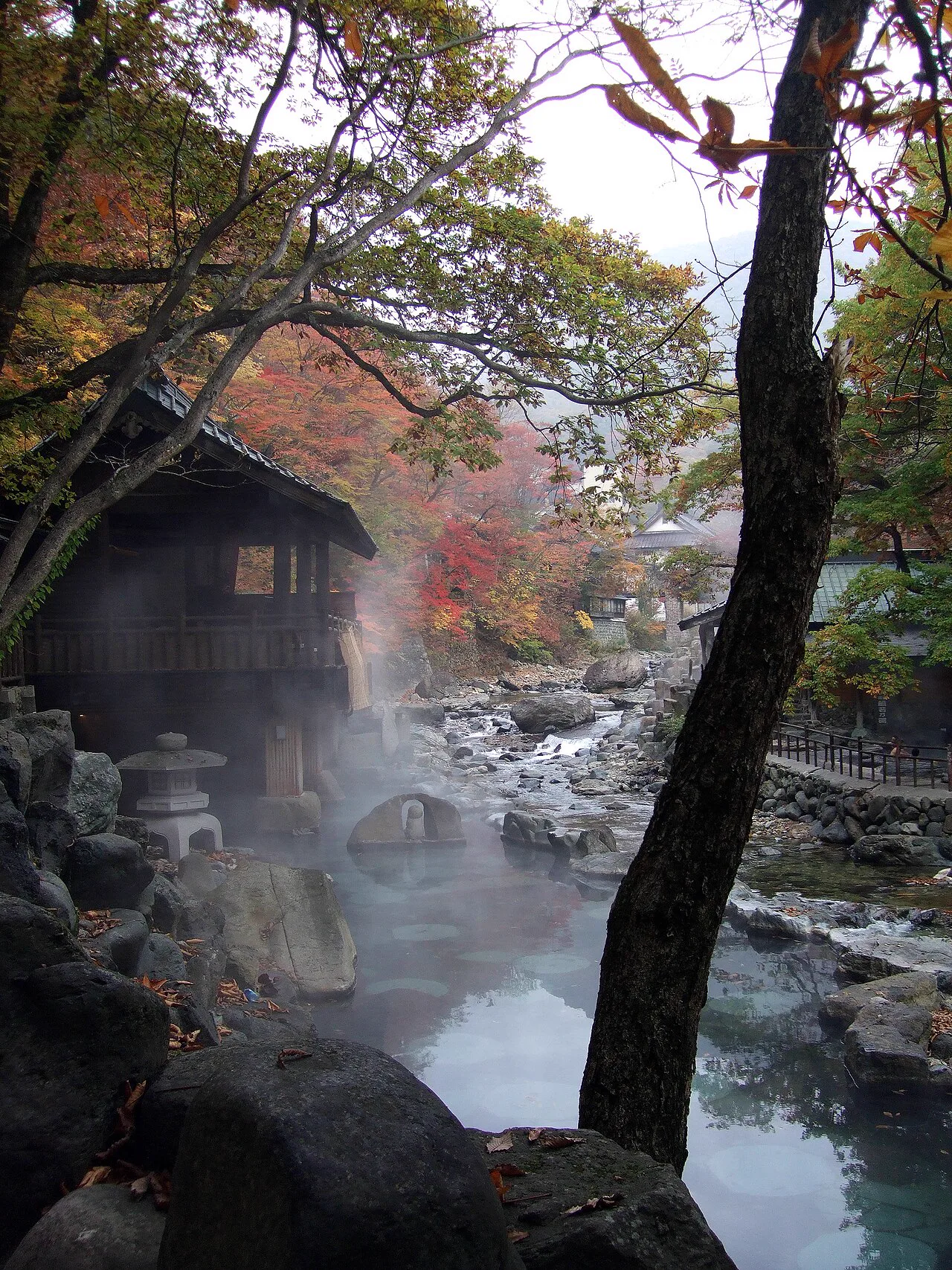
“Hakkoda Onsen” usually means a group of mountain baths scattered between Aomori and Towada—not one town where you can wander from bath to bath. Sukayu and Hotel Jogakura are on the Aomori side; Yachi and Tsuta are farther along the mountain road toward Oirase and Lake Towada. If you have only a short stop, choose the bath first and check the bus or road route around it.
Pick by the bath you came for
| Place | What sets it apart | Day-visit detail checked September 27, 2026 |
|---|---|---|
| Sukayu Onsen | The large timber Sen-nin-buro hall, with mixed bathing and a women-only hour | Through November 30, adult admission is ¥1,000. From December 1, hours change to 9 a.m.–4 p.m. and adult admission to ¥1,500. |
| Yachi Onsen | Two spring baths: a 38°C source that bubbles up through the floor and a 42°C milky bath | 10 a.m.–3 p.m.; last entry 2:30 p.m. Adult admission ¥800. In winter, it closes Tuesday through Thursday from November 1 through April 30; check its calendar for extra closures. |
| Hotel Jogakura | A modern mountain hotel with a mist sauna and forest-facing baths | Day bathing is listed for 11:30 a.m.–3 p.m., last entry 2:30 p.m., at ¥1,000 for adults. Its outdoor baths are currently suspended following a bear sighting; the indoor bath remains open. No outdoor-bath reopening notice was posted on the hotel’s current notice page when checked. |
| Tsuta Onsen | Spring water wells up through the wooden floor of the baths; the inn sits near the Tsuta marsh trails | 10 a.m.–3 p.m., last entry 2:30 p.m.; ¥1,000 for adults and ¥500 for elementary-school children. The inn says busy conditions or filming can shorten access. |
| Sarukura Onsen | A secluded inn and spring-bath complex | The operator suspended lodging, day bathing and private sauna for the 2026 season because of large-scale work at the property. Its limited May weekend exception has passed. |
The prices and hours are not interchangeable across the area. Tsuta’s springs rise through the floor of its baths, while Yachi is the clearer pick for a cool soak followed by a hotter one. Jogakura normally offers a different mix of outdoor bathing and sauna; at present, its own notice says the outdoor baths are closed, so check again if that is the reason for going.
Sukayu is the easiest name to recognize, but its main Sen-nin-buro is mixed bathing. A women-only hour is listed from 8 to 9 a.m. through November 30; its separate Tamano-yu bath has men’s and women’s sections. From December 1, Sukayu moves to one day-use window, 9 a.m.–4 p.m., and the ¥1,500 adult ticket covers both bath areas. That date change matters if your visit falls near the end of the year.
Do not plan a string of baths on foot
The mountain inns sit along a long route, with significant distances between them. A stop at Sukayu does not make Yachi or Tsuta a casual next stop; allow for the bus timetable, road conditions and the short day-visitor window at each property. In winter, the road between Sukayu and Yachi on National Route 103 closes seasonally. A summer map route is not a winter itinerary.
Without a car, start with JR Bus Tohoku’s date-specific schedule. As of September 27, the autumn Aomori–Oirase–Lake Towada service is scheduled through November 17, 2026. A separate Aomori–Sukayu winter service starts November 12; some departures require reservations, and it does not continue to Oirase or the lake. For the full seasonal route and connection details, use the Oirase and Lake Towada access guide and check the operator’s current timetable for your travel date.
Several names can muddy a search. The long-closed “Nugudamari no Sato Hakkoda Onsen” is a specific former inn, not a synonym for the whole mountain onsen area; see its current closure status. Berjaya Hakkoda is a separate property near the ropeway, and its main bath currently uses heated groundwater rather than the Kansuizawa spring; details are in the Berjaya Hakkoda status guide.
For a night in the mountains rather than a day-use bath, the Asamushi or Hakkoda stay-area comparison looks at the wider choice between a coastal rail town and a remote mountain base. The two trips solve different problems: Asamushi is easier to reach by train, while Hakkoda makes sense when the mountain itself is part of the plan.