Daifuku-yu in Kumamoto: Sento Admission, Three Saunas and Access
Daifuku-yu in Kumamoto charges ¥550 bath admission plus ¥100 for sauna, with three sauna types and a cold-spring plunge. Fujisakigu-mae is a short walk away.
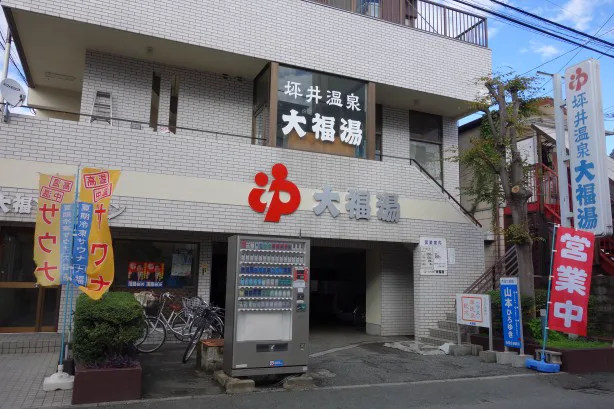
Daifuku-yu is a neighborhood sento in Tsuboi, north of central Kumamoto. The Kumamoto Bath Association lists nine kinds of bath, three sauna rooms and a cold-spring plunge. At the current adult public-bath rate of ¥550, sauna use adds ¥100, making ¥650 the working total for bath and sauna. It is a straightforward, low-cost stop near Fujisakigu-mae Station—not a resort spa with a lounge pass or an all-day program.
The distinction between “cold spring” and a confirmed hot spring matters here. The association calls the plunge water a reisen (cold spring), but Daifuku-yu does not publish an individual hot-spring analysis. Treat it as an unusual cold-water bath, not as a verified natural onsen.
Admission, hours and what the ticket covers
| Current details | |
|---|---|
| Adult public-bath admission | ¥550 |
| Sauna surcharge | +¥100 |
| Adult bath-and-sauna baseline | ¥650 |
| Hours | 1:00pm–11:00pm |
| Regular closing day | Tuesday |
| Nearest station | Fujisakigu-mae, Kumamoto Electric Railway |
| Parking | Available; confirm space before relying on it |
Kumamoto Prefecture’s regulated maximum for general public bath admission is ¥550 for adults. The bath association says member bathhouses adopted that rate from February 16, 2026.
Daifuku-yu separately lists a ¥100 sauna surcharge, making ¥650 a useful adult bath-and-sauna budget. Confirm any child price or special condition with the facility rather than inferring it from the prefectural ceiling.
The association describes the sauna options as high-temperature, low-temperature and cold/freezing types. It does not publish current room temperatures or a schedule of how each one operates. There is no need to treat all three as a mandatory circuit: choose the room that suits you, take a break if you feel unwell, and skip cold immersion if it is not comfortable.
Forgot your kit? The association lists rental towels, soap, shampoo, shoe lockers and lockers, but does not post their current prices. Bringing a small towel keeps that part of the bill predictable; you do not need to pack a full set of toiletries just to use the bath.
What makes the cold plunge different—and what is not confirmed
The bath association highlights the cold-spring plunge as a feature of Daifuku-yu. That gives the bathhouse a more distinctive sauna setup than a single hot room followed by an ordinary cold bath. Still, the label alone does not establish a legal hot-spring classification. No current, facility-specific analysis listing the source temperature, pH or mineral content appears on the association’s Daifuku-yu page.
That makes this a better match for someone searching for an inexpensive sento-and-sauna session than for someone comparing natural onsen water. If verified hot-spring water is your priority, the Kumamoto City natural-onsen comparison separates facilities by water claims. For a broader look at neighborhood bathhouses, use the traditional sento comparison or the Kumamoto City onsen and sento guide.
Getting there without a car
The bathhouse is at 2-5-28 Tsuboi, Chuo Ward. Fujisakigu-mae is the nearest station, about a three- to four-minute walk away. The station is the terminal of the Kumamoto Electric Railway’s Fujisaki Line. Check the railway’s current departure times for the return leg, especially if you are heading back toward a connection rather than staying around the station area.
The association lists parking, but the number of spaces differs across current listings. If you are driving at a busy time, do not build the visit around an assumed empty spot; confirm directly or have a nearby paid-parking option ready. If you are staying around central Kumamoto, the train-and-walk approach avoids that uncertainty.
When another Kumamoto bath makes more sense
Daifuku-yu suits a compact visit between other plans. Pick a larger facility if you want somewhere to spend most of an afternoon: Agannasse’s sauna and course options cover a more extended spa visit, while YuLax’s sauna guide is aimed at a different sauna crowd.
For an evening that runs later, compare Batten no Yu’s family baths and late hours and the Kumamoto City morning-and-late-night bath guide. If an early soak is the point, Tsurunoyu’s morning and family-bath guide is the more relevant option.
Daifuku-yu is the clearest fit when you want a neighborhood bath, a sauna surcharge that keeps the adult total to about ¥650, and a short walk from the railway. For a wider-area outing, the Ueki ¥500 onsen comparison and Ueki day-bath guide cover a separate hot-spring district; they are not drop-in alternatives from Tsuboi.
Sources
- [Kumamoto Bath Association: Daifuku-yu facilities, hours, sauna surcharge and station](https://kuma1010.com/custom/399) - [Kumamoto Prefecture: regulated public-bath prices, effective February 16, 2026](https://www.pref.kumamoto.jp/soshiki/45/152.html) - [Kumamoto Bath Association: 2026 bath-admission price revision](https://kuma1010.com/9980) - [Kumamoto Electric Railway: Fujisakigu-mae Station information](https://www.kumamotodentetsu.co.jp/train/station/06.html) - [Nifty Onsen: Daifuku-yu station access](https://onsen.nifty.com/kumamotoshuuhen-onsen/onsen008769/) - [Japan 47 Mizuburo: Daifuku-yu cold-bath notes](https://mizuburo.com/daihukuyu/)Checked: September 28, 2026.