Mimatsukan Ikaho: A Shirogane Stay with a Rooftop Bath
Choose a Mimatsukan room by bed style and space, then see what its Shirogane baths, rooftop rotenburo, private Komochi bath and access actually offer.
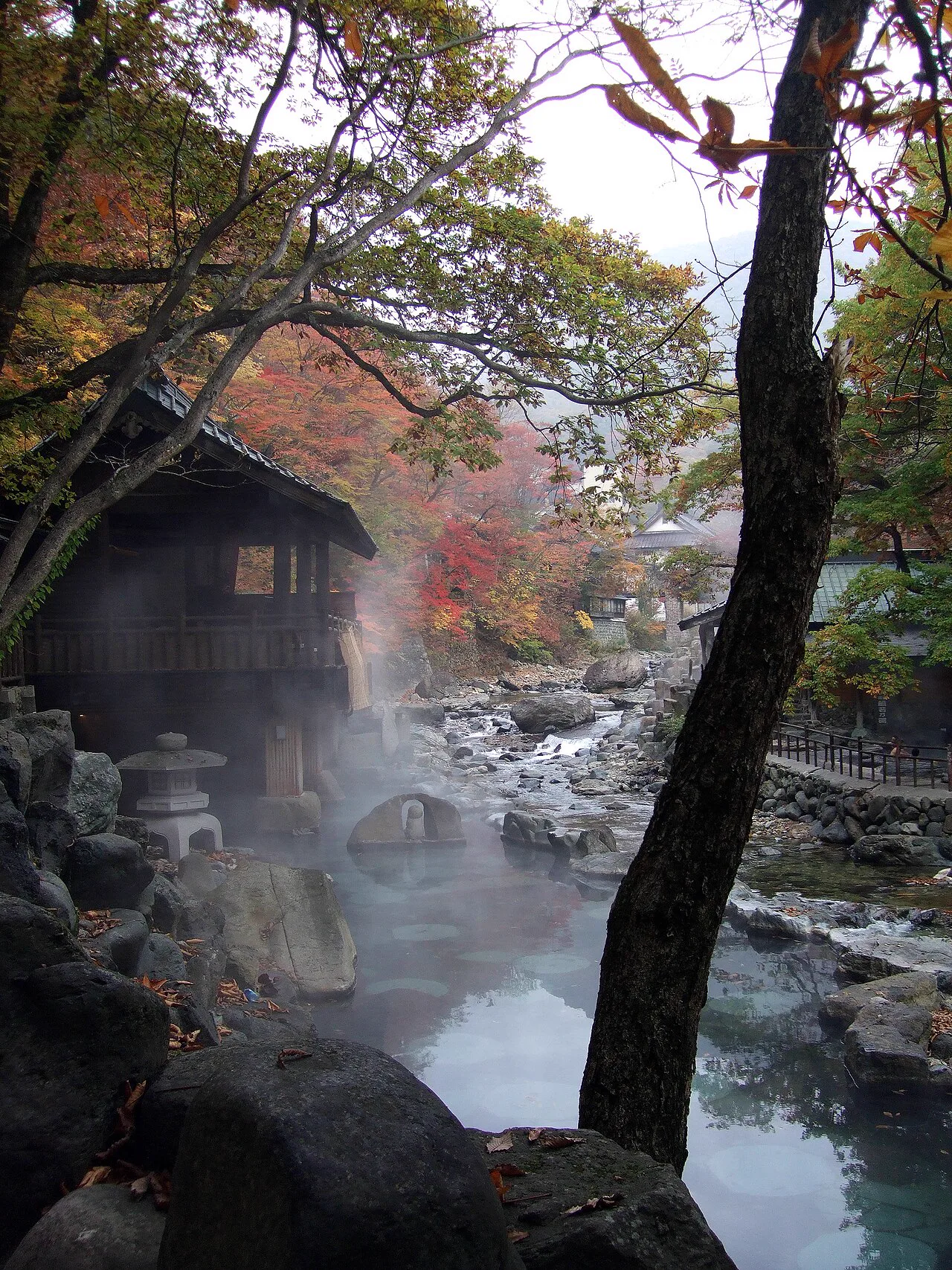
Mimatsukan’s clearest selling point is the contrast between its indoor tatami bath and its rooftop open-air baths. The inn identifies its spring as Ikaho’s Shirogane-no-Yu, while the rooftop facilities add views across the surrounding mountains. A private rooftop bath, Komochi no Yu, can be booked for a 50-minute session, but the inn does not let guests choose a precise start time through its published process. If you want Kogane-no-Yu, a room with its own natural spring bath, or fully documented water treatment, this is not the most straightforward match.
The water is Shirogane, but the handling details are limited
Mimatsukan identifies its spring as Shirogane-no-Yu, the clear source, and describes it as a simple hot spring with metasilicic acid. The indoor Zaan bath is specifically labeled Shirogane and filtered/recirculated. The inn’s current bath pages do not publish a complete tub-by-tub account of water source and treatment for every rooftop and private bath, nor details such as dilution, heating or disinfection for each one.
So the reliable expectation is a Shirogane-focused stay with several bathing settings—not proof that every tub is continuously supplied from the source. If continuous flow is important, ask the inn about the exact bath before booking. For the broader distinction between Ikaho’s two sources, use the Kogane vs Shirogane guide; for a stay centered on Kogane, see Chigira Jinsentei’s source-flowing bath guide.
Use Zaan to wash; go upstairs for the view
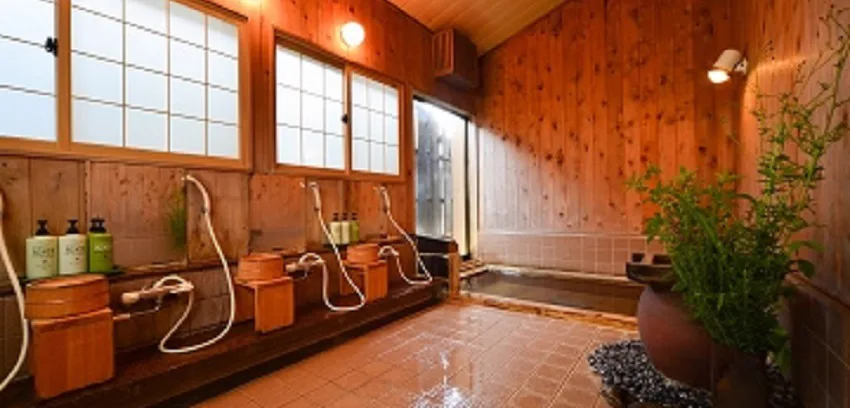
The second-floor public bath, Zaan, has specially treated Ryukyu tatami around the bathing area, plus wash stations and toiletries. It is open from 3 p.m. until 9:30 a.m. the next day. The soft flooring is a useful difference underfoot, but it should not be mistaken for a step-free or fully accessible bath. Ask about the route, rails and assistance if anyone in your party has limited mobility.
The top-floor Ukigumo baths look in two directions: Akagi-no-Yu faces toward Mount Akagi, and Haruna-no-Yu toward Mount Haruna. They normally rotate between men and women, though the inn says the changeover may not happen on some dates. The posted window is also 3 p.m.–9:30 a.m., but nighttime cleaning or other operating conditions can interrupt access.
There are no washing stations or shampoo and body wash in the rooftop area. The practical order is to wash at Zaan first, then go upstairs for a soak. That extra floor change is easy to overlook when the rooftop view is the feature that caught your eye; guests who prefer one stop for washing and bathing may be happier staying in the indoor bath.
Komochi no Yu: one private session, with the start time assigned
Komochi no Yu is the inn’s bookable rooftop open-air bath. The current listed window is 3:30–10 p.m.; a session costs ¥2,200 per group for 50 minutes. Guests apply at the front desk on the day of their stay. The inn accepts calls to discuss advance arrangements, but it does not promise a chosen time, and some dates may have no availability.
Treat it as a possible extra, not a guaranteed room benefit. The bath is for soaking only: it has no wash area or bathing products, so use Zaan first. The official bath page identifies the property with Shirogane-no-Yu but does not clearly name the source or treatment separately for Komochi. If you need to know whether this particular bath uses the spring, ask the property directly before relying on that assumption.
Pick the room for its layout, not an assumed in-room onsen
The room range is broad, and layout is the useful distinction when choosing:
- Yamabiko combines a 15-tatami Japanese room with a twin-bed room and sleeps four to nine. It suits a larger family or multigenerational group. Meals are served in the dining room.
- Kodama is a 10–12-tatami Japanese room for one to five. For groups of up to three, dinner can be served in the room or dining room. Groups of four or more eat in the dining room.
- Hatsune is a 10-tatami Japanese-modern twin room for one to four, fully renovated in 2024 with a shower booth. It has no window view. Meals are served in the dining room.
- Ukifune is a compact Western-style room with one semi-double bed for one or two. The inn says it has no view and can feel quite tight for two.
Bathrooms vary by room, but the current room descriptions do not identify a guest-room bath as using Shirogane or Kogane. Don’t pay a room premium on the assumption that a bathtub is an in-room onsen. Ask about the named room and its water source if that is part of your booking decision. If private natural spring water in the room is essential, compare properties that specify it, such as FUTOKI’s private-bath rooms or Stay View’s Shirogane room.
Bus access is simple; driving involves handing over your keys
The inn’s bus directions tell local-route passengers to ride from JR Shibukawa Station to the Ikaho terminus, then follow the short downhill-and-turn route shown on its page. For the Shinjuku highway bus, the directions identify the Ikaho Ishidangai terminal and estimate a seven-minute walk to the inn; they specifically say there is no shuttle from that terminal. Check which stop appears on your actual ticket, since “Ikaho Onsen” and “Ikaho Ishidangai” are not interchangeable names on every service.
Mimatsukan lists 15 free covered parking spaces with no reservation required. Pull up at the entrance and staff will move the car to the parking area; the inn says it keeps the car key. If you would rather retain your keys or have an unusually large vehicle, confirm the arrangement before arrival. For the wider choice between the stone-step area and quieter outskirts, see the Ikaho stay-area guide.
Mimatsukan makes most sense when Shirogane, an indoor tatami bath, rooftop bathing and a private 50-minute option cover what you want. For Kogane or a verified guest-room onsen, choose by the water source first and compare another property.
Official sources and verification
- [Mimatsukan: baths, spring description, bath hours and Komochi no Yu rules](https://www.mimatsukan.com/bath/) - [Mimatsukan: FAQ on private-bath booking, parking and local bus directions](https://www.mimatsukan.com/qa/) - [Mimatsukan: room types and capacity](https://www.mimatsukan.com/room/) - [Mimatsukan: directions and parking instructions](https://www.mimatsukan.com/directions/) - [Mimatsukan: directions for local-bus passengers](https://www.mimatsukan.com/access-bus-html/) - [Mimatsukan: highway-bus and train access](https://www.mimatsukan.com/tourism/access.html)Last verified: 2026-09-28