FUTOKI Ikaho: Which Rooms Have a Private Onsen?
FUTOKI has private spring baths in 9 of 16 rooms; the four bath types use Kogane or Shirogane water. Compare room size with its ¥3,300, 50-minute rooftop baths.
At FUTOKI, the deciding detail is the room category: nine of the property’s 16 rooms have a private outdoor onsen, while the other seven are shower-only rooms. The four onsen-room types split between Ikaho’s Kogane-no-Yu and Shirogane-no-Yu, and they are not all the same size or suited to the same party.
Book an onsen room if you want to bathe without sharing or scheduling a session, especially more than once during the night. If one private soak is enough, compare the room-rate difference with FUTOKI’s separate 50-minute rooftop baths. A cheaper room name or a private bathroom alone does not mean the tub uses hot-spring water.
Match the tub to the spring and the space
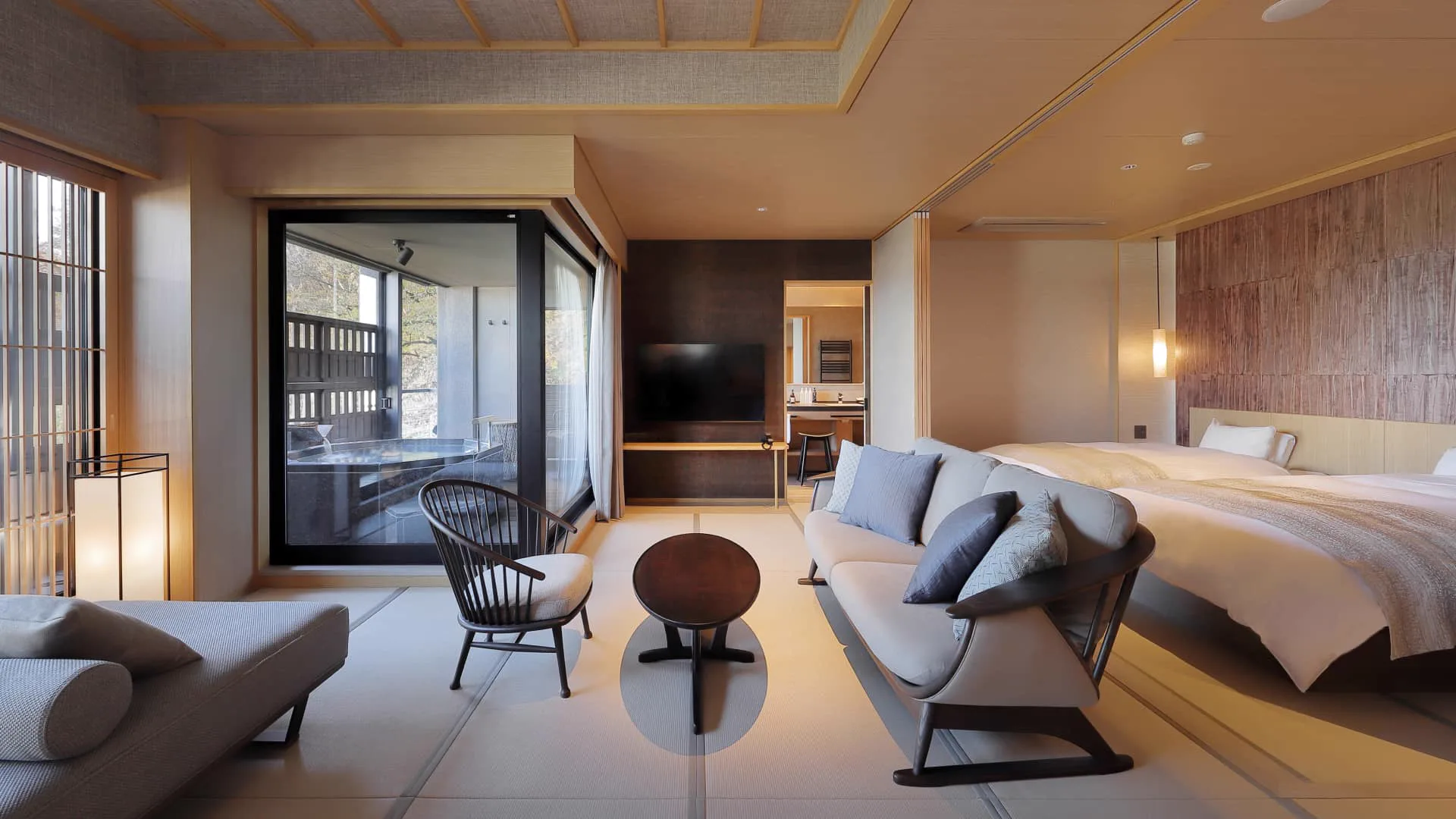
FUTOKI lists four categories with a private outdoor hot-spring bath. All are double-bed rooms with a shower booth; the source and outdoor space vary.
| Room type | Spring in the room bath | Size and listed capacity | Better fit when… |
|---|---|---|---|
| Special room with open-air bath | Shirogane-no-Yu | 73 m² including balcony; up to 4 | You want the most room among the onsen categories, or are travelling as a group of up to four. |
| Kogane-no-Yu onsen room | Kogane-no-Yu | 62.5 m² including balcony; up to 4 | The traditional brown Kogane spring is central to your Ikaho stay. |
| Shirogane-no-Yu onsen room | Shirogane-no-Yu | 62.5 m² including balcony; up to 4 | A private spring bath matters more than choosing the brown Kogane water. |
| Garden room with open-air bath | Shirogane-no-Yu | 73 m² including terrace; up to 2 | You are a couple who wants a garden terrace as well as a private bath. |
There are three distinct private-bath choices here: the spring itself, the room’s indoor-outdoor layout, and how much space your group needs. A party of two does not automatically need the largest category; the garden room has a two-person limit but a generous listed area. A group of three or four should check the exact room’s bed setup and plan rather than choosing only by square metres.
The other listed categories—garden twin, twin and double rooms—have a shower booth but are not described as onsen rooms. If a natural spring bath in your room is the point of booking, select the specific onsen category in the reservation flow and confirm it appears in the final plan details.
Kogane or Shirogane: what the room listing confirms
The room page names the spring used in each onsen-room category: Kogane for the Kogane room, Shirogane for the other three types. The property does not publish room-by-room details on whether those baths are continuously source-fed, diluted, heated or recirculated. If “kakenagashi” is a firm requirement, ask about the exact room category before booking; the day-use bath information does not automatically describe the guest-room plumbing.
FUTOKI’s separate rooftop private baths make the distinction especially clear. Ama-ne uses Kogane-no-Yu, and the property’s January 2026 notice describes it as source-flow. So uses Shirogane-no-Yu, but the notice does not specify its water-handling method. For a wider explanation of the two springs, see Ikaho Kogane vs Shirogane.
A private room versus a 50-minute private bath
FUTOKI lists two private baths at ¥3,300 per 50-minute session. Overnight guests and day visitors can use them.
Day-use visitors also pay admission: ¥1,000 per adult or ¥500 per child aged two and older. The published notice says to reserve by phone and lists day-use start times from noon to 8 p.m.; those hours should not be assumed to be the booking window for overnight guests.
One session may be enough if you mainly want a private soak with a partner and plan to spend the rest of the evening out. An in-room tub is more convenient if you expect a second bath before bed or in the morning, or do not want your plans tied to a 50-minute slot. Compare the price for your date and meal plan with the room category, not a general starting price for the property.
The bath itself can also affect access: Ama-ne is on the fourth floor and So on the third. The hotel is near the upper end of Ikaho’s stone-step district, so an in-room bath avoids going back to a shared bathing area, but it does not remove the climb to reach the hotel. Guests with limited mobility should confirm the route from the bus stop or parking to their room, plus how they enter the tub. The published room page does not call these baths accessible.
Getting to the hotel
From Shibukawa Station, FUTOKI lists a bus journey of about 25 minutes to Ikaho Bus Terminal, followed by a five-minute walk. The direct highway bus from Shinjuku takes about 2 hours 42 minutes to the Ikaho Stone Steps stop. The hotel is about a minute from the stone-step street and sits near the upper end, by Ikaho Shrine; expect slopes and steps around the district, even with the short final walk from the stop. Check the current bus timetable and luggage route before choosing a private bath room for someone who finds stairs difficult.
For the broader property choice, meals and other room features, use the Ikaho stay-area guide. If you are considering the rooftop session rather than staying overnight, the Ikaho private day-use bath comparison explains the admission-plus-session cost and booking differences.