Where to Stay in Ikaho: Ishidangai, the Bus Terminal or Miharashishita
Choose an Ikaho hotel by walking distance to the stone steps, bus terminal or Miharashishita; luggage routes and slopes can matter more than map distance.
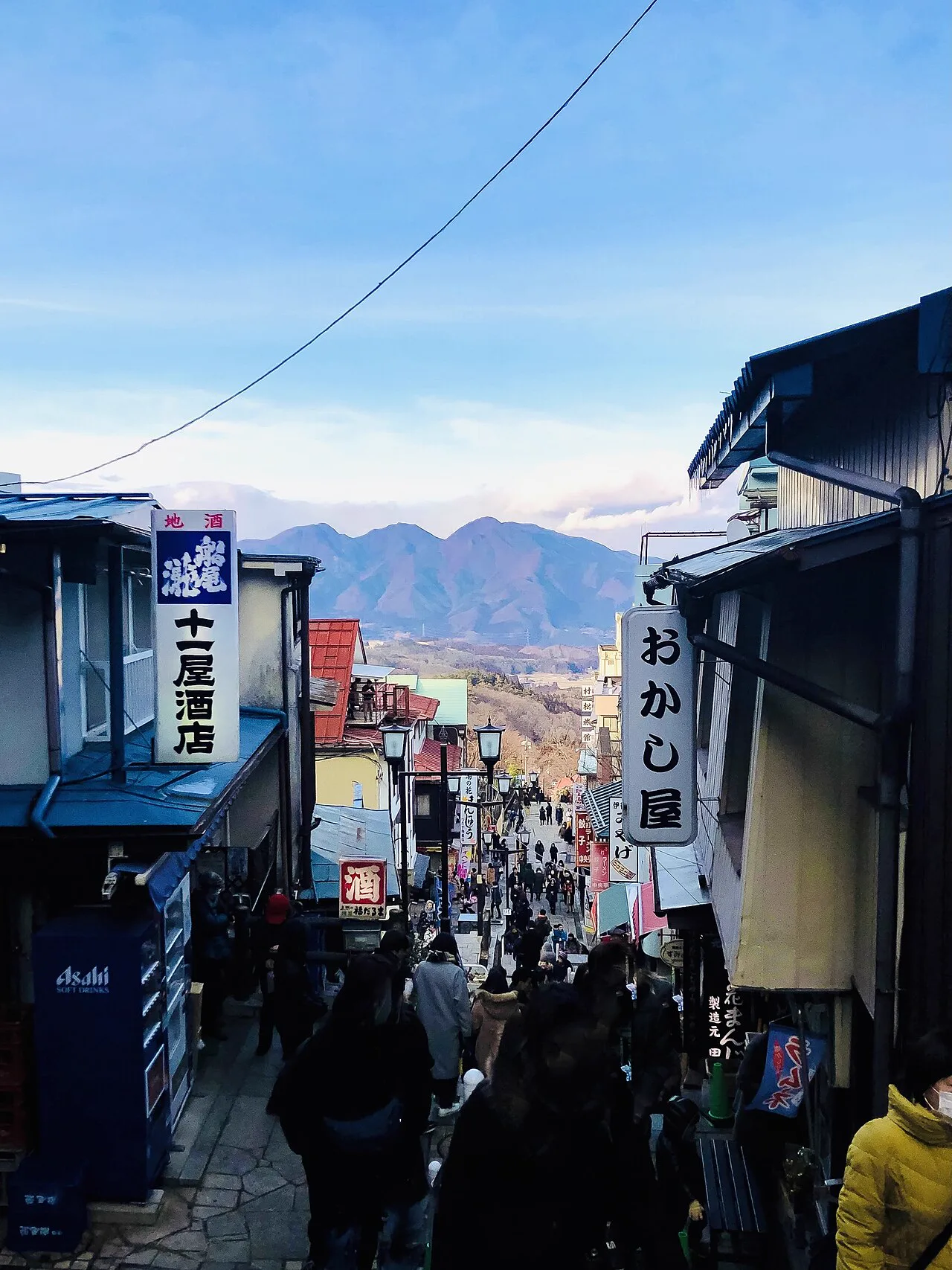
Ikaho is compact on a map, but it is built on a slope. The 365 stone steps rise through the main hot-spring street toward Ikaho Shrine, while the bus terminal and Hototogisu ropeway station sit on a different part of the hillside. A hotel shown as “five minutes away” may mean steps, a steep lane or an entrance on the far side of the building.
The three useful reference points
Ishidangai means the stone-step street and nearby roads. Stay here if you want to wander among the shops after dinner or reach the upper street and shrine early in the morning. The city describes the 365-step route as Ikaho’s main street, lined with inns, souvenir shops and small amusements. Being nearby does not make every walk flat: check whether the hotel entrance is by the lower, middle or upper steps.
The bus terminal and Hototogisu Station are close to one another. The ropeway beside the terminal reaches Miharashi Station, 955 metres above sea level, in four minutes. The city lists departures every 15 minutes from 9 a.m. to 5 p.m.; the final uphill car leaves at 4:45 p.m., and there is no 12:15 service. Check the city’s current notice before planning around the ropeway.
Miharashishita is the lower roadside stop used by some intercity and local buses. It can suit travellers who would rather leave with their luggage than finish a stay with another climb. The stop is not interchangeable with Ishidangai-guchi or the bus terminal, so confirm the exact stop on your ticket and the walking route from the hotel.
Use Shibukawa City’s Ikaho accessibility map to check gradients, toilets, parking and route details around the hot-spring district. It is useful for checking a particular approach, especially if someone in your party has limited mobility or you are bringing a stroller. A hotel’s quoted walking time alone will not tell you whether the route includes steps or a long incline.
Pick a location around your arrival and departure
Think through three moments before booking: arriving with bags, going out after dinner, and leaving after checkout. The right base depends on which of those would be hardest to do uphill.
If your evening plan includes a stroll along Ishidangai, staying close to the steps makes it easier to pop out and return without turning the walk into a separate excursion. Check the slope back to the inn as well as the distance to the street; the route may feel different after dinner than it does on arrival.
For a morning ropeway ride, the bus-terminal area keeps you near Hototogisu Station. The line takes visitors to Miharashi Station and the viewpoint at Uenoyama Park. If you are leaving by bus soon after checkout, this central transport point may also reduce backtracking.
Miharashishita is worth considering when you expect to leave directly by road bus, have bulky luggage, or plan to spend most of the evening at the hotel. It is a lower stop, not a promise of step-free access. Ask the hotel which stop to use and whether its pickup service runs at your arrival and checkout times.
Shibukawa City’s current accessibility map marks gradients, toilets, parking and route details around Ikaho. It is useful for checking a particular approach, especially if someone in your party has limited mobility or you are bringing a stroller. A hotel’s quoted walking time alone will not tell you whether the route includes steps or a long incline.
How local buses help—and where they do not
Ikaho Town Bus routes connect points around the hot-spring district, including the bus terminal and parts of the Ishidangai area. They can help with a daytime outing, but do not assume a frequent service will be available after dinner or whenever you want to return to the hotel. Check the current timetable against your plans.
For a car-free daytime visit, see the Ikaho half-day route. This guide compares where to stay.
Decide on the spring after the location
Many inns advertise Kogane-no-Yu, Shirogane-no-Yu or both. The labels help narrow down the bathing experience, but they do not tell you whether a particular guest room has its own bath. First choose a location that fits your walking and transit plans; then compare the spring and room facilities at the individual property. The Shibukawa City page on Ikaho’s two spring types explains the distinction.
If a room with a private Shirogane-no-Yu bath is the deciding factor, the Stay View Ikaho room guide explains which rooms are listed as onsen rooms and what the hotel does not provide on site.
Before paying, confirm the hotel’s actual entrance, nearest bus stop, luggage drop-off and any pickup arrangement. In Ikaho, those details can matter more than the straight-line distance between two map pins.
Sources
- [Shibukawa City: Ishidangai](https://www.city.shibukawa.lg.jp/kankou-site/kankou/000357/000360/p000206.html) — 365 steps and the main street’s layout. - [Shibukawa City: Ikaho Ropeway](https://www.city.shibukawa.lg.jp/kankou-site/kankou/000357/000360/p000203.html) — station location, travel time, operating hours and interval. - [Shibukawa City: Ikaho accessibility map](https://www.city.shibukawa.lg.jp/kankou-site/shisei/000259/000265/p008884.html) — gradients and route-planning information; map updated April 2026. - [Shibukawa City: Ikaho hot-spring district](https://www.city.shibukawa.lg.jp/kankou-site/kankou/000968/p015066.html) — area orientation. - [Shibukawa City: Ikaho Town Bus timetable](https://www.city.shibukawa.lg.jp/manage/contents/upload/6608cbdd5ba65.pdf). - Image: [Ishidangai, Wikimedia Commons](https://commons.wikimedia.org/wiki/File:Gunma_Ikaho_ishidan-gai_m.jpg).Checked: September 27, 2026
Tags: Ikaho Onsen, where to stay, Ishidangai, Ikaho bus terminal, Gunma travel