Ikaho Private Day-Use Baths: Oyado Tamaki or FUTOKI?
Compare Tamaki and FUTOKI private baths in Ikaho, including spring type, two-adult cost, booking times, tattoo rules and access.
At Ikaho, a private bath is usually an add-on to day-use admission, not a single all-in ticket. That distinction changes the real price, especially for two adults. Oyado Tamaki publishes specific room prices and start times; FUTOKI offers two view baths by phone reservation, but leaves some booking details to confirm directly.
| Bath | Spring and setting | 50-minute bath fee | Two-adult total, including admission | Main reason to choose it |
|---|---|---|---|---|
| Tamaki Koharubiyori | Kogane-no-Yu, source-flow indoor rock bath | ¥3,300 | ¥5,300 | The clearest indoor option for Ikaho’s brown Kogane spring |
| Tamaki Akari | Shirogane-no-Yu, recirculated outdoor bath | ¥2,200 | ¥4,200 | Lowest published two-adult total and an open-air setting |
| FUTOKI Ama-ne | Kogane-no-Yu, source-flow view bath | ¥3,300 | ¥5,300 | A private Kogane soak with a view from the upper slope |
| FUTOKI So | Shirogane-no-Yu, view bath | ¥3,300 | ¥5,300 | A higher-positioned private bath; confirm its water handling |
Each total adds day-use admission of ¥1,000 per adult to the room charge. Children aged two or older are listed at ¥500 for day-use bathing at both inns, so a family should recalculate by age and party size instead of multiplying the adult total.
Tamaki publishes the clearest room choices
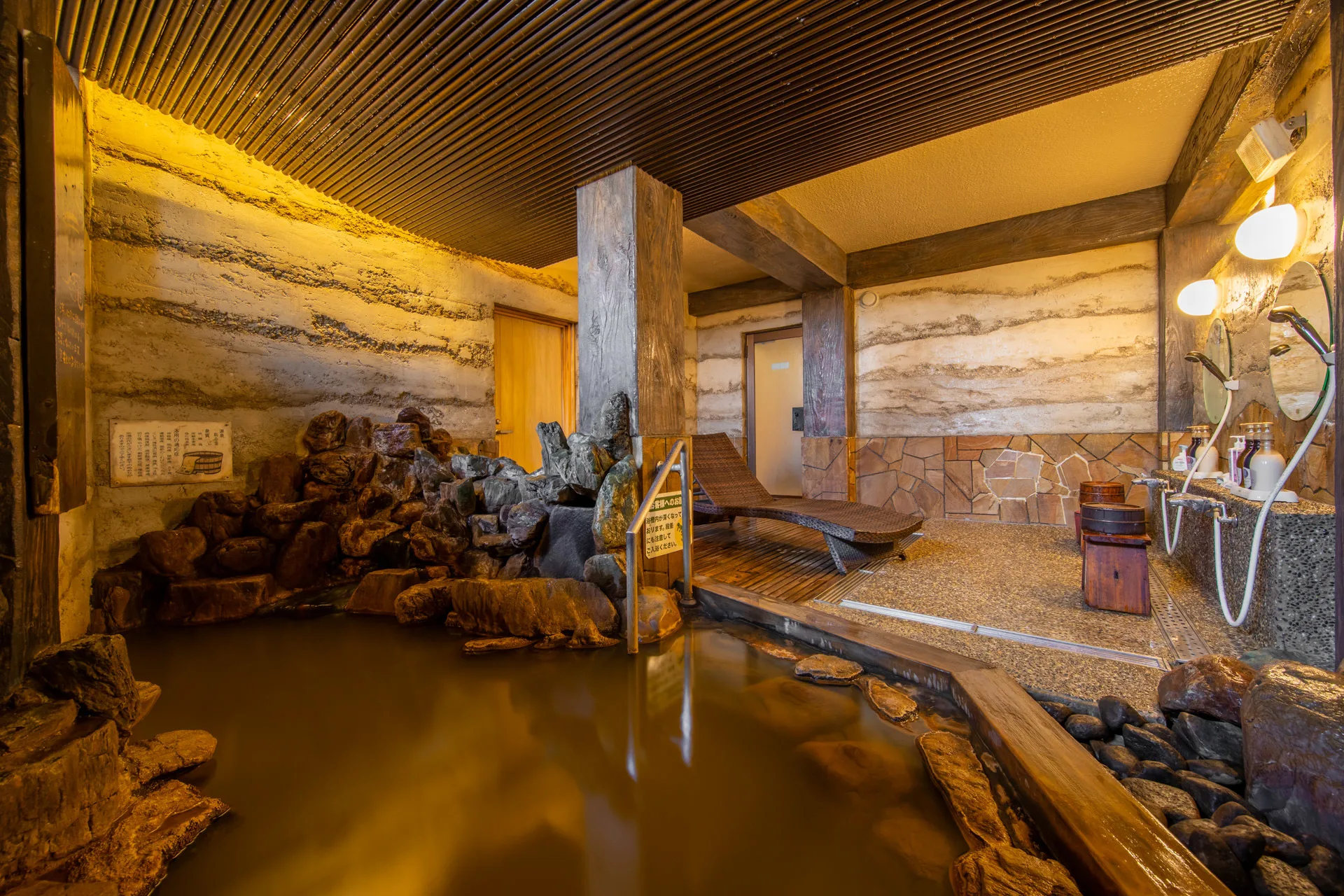
Koharubiyori is an indoor rock bath using Kogane-no-Yu. Akari is an outdoor bath with recirculated Shirogane-no-Yu and room for two or three people. Both are 50-minute sessions; the table above shows the two-adult totals, including admission.
Tamaki’s public bath is separate from the private rooms:
| Public-bath detail | Current listing |
|---|---|
| Admission | Adults ¥1,500; elementary pupils ¥1,000; preschool children age 2+ ¥700 |
| Hours | 11:30 a.m.–2:30 p.m. |
| Regular closure | Mondays and Fridays, except holidays; year-end and irregular closures may apply |
| Towels and payment | Towels included; cash only |
Private sessions start at noon, 1 p.m., 2 p.m., 6 p.m. or 7 p.m., independently of the public-bath schedule. Confirm availability; crowding can limit day-use access. Tamaki allows small tattoos only when fully covered with a sticker, and tattooed guests may use its paid private baths or rooms.
FUTOKI has two view baths, with a few details to confirm
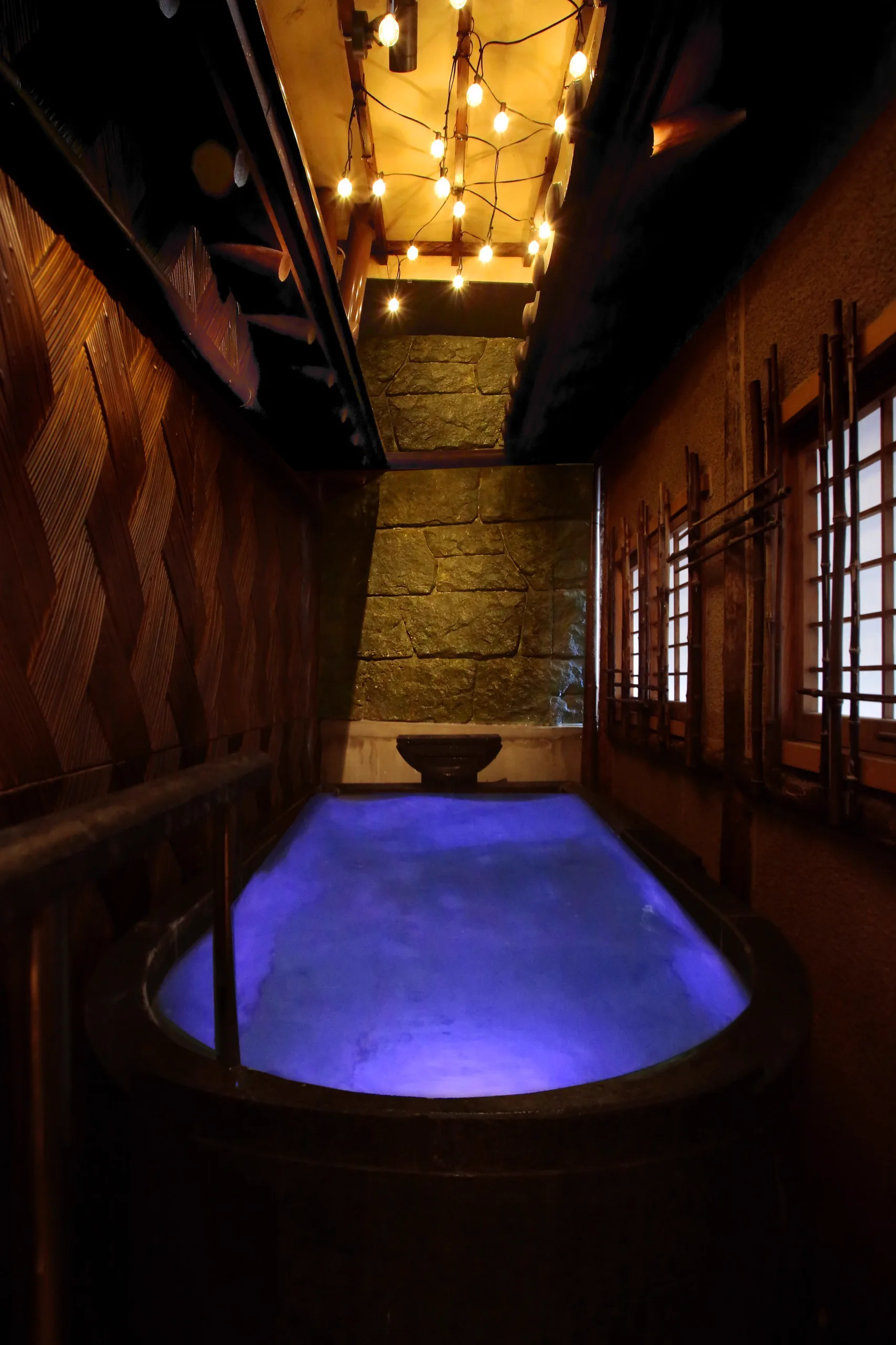
FUTOKI’s Ama-ne uses Kogane-no-Yu; So uses Shirogane-no-Yu. Ama-ne is identified as kakenagashi (source-flow). The operator does not make that claim for So. The fees above are room charges; day-use admission is added for each guest.
Reservations are made by phone, with available start times within the noon-to-8 p.m. window. Payment is cash only. FUTOKI’s reviewed official pages do not give exact daily time slots, bath capacity, or a tattoo policy, so ask when booking rather than assuming those details match another Ikaho inn.
Let the day’s timing decide which inn is practical
Tamaki lists private-bath starts at noon, 1 p.m., 2 p.m., 6 p.m. and 7 p.m.; its sessions finish by 7:50 p.m. These slots are separate from the public-bath window, which ends at 2:30 p.m. FUTOKI’s day-use notice accepts bookings for starts between noon and 8 p.m. That later window can work better if you reach Ikaho in the late afternoon, but confirm the exact slot by phone. The general facility hours are not a substitute for the day-use booking notice.
For a midday visit, Tamaki sits near the lower entrance to the stone-step district, so the bath can follow a walk from below. FUTOKI is near the upper end, close to Ikaho Shrine; make it the destination after climbing, or check the slope before bringing a stroller or anyone who tires easily. Neither “five minutes from the bus stop” nor “one minute from the steps” describes a flat walk. The mobility guide to Ikaho explains the difference between distance and effort on this hillside.
Choose the bath by what you want from the 50 minutes
If Kogane-no-Yu and source-flow water are the priority, compare Koharubiyori with Ama-ne. They have the same listed two-adult starting total; Tamaki is an indoor rock bath, while FUTOKI’s Ama-ne is the view-focused option. For an outdoor bath at the lower total, Akari pairs Shirogane-no-Yu with a recirculation system. FUTOKI’s So also uses Shirogane-no-Yu, but do not assume it is source-flow simply because Ama-ne is.
For a couple, a walk and one booked bath usually make a cleaner half-day than adding several public baths and changing repeatedly. With a young child, decide first whether an indoor or outdoor setting is easier for changing and getting in and out; ask each inn about the bath’s entry and washing facilities if those affect your choice. A 50-minute booking includes undressing, washing and dressing again, so it is not 50 minutes of soaking.
Tamaki generally bars tattooed guests from its public bath, with a possible exception for a small tattoo fully covered by a sticker; tattooed guests may use its paid private baths and rooms. FUTOKI does not give a tattoo rule for day-use baths. Call before reserving a fixed session, since there may be little time to find another option if entry is refused.
FUTOKI has also advertised a conditional half-price offer from September 2026 that can include day visitors, with exclusions such as Saturdays, days before holidays and the year-end/New Year period. Treat it as a promotion, not the regular price: check the notice and booking method against your exact date. For an ordinary public soak without a private room, compare the municipal baths in Ikaho instead; admission is a separate, much cheaper product.
The two baths are at different ends of Ikaho
From Shibukawa, the local bus takes about 25 minutes to Ikaho terminal. FUTOKI is a five-minute walk from the terminal; a taxi takes about 15 minutes. A highway bus from Shinjuku to Ishidangai takes roughly 2 hours and 42 minutes. FUTOKI is near the upper stone steps, while Oyado Tamaki is closer to the lower entrance side, which can matter if you are combining a bath with a walk through the town.
Shibukawa City lists Kogane-no-Yu as a neutral, low-tonicity spring containing calcium and sodium sulphate, bicarbonate and chloride. Shirogane-no-Yu is also neutral and low-tonicity; its onsen classification is based on metasilicic acid. For an overnight stay rather than a bookable bath session, see the Ikaho accommodation-area guide.
Sources
- [Oyado Tamaki: bath details and room prices](https://www.oyado-tamaki.com/spa/) - [Oyado Tamaki: FAQ, private-bath sessions and day-use admission](https://www.oyado-tamaki.com/faq/) - [Oyado Tamaki: access](https://www.oyado-tamaki.com/access/) - [FUTOKI: day-use private bath notice](https://www.futoki.com/news/detail.html?CN=419511) - [FUTOKI: access](https://www.futoki.com/access/) - [FUTOKI: facilities](https://www.futoki.com/facilities/) - [Oyado Tamaki: photo library and image-use terms](https://www.oyado-tamaki.com/gallery/) - [Shibukawa City: Ikaho spring classifications](https://www.city.shibukawa.lg.jp/kankou-site/kankou/000357/000359/p000209.html)Tags: Ikaho onsen, Ikaho private bath, day-use private onsen, Oyado Tamaki, FUTOKI Ikaho, Kogane-no-Yu, Shirogane-no-Yu, family bath, onsen reservation, private bath price, Ikaho access, Shibukawa, Gunma onsen, Japan hot springs, Ikaho travel guide