Fukuichi Ikaho: How to Choose a Stay for Its Two Springs
Fukuichi’s shared baths offer Ikaho’s Kogane and Shirogane springs, but its natural private bath remains closed. Check room and bath details before booking.
Fukuichi is a strong fit if your main reason for staying in Ikaho is to try both of its named springs at one property. The two shared bathing areas, Fuku no Yu and Ichi no Yu, each offer Kogane-no-Yu and Shirogane-no-Yu. The catch is the private-bath wording: Fuwari, the only bookable bath the inn identifies as 100% free-flowing Kogane, is still closed after earthquake damage. The other two reservable baths use Haruna-system tap water, not either hot spring.
That makes the choice fairly clear. Book Fukuichi for its shared two-spring baths and upper-stone-step location; don’t book it on the assumption that you can reserve a private natural hot-spring bath or soak in onsen water in your guest-room tub.
The shared baths are where the two-spring stay happens
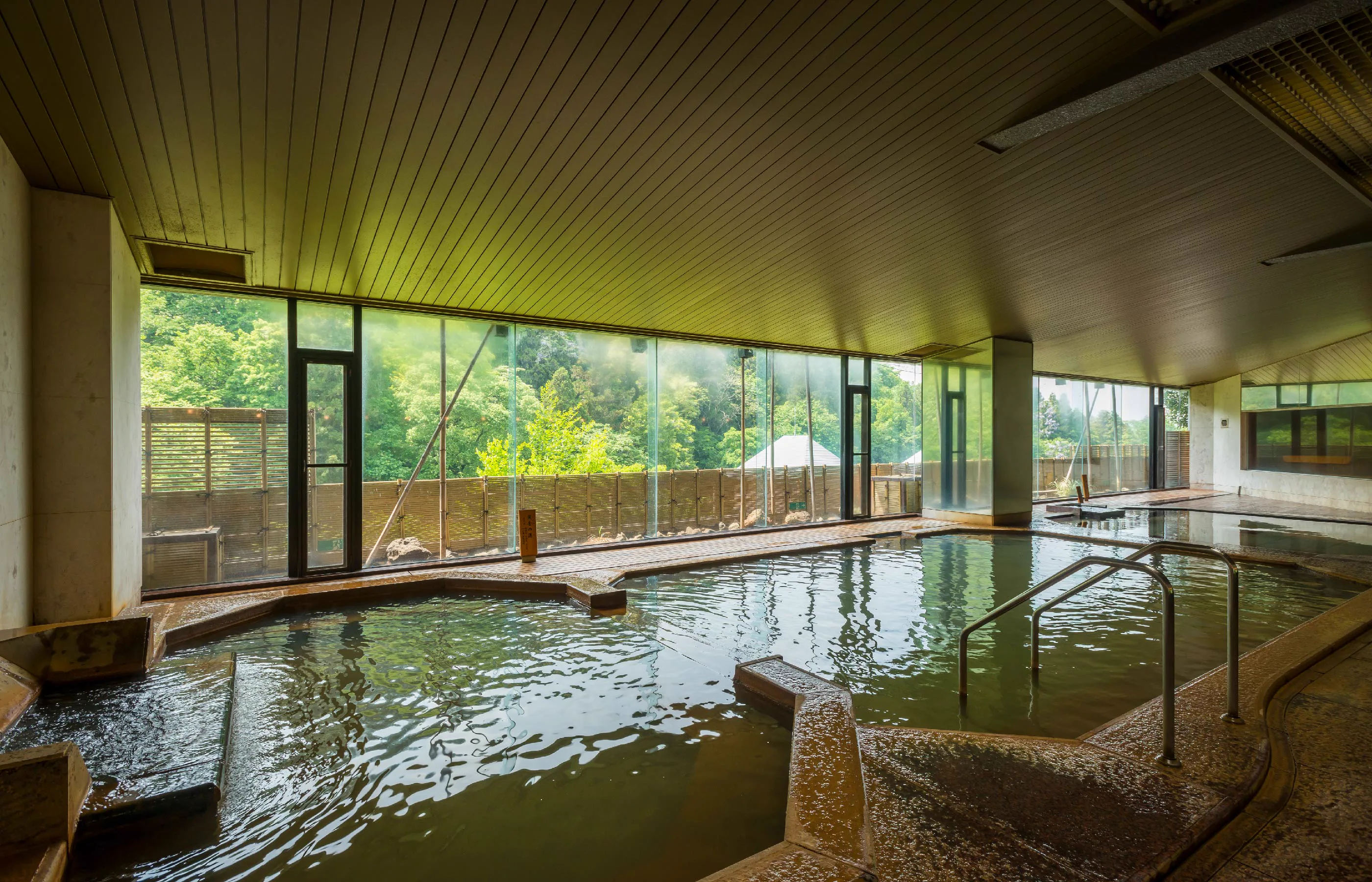
Both public bathing areas are on the third floor of Manyo-kan. Fuku no Yu and Ichi no Yu alternate between men and women, and the inn lists both spring types in each. The current bathing window is 3 p.m.–1 a.m. and 5–10 a.m.; the sauna closes earlier, at midnight and 8 a.m. respectively. If you want to use a particular side or sauna, check the day’s gender schedule at the inn rather than assuming it stays the same throughout your visit.
Kogane-no-Yu is Ikaho’s older, iron-bearing amber spring; Shirogane-no-Yu is the newer clear spring. Fukuichi says both public bathing areas offer both springs, but its treatment table only identifies Kogane-no-Yu for the listed public and outdoor baths. It does not give a tub-by-tub treatment breakdown for Shirogane. The listed water is heated, disinfected and handled through both flow-through and circulation systems. Ask which tubs are open if you want a specific source. See the Ikaho Kogane vs Shirogane guide for the wider comparison.
The building affects how far you walk, not which spring reaches your room. Manyo-kan connects to the lobby and third-floor baths. Senju-kan is nearest the stone-step entrance. Kotohogi, the adjoining annex, has Western-style rooms with living areas. The shared baths are the way to try both springs. See the Ikaho stay-area guide for the upper-versus-lower steps trade-off.
For less walking indoors, choose a Manyo-kan room, where the lobby and baths share a building. Senju-kan is closest to the stone-step entrance. Kotohogi has a more casual Western-room style, with twin beds and a living area in some layouts. Compare the exact room and meal plan; prices depend on the date and category.
Fuwari is the natural private bath, but it is currently closed
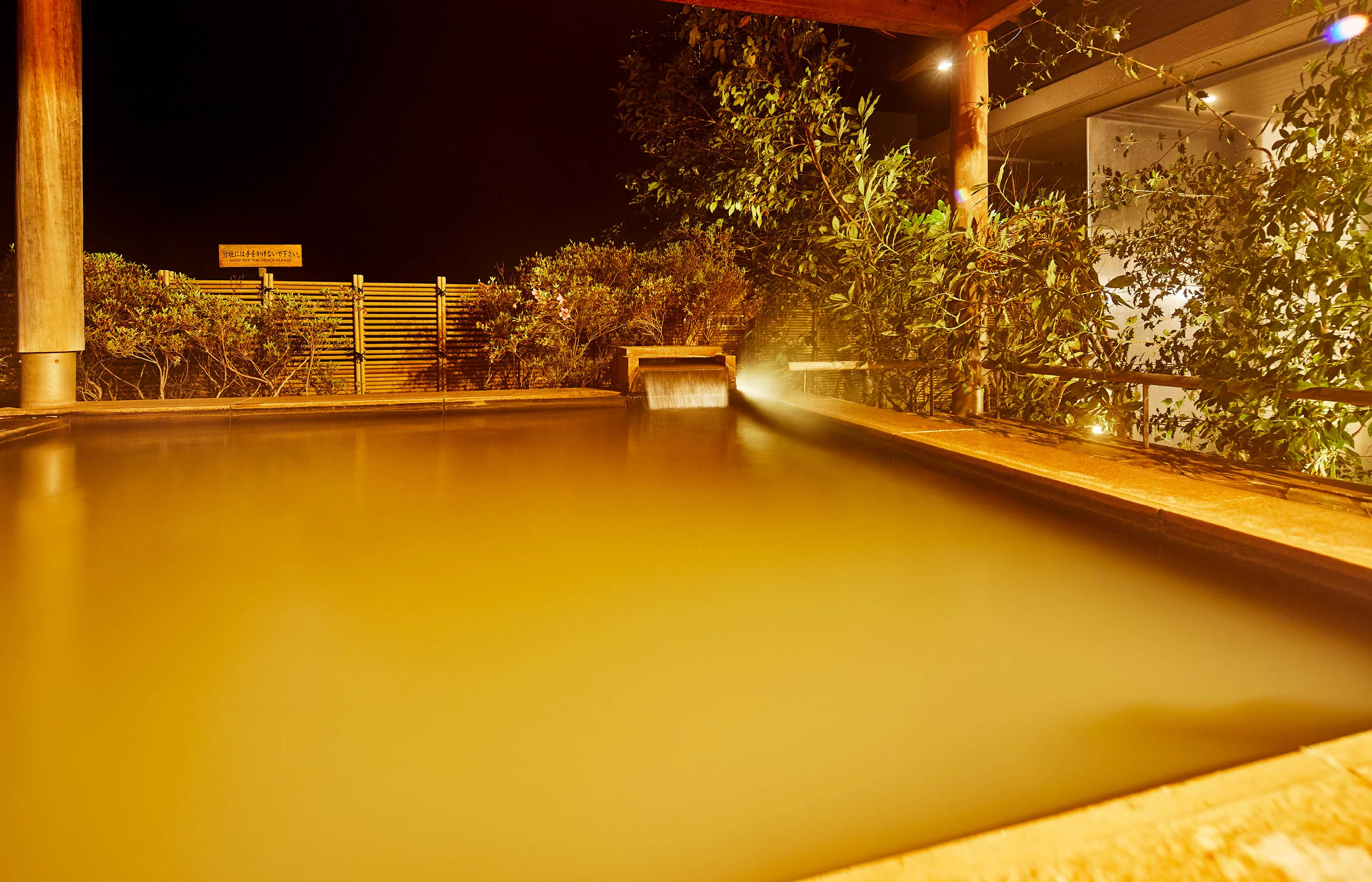
Fukuichi’s sixth-floor private-bath salon has three rooms. Of these, Fuwari is the one the inn lists as using Kogane-no-Yu without added water, continuously flowing from the source. It normally accommodates up to six people for 45 minutes, at ¥5,000 for overnight guests, with sessions listed from 4 p.m. to 11 p.m. and last entry at 10 p.m.
That usual offer is not available at present. An official notice dated August 21, 2026 says equipment was damaged in the June 16 earthquake; Fukuichi has no restoration date and says Fuwari remains suspended. Its onsen page still carries the closure notice. Treat the bath as unavailable unless the inn posts a new reopening announcement or confirms otherwise directly.
The remaining private baths are not a like-for-like replacement:
- Yurari is a larger ion bath for up to 28 people, for 60 minutes at ¥15,000. The inn lists Haruna-system tap water, circulation and disinfection.
- Sarari is for up to three people, for 45 minutes at ¥2,000. It also uses Haruna-system tap water, not Kogane or Shirogane.
Both are bookable private spaces, but neither should be described as a private onsen. The listed hours for all three are 4–11 p.m., with last entry at 10 p.m.; confirm current availability and booking terms with the inn. If a private natural spring bath is the deciding factor, Fukuichi is not the dependable choice while Fuwari is closed. The separate Ikaho private day-use bath guide compares other properties, though its day-use terms are a different product from an overnight booking.
A room with an outdoor bath does not mean a room with onsen water
The Forest Suite in Manyo-kan has a private garden and an outdoor tub, but Fukuichi’s launch notice identifies that bath as non-onsen water. It may suit a guest who wants a private place to bathe without sharing a public bath; it does not solve the need for a private Kogane or Shirogane soak. The same distinction applies to any room description that says “bath” or “open-air bath”: check the exact room’s water source before paying more for that feature.
The premium for this suite is for the garden, outdoor bathing space and room experience—not a private natural spring. If onsen water is non-negotiable, compare a specifically named spring-bath room elsewhere rather than relying on the words “open-air bath.”
Day visitors can sometimes use the shared bath
If you want to compare the springs before committing to a stay, Fukuichi lists day-use entry from 2–5 p.m. for ¥2,000 per person. Towels are provided, and a reservation is not normally required. Availability can still be restricted by the inn’s booking situation, so call ahead rather than making the bath the sole reason for a trip. Day-use guests use the shared bath, not the suspended Fuwari private bath.
Getting there and making the location work
The local bus from JR Shibukawa Station takes about 30 minutes. Fukuichi can pick guests up at Ikaho Onsen or Ikaho Harunaguchi; call when you arrive.
The inn stands at the top of the stone steps, so the walk into town is downhill and the return is uphill. Drivers should navigate to “Fukuichi Parking,” not the inn, which may route them to the steps. The underground car park has about 50 spaces. If it fills, staff may move the car to a nearby lot.
For a stay built around both public springs, the room category can come down to budget, bed style and whether you want to be closest to the baths or the stone-step entrance. For privacy, make sure the appeal is the room itself—not an assumption that a private bath currently comes with natural hot-spring water.
Meals and family facilities vary with the plan
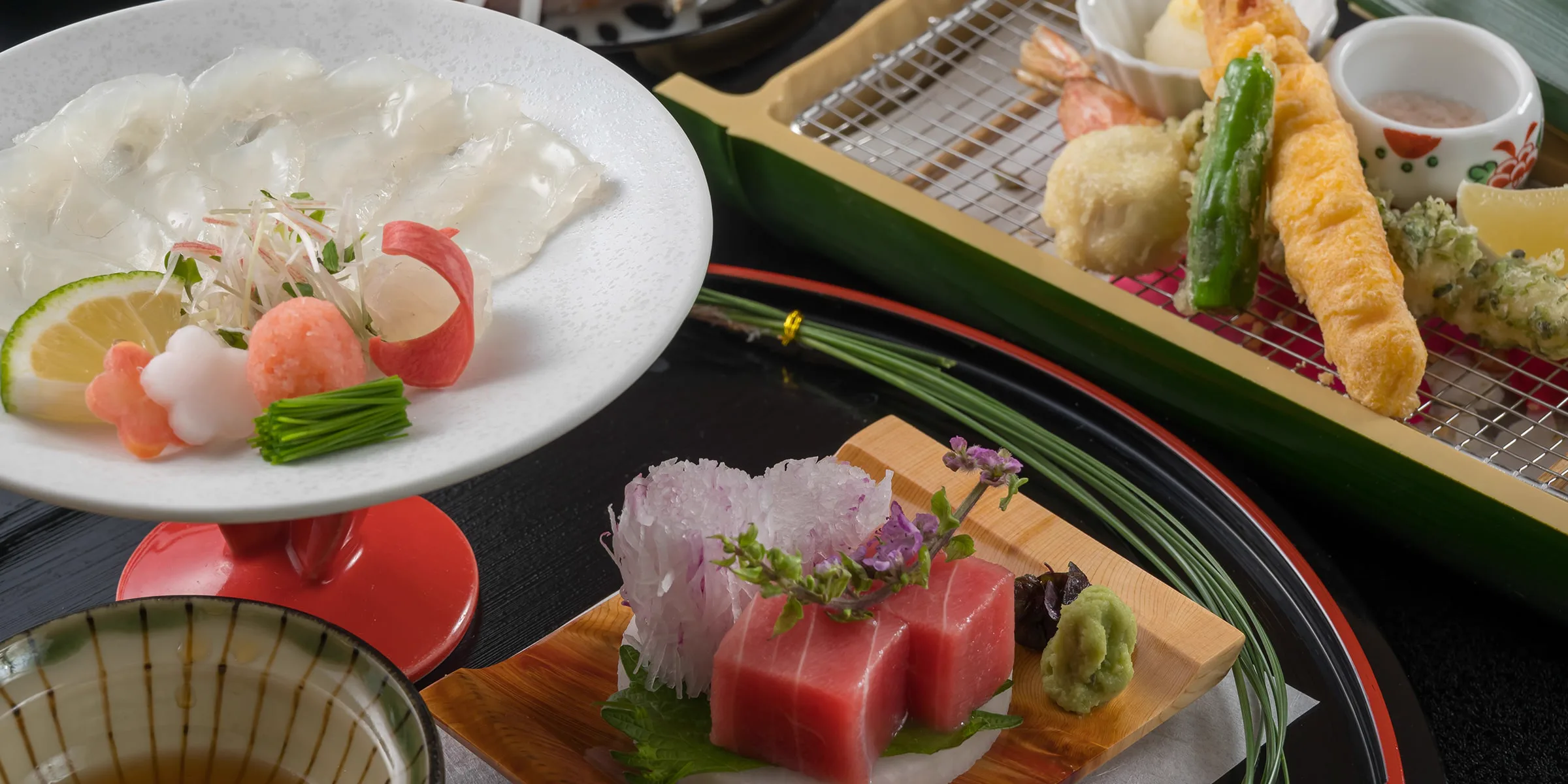
Manyo-kan’s dinner is a creative kaiseki meal in a private dining setting; Senju-kan and Kotohogi offer more casual regional kaiseki-style plans. If you intend to eat along Ishidangai, a room-only or breakfast plan may fit better. If you want a full dinner at the inn, compare the meal and room together. Direct-booking benefits, including any in-house credit, are plan-specific and can change, so check the offer for your dates.
Fukuichi lists a baby bed and children’s bath chairs in the public bathing area. Some plans also offer children’s meals, discounts or free bed-sharing, subject to age and bedding conditions. Enter each child’s details when comparing totals. Fuwari is closed, and the other reservable baths do not use either natural spring. Families who need a private natural bath should choose another property; children happy to bathe with a parent can use Fukuichi’s two-spring public baths.
Tattoo rules and the overall fit
Fukuichi’s published bathing information does not state a property-wide tattoo policy. Ask the inn about its shared baths, cover patches and private rooms before the free-cancellation deadline. Yurari and Sarari are private rooms, but use Haruna-system tap water; they do not replace the closed Fuwari spring bath.
On Yubiyori’s seven-part stay scorecard, Fukuichi scores 93 for bathing comfort, 95 for bath variety, 90 for atmosphere, 96 for transport convenience and 89 for value. Upkeep (85) and quiet (84) are more qualified. These are editorial scores, not ratings published by the inn; they reflect the range of shared facilities and the scale of the property, alongside individual reports about older equipment or bath details.
Fukuichi is a good fit if you want both Ikaho spring types in one stay, plan to use the public baths and value being at the upper end of the steps. It is less suitable if a private natural onsen bath in the room—or a reservable private Kogane bath right now—is essential. For a family, check whether public bathing works for your children before treating the currently closed Fuwari as part of the offer.
Official sources and verification
- [Fukuichi: onsen, public baths, private-bath water sources, hours and day use](https://www.fukuichi.jp/onsen/) - [Fukuichi: August 21, 2026 notice on Fuwari’s earthquake-related closure](https://www.fukuichi.jp/topics/news/8737/) - [Fukuichi: room categories and location within the property](https://www.fukuichi.jp/room/) - [Fukuichi: Manyo-kan rooms and Forest Suite](https://www.fukuichi.jp/room/manyo/) - [Fukuichi: 2023 Forest Suite announcement](https://www.fukuichi.jp/ja/topics/news/3217/) — identifies the in-room garden bath as non-onsen water. - [Fukuichi: access, shuttle pick-up and parking directions](https://www.fukuichi.jp/access/) - [Fukuichi: direct booking plan with public-bath and arrival details](https://reserve.489ban.net/client/fukuichi/0/detail/691278?date=2026-02-16)Last verified: 2026-09-28