Yunohira Onsen Public Baths in 2026: Hashimoto Is Open Again
Hashimoto and Gin-no-Yu are Yunohira’s two public baths, both ¥300. The other three historic baths are unavailable; expect a sloped walk through the village.
Yunohira Onsen currently has two public baths visitors can use: Hashimoto Onsen and Gin-no-Yu. Hashimoto reopened on May 17, 2026, after seven years out of service; Gin-no-Yu sits by the entrance to the village’s stone-paved lane. Both charge ¥300 for adults, but their different opening times make it worth deciding where to start.
The old five-bath circuit is no longer possible. Kin-no-Yu and Naka-no-Yu remain closed, and Suna-yu was washed away in the July 2020 floods. Older pages that list all five as operating are out of date.
Hashimoto Onsen reopened with a new spring
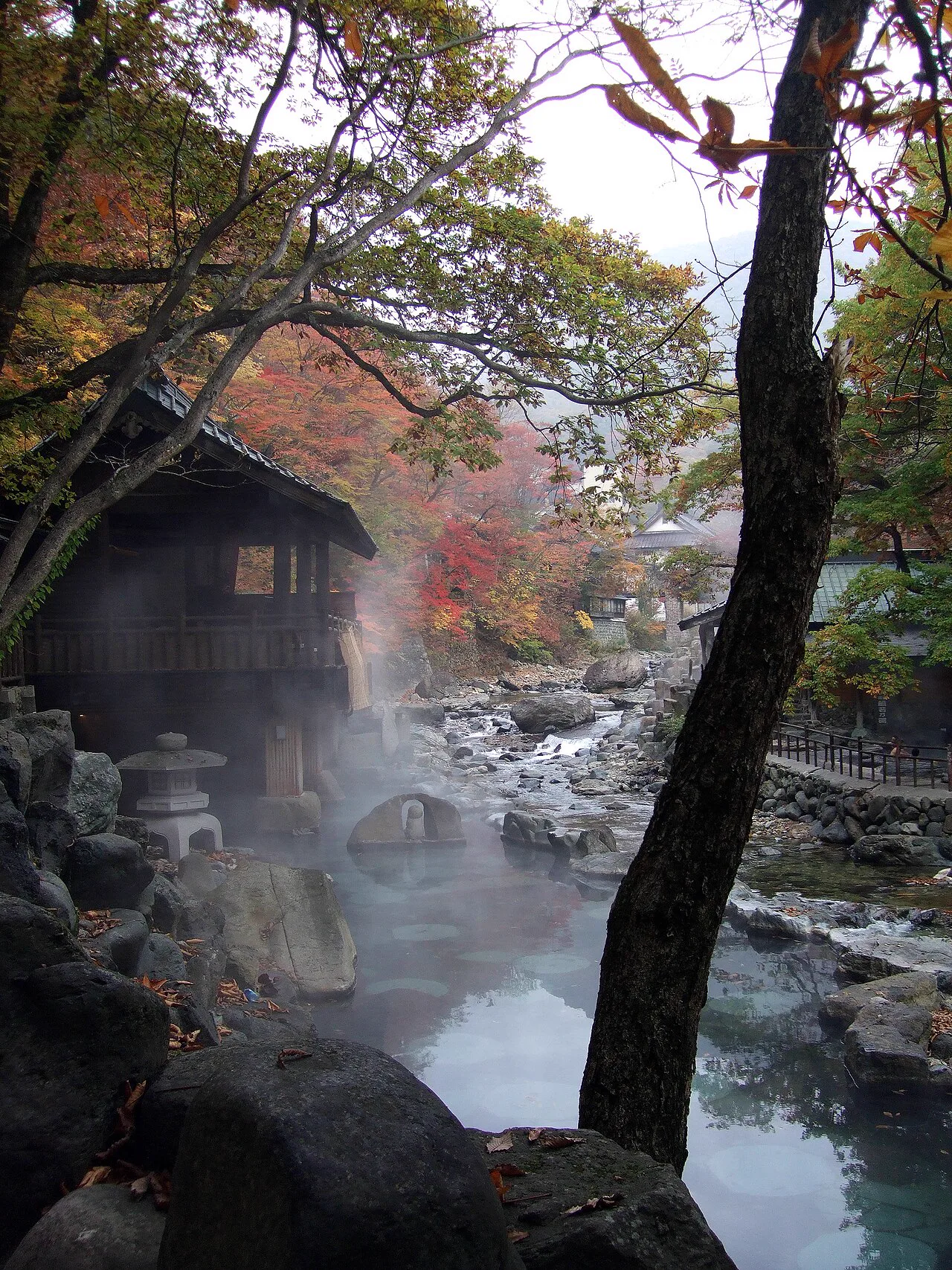
Hashimoto is at the lower end of Yunohira’s row of traditional bathhouses. It is the largest of the village’s communal baths, and boards divide the indoor tub into hotter and cooler sections. That gives visitors more choice than a single-temperature pool, though the town does not publish exact bathing temperatures for either side.
Admission is ¥300 for junior-high-school students and older, ¥100 for elementary-school children, and free for children aged five and under. It is open from 8 a.m. to 8 p.m. with no regular closing day. The city lists a nearby free car park and a toilet at the facility.
The water is from a new source, not the old supply. The earlier source lost flow and Hashimoto closed in 2019. Work to develop a replacement eventually reached water about 180 metres underground; it is pumped to a tank and carried through roughly one kilometre of new pipe to the bath. The 2026 reopening followed that work, so older analyses of the former water should not be attached to today’s bath.
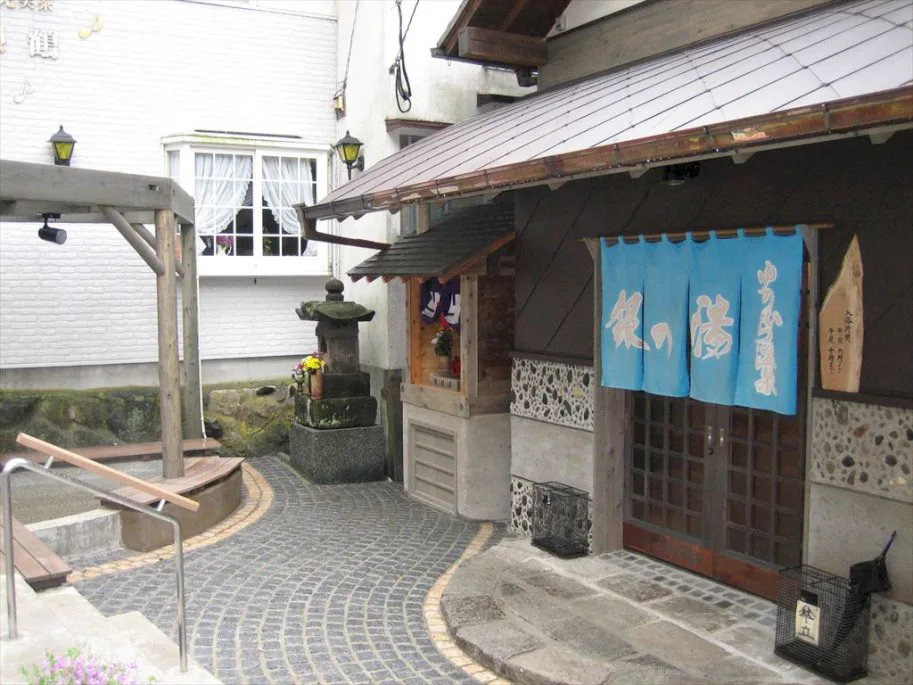
Gin-no-Yu is the convenient stop after the stone lane
Gin-no-Yu stands near the entrance to Yunohira’s roughly 500-metre stone-paved slope. It opens from 10:30 a.m. to 8 p.m. and charges ¥300 for junior-high-school students and older, ¥100 for elementary-school children, with free entry for children aged five and under. Yufu City lists no regular closing day, but the local tourism association notes that maintenance can cause an unscheduled closure; check on the day if you are making a special trip.
This is a compact, gender-separated indoor bath, not a place to book a private room or spend a long spa day. It has no shower, according to Yufu’s official tourism guide, and the current visitor listing describes it as a free-flowing spring. Bring your own towel and do not count on the washing and rest facilities of a larger day spa.
What happened to the other three baths?
Yunohira once had five communal baths, but only two are currently usable. Kin-no-Yu and Naka-no-Yu still appear on older maps and in pre-closure articles; Yufu City continues to mark them as suspended. Suna-yu was a separate riverside bathhouse, but its building was lost during the July 2020 flood. None belongs on a current bathing itinerary.
You can visit both in one outing; the two adult admissions total ¥600, paid separately. There is no combined ticket.
A low-effort route through the village
Hashimoto opens two and a half hours before Gin-no-Yu. If you reach Yunohira in the morning, begin at Hashimoto, then follow the sloping stone lane uphill and finish at Gin-no-Yu near its entrance. That avoids going up and down the hill more than necessary. The path is about 500 metres, but it is a slope rather than a level promenade; rain, luggage and limited mobility all make the route slower.
If you arrive after lunch, take the walk first and decide whether Gin-no-Yu is open before settling into a long soak. The nearby Ishidatami no Eki Tsuruya is a tourist-information point, rest area and small shop; it currently opens 1–5 p.m. and closes Wednesdays and Thursdays. It can be useful for checking local information, but it is not a substitute for confirming an individual bath’s status.
JR Yunohira Station is not in the hot-spring village. Oita Prefecture lists the trip from the station to the stone-paved area as about ten minutes by car. Unless your accommodation has arranged a pickup, plan on a taxi rather than assuming there is a frequent public shuttle. Ask the inn about its own pickup rules; overnight transfers are not a public bus service for day visitors.
Pack for a small communal bath
Bring a small towel, a change of clothes and ¥300 per adult bath. These are neighbourhood bathhouses, not staffed resort facilities with private rooms, outdoor pools or long-stay lounges. If you need privacy or a full wash, compare a larger facility in the area before travelling; our Yufuin or Yunohira comparison explains how different the two districts are. First-time visitors can also use our sento packing guide.
Sources
- Yufu City: [Hashimoto Onsen, current admission, hours and features](https://www.city.yufu.oita.jp/kankou/onsen/onsen_cate1_2/hashimoto) and [Gin-no-Yu, location and current details](https://www.city.yufu.oita.jp/kankou/onsen/onsen_cate1_2/ginnoyu) - YUFUINFO: [Gin-no-Yu, spring-water description, shower facilities and maintenance note](https://yufuin.gr.jp/spot/spot-1227/) and [Ishidatami no Eki Tsuruya hours and visitor information](https://yufuin.gr.jp/spot/spot-1216/) - Oita Prefecture Tourism: [Yunohira’s stone-paved lane and station access](https://www.visit-oita.jp/spots/detail/4513) - Oita Godo Shimbun: [Hashimoto’s May 2026 reopening and the five-bath current status](https://www.oita-press.co.jp/1010000000/2026/05/21/JDC2026051900471)Checked: September 27, 2026. Opening status and maintenance closures can change; confirm locally before travelling.