Yufuin or Yunohira? Choose Between a Lively Town and a Quiet Hillside Stay
Yufuin has station-side shops and Lake Kinrinko; Yunohira suits a quiet overnight among stone lanes. Its station is a 10-minute drive from the onsen street.
Yufuin is easier without a car: the station, shops and Lake Kinrinko are connected by walkable streets. Yunohira is a quieter overnight base, but the railway station sits about a 10-minute drive from its stone-paved onsen street. Book your inn’s transfer or arrange a taxi before travelling.
| Yufuin Onsen | Yunohira Onsen | |
|---|---|---|
| From the station | Yufuin Station opens onto the main town area; shops and inns spread between the station and Lake Kinrinko | Yunohira Station is about 10 minutes by car from the onsen street; arrange a pick-up or taxi |
| Best for | Daytime walks, cafés, shopping and onward transport | A slower overnight stay among old inns, narrow lanes and stone steps |
| Bathing | More day-use baths and ryokan, with distances varying across town | Community baths and ryokan baths; hours and access vary by property |
| Plan ahead | Choose accommodation by how much you want to walk with luggage | Confirm transfers, dinner and parking with your inn before travel |
Getting around: Yufuin is simpler for a day visit
Yufuin Station opens onto the central shopping area. Lake Kinrinko is about a 25-minute walk away, with cafés and shops along the route. A lakeside walk, lunch and one bath fit into a day; check the opening hours of any specific business you plan to visit.
The train from Yufuin to Yunohira takes around 20 minutes. From Yunohira Station, continue by transfer or taxi to the onsen district; the station is not within walking distance of the historic street.
Ask your ryokan whether it offers pickup, how far ahead to book and when the last transfer runs. Kamiyanagiya, for example, asks guests to reserve by the previous day and lists pickups for trains arriving between 3 and 5:30 pm. Arrange a taxi in advance if you plan to use one.
Yunohira’s stone lanes are steep and uneven, and can be slippery in rain. Wheelchairs, strollers and large suitcases are difficult to manage here. Kamiyanagiya directs drivers to its signed entrances rather than the narrow central street; ask your inn where to meet a transfer and how far you will need to walk.
Two different streets after dark
Yufuin’s activity centres on the station, Yunotsubo Street and Lake Kinrinko. The main shopping area is busier during the day. Stay near the station if train access matters most; choose the lake side if you are happy to walk farther with your luggage. Visiting Kinrinko early can make for a quieter walk, while shops and cafés fit more naturally around lunch.
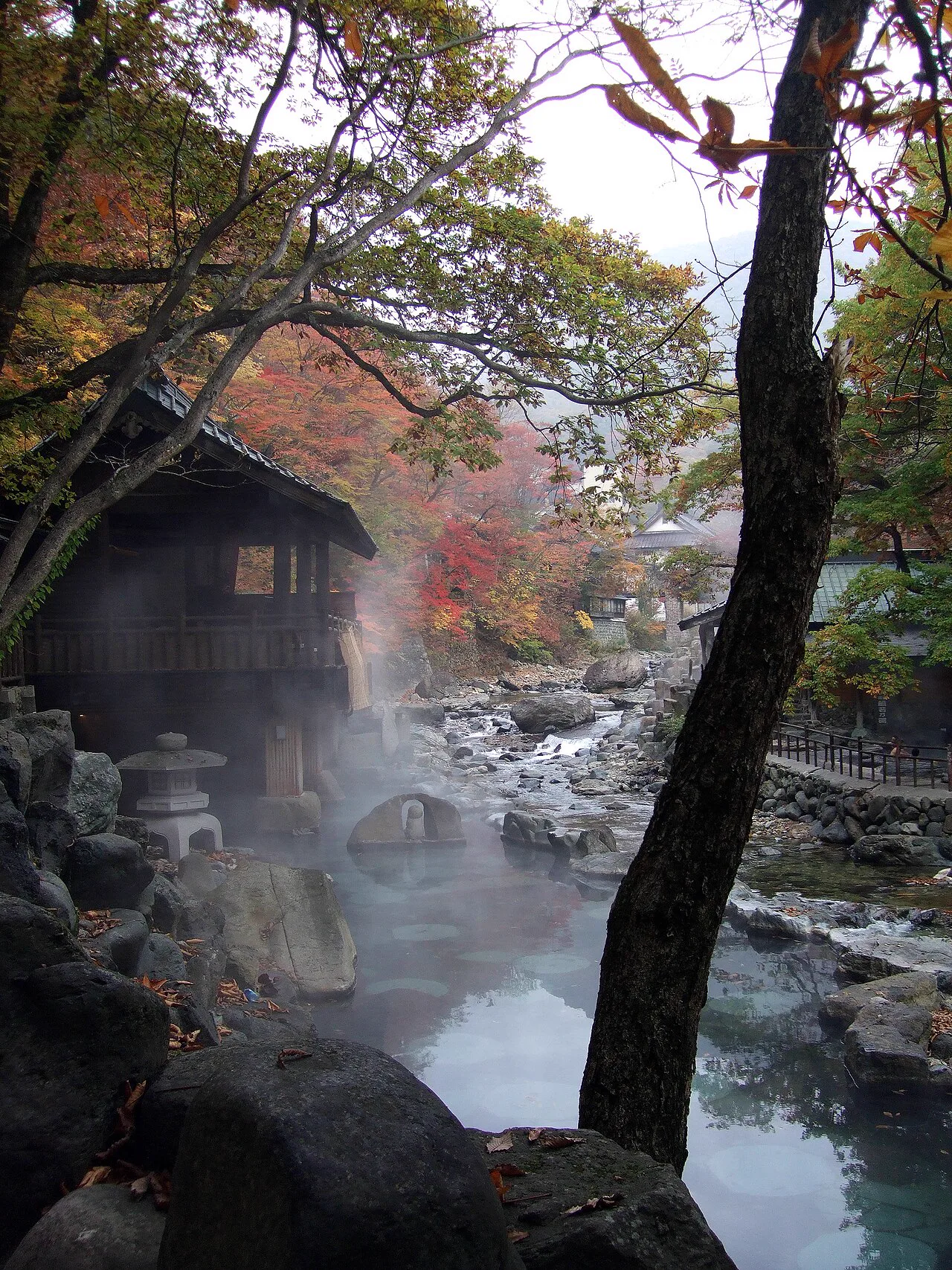
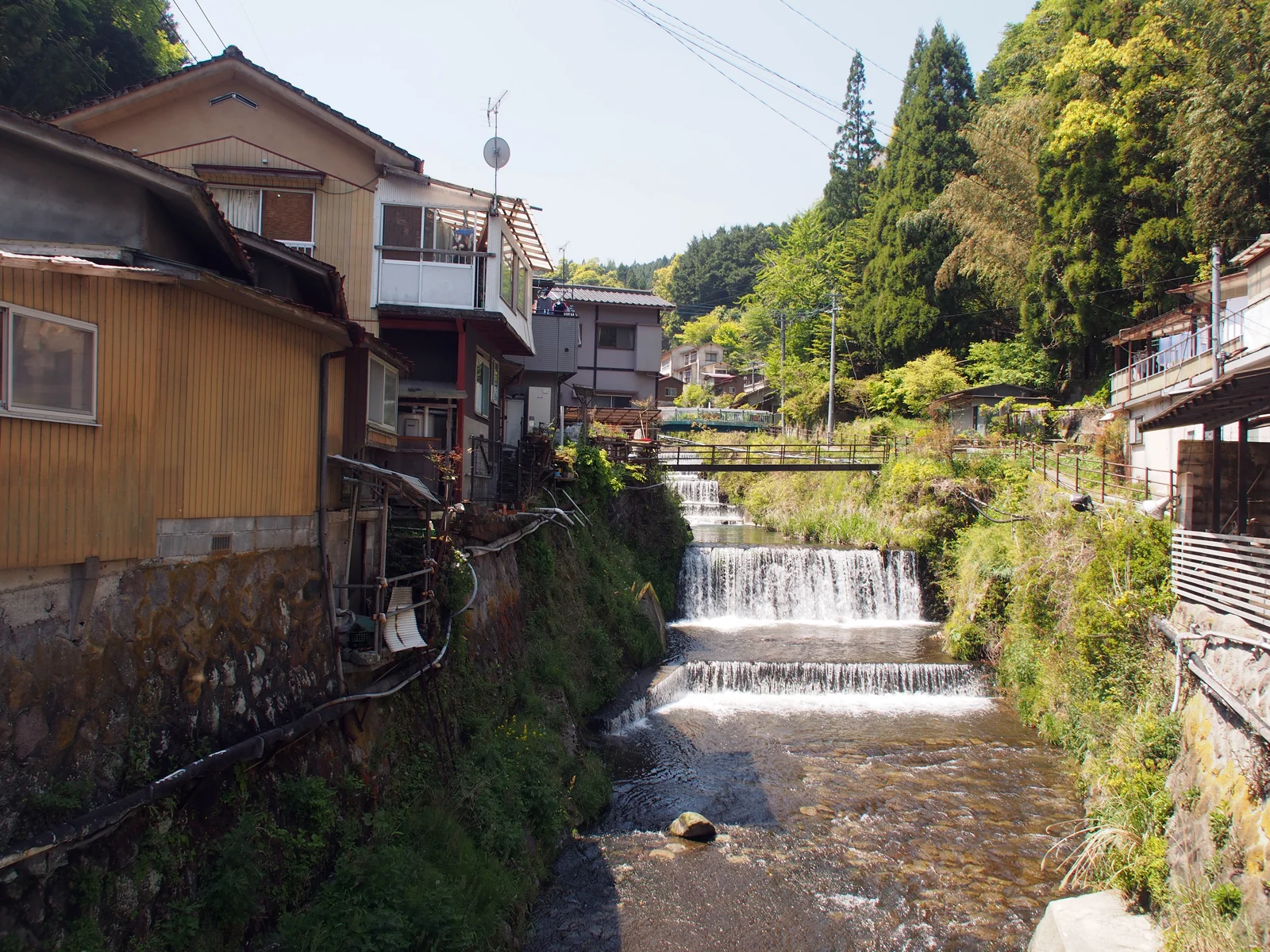
Yunohira is a compact hillside settlement along the Kagono River. Its stone-paved slope dates back roughly 300 years, and lanterns illuminate parts of the street at night. The setting rewards a slower walk, but the uneven surface and gradients are practical considerations, not just atmosphere. Wear shoes with grip, especially in wet weather.
There are fewer restaurants and shops than in Yufuin, so decide on dinner before evening. A half-board ryokan avoids searching for a restaurant after check-in. If you want to eat out, ask about the restaurant’s opening days, last order and the return walk to your inn.
Compare the bath you plan to use, not the town name
Both districts have several spring types. Yufuin’s tourism association lists alkaline simple and sodium-chloride springs; Yunohira includes sodium-chloride/bicarbonate and alkaline simple springs. A community bath and a nearby inn can use different sources, so compare the named bath rather than relying on the district label.
Yunohira’s two community baths, Gin-no-yu and Hashimoto Onsen, charge adults ¥300. Gin-no-yu is open 10:30 am–8 pm; Hashimoto Onsen opens earlier, at 8 am, and closes at 8 pm. Both are public baths, not private couple baths.
Ryokan for three different kinds of stay
Yufuin Santokan: stay near the town’s main walks
Yufuin Santokan is close to Lake Kinrinko and Yunotsubo Street. The ryokan lists 12 rooms, six of them with a private outdoor bath. Its official room information says the guestroom baths use hot-spring water; confirm which bath comes with the room category you are booking. It suits travellers who want to spend the day in Yufuin and return to an onsen bath without going back out.
Kamiyanagiya: private baths and a hillside location
Kamiyanagiya sits above the stone-paved street. The inn lists four private-use baths, including outdoor baths, and two detached rooms with their own baths. It does not accept day visitors for bathing. Reserve the station pick-up in advance and confirm dinner service, parking access and the bath included with your chosen room.
Hanamomen: a riverside outdoor bath
Yukemuri no Yado Hanamomen has an outdoor bath beside the Kagono River as well as an indoor bath. The sound of the river is part of the setting, but the inn is still in a mountain valley: confirm the pick-up and meal arrangements before booking. Yufu City’s tourism listing currently gives Monday and Tuesday as its regular closing days, so check availability for your dates.
Which one fits your trip?
Stay in Yufuin if you want to walk between the station, shops and lake, then continue by train or bus. Pick Yunohira for a quieter night built around your ryokan and the hillside street, and book the station transfer before you travel. With older relatives, young children or bulky luggage, sort out the final drive and walking route first; the spring-water label matters less than whether everyone can reach the inn comfortably.
Sources
- Yufu City Tourism Bureau, onsen areas and spring classifications
- Yufu City Tourism Bureau, Yunohira area and stone-paved street
- Yufu City, Gin-no-yu hours and admission
- Yufu City, Hashimoto Onsen hours and admission
- Yufuin Santokan, official room information
- Oita Prefecture Tourism, Kamiyanagiya baths, access and day-use policy
- Kamiyanagiya, station transfers and access
- YUFUINFO, Hanamomen facilities and current opening days
- Image: Oita Kisei-chu, “Yunohira Onsen,” Wikimedia Commons, CC BY-SA 3.0; resized to WebP and shared under the same licence.
Tags: Yufuin or Yunohira, Yufuin Onsen, Yunohira Onsen, Yufu City, private onsen ryokan, Oita travel