Otakiya Ryokan Day Bath: Two Springs, Short Hours and Booking Rules
Check Otakiya Ryokan’s narrow Yujuku day-bathing window, listed ¥1,000 and ¥700 baths, reservation-first access, gender schedule and two-source setup.
Confirm the day’s availability first
Otakiya’s operator page lists ordinary day bathing from 1 p.m. to 3 p.m. The larger Otaki-no-yu is ¥1,000; Yakushi-no-yu is ¥700. The page says the baths switch between men and women by date: Otaki-no-yu is for men on odd-numbered days and women on even-numbered days, with Yakushi-no-yu assigned the other way around.
There are important caveats. The operator says day use is prioritised around reserved private sessions and may not be available depending on the booking schedule. Yakushi-no-yu may also be unavailable depending on the amount of stored spring water. Its current page does not give a separate last-entry time. Call Otakiya before travelling rather than treating the two-hour listing as guaranteed walk-in access.
Private day-use sessions are listed by advance phone arrangement: 45 minutes at either 1 p.m. or 2 p.m. Yakushi-no-yu costs ¥2,000 and Otaki-no-yu ¥3,500. Those slots overlap the ordinary day-use period, which is why availability needs to be checked directly.
| Bath | Listed standard day-use price | Private session |
|---|---|---|
| Otaki-no-yu | ¥1,000 | ¥3,500 for 45 minutes |
| Yakushi-no-yu | ¥700 | ¥2,000 for 45 minutes |
The published terms do not promise both baths on one visit. The date-based gender assignment and the operator’s availability caveats are more useful planning details than assuming you can move between them.
Why the two baths are different
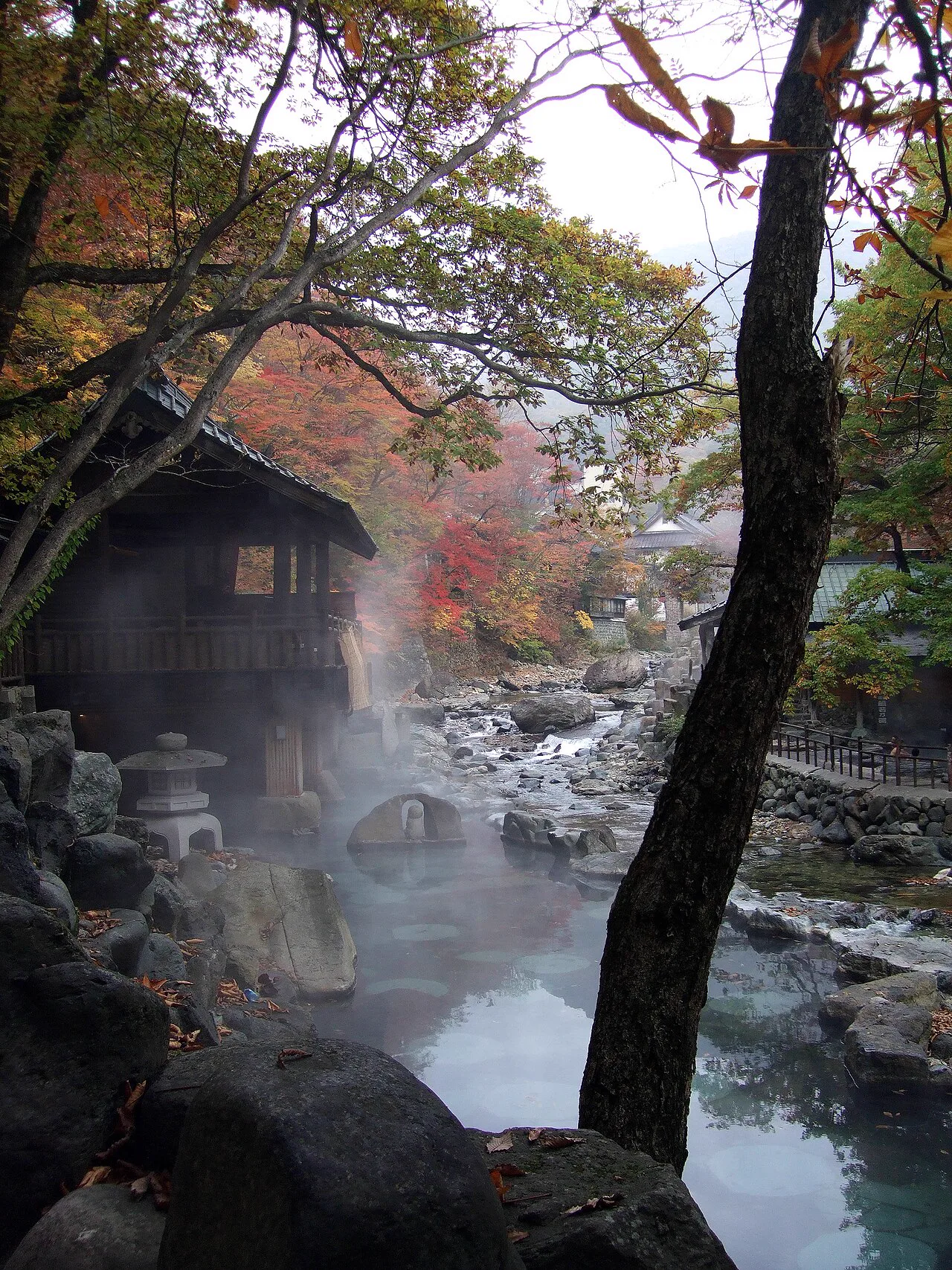
Otakiya describes two separate sources. Kubo-yu is a sodium-calcium sulfate spring; Otaki is the inn’s own calcium-bicarbonate spring. Since a 2014 renovation, the inn says a heat exchanger transfers heat from hotter Kubo-yu to Otaki water without mixing the sources. Each is then supplied separately.
The operator gives approximate source temperatures of 57°C for Kubo-yu as used at the inn and 41°C when Otaki source water emerges. These are source-side figures, not a guarantee of either tub’s temperature.
The inn says all tubs are 100% kakenagashi, but uses a bottom drain rather than the familiar overflow lip. Fresh water flows in and water leaves through a drain at the bottom. That design can make a continuously supplied bath look like a recirculating one; appearance alone is not a reliable guide here.
One practical note from the operator: the Otaki source can become cloudy when heavy stream flow carries water into its natural outlet. The inn says this happens a few times a year and clears as the water level settles. It is another reason to confirm conditions if you are making a special trip.
Reaching Otakiya
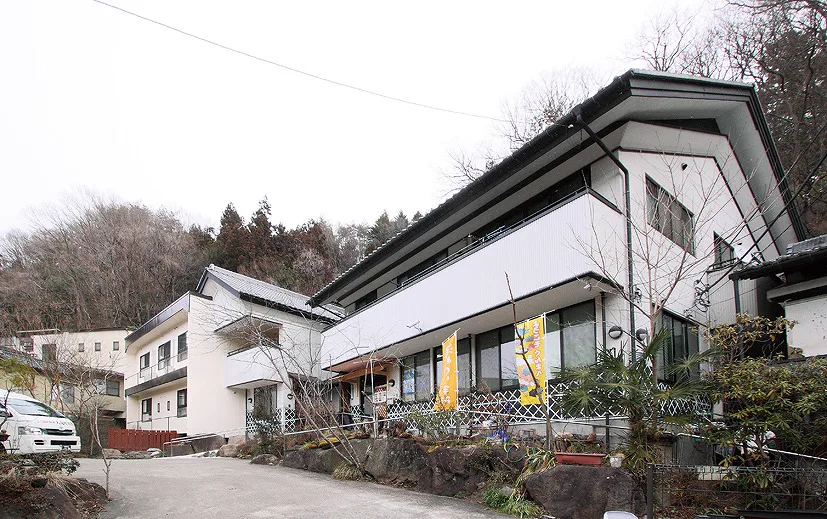
Take a Kanetsu Kotsu bus bound for Sarugakyo Onsen from Jomo-Kogen Station or Gokan Station and get off at Yujuku Onsen-kami. Otakiya’s access page gives a one-minute walk from the stop. It lists the fare as ¥790 as of May 2026; confirm the current fare and timetable with the bus operator before travel. Otakiya is at 2383 Yujuku Onsen, Minakami, Gunma.
For another Yujuku property with a longer ordinary day-bath period, see Taiyoukan’s guide. The Kanetaya guide covers the third inn’s separate hours and spring data, and the Minakami day-onsen guide can help with nearby alternatives.
A couple of details worth checking
Call Otakiya about tattoo entry and whether it is accepting day visitors on your date. The inn says its spring is not approved for drinking, so do not drink from a bath spout.