Yufuin Yasuha: When to Pay Extra for a Room with a Blue Onsen
Yasuha’s standard rooms include a reserved 40-minute private-bath session; pay for an in-room tub to bathe on your own schedule.
Checked: September 27, 2026
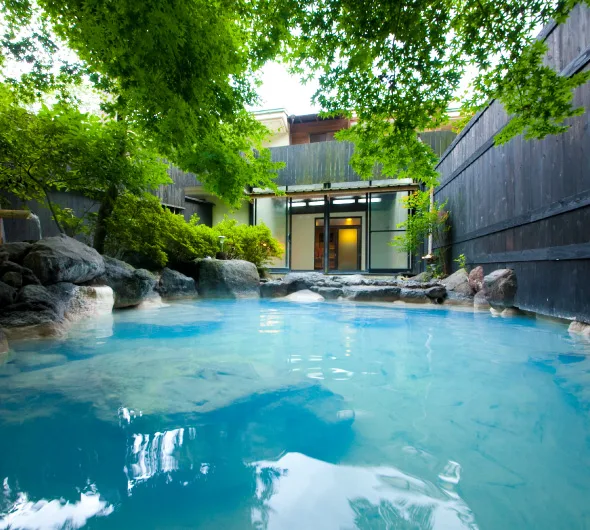
Yasuha has 19 rooms split between the main building and detached cottages. The room categories matter more than the word “blue” in the hotel’s name: the main building has rooms without a private bath, rooms with an open-air tub, and a newer detached room with an indoor bath. The water itself is not a guaranteed shade of blue on any particular day.
What the standard room still gets you
The second-floor Japanese rooms, twin rooms and four-bed room do not have their own baths. Guests in these categories can use the guest-only large bath and outdoor bath, plus one free 40-minute private-use bath session per stay. The session is reservation-based; the current listed start times run hourly from 3 p.m. to 9 p.m., with an early-morning window from 6 a.m. to 7 a.m. Ask the front desk to arrange it.
That can be enough for a one-night stay if you are comfortable using the public bath for your other soaks. You do not need to book an open-air room simply to reach the spring water or to have one private bathing slot.
What the room upgrade buys
The first-floor Japanese room with an open-air bath and the detached cottages keep the bath inside your own room, so you can soak without fitting around a 40-minute booking. The detached rooms have steps and level changes on the route from the main building; Yasuha specifically asks guests with mobility concerns to check before booking. The first-floor main-building room is a more practical place to start if stairs are a concern.
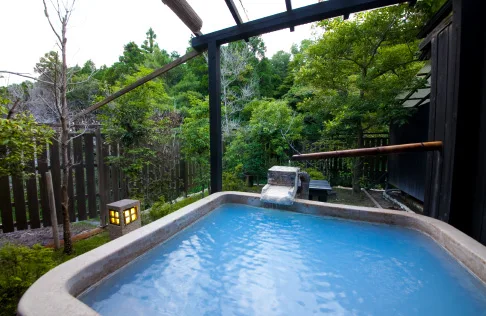
For groups, compare the actual room plans rather than assuming a cottage is always best. The detached 12-tatami room accommodates up to six; the BayMaay room has an indoor bath and sleeps up to four; the main-building four-bed room is also for up to four but uses the shared bath facilities. The bath type, sleeping arrangement and route to the room are separate trade-offs.
The water’s colour is natural, not a room feature
Yasuha says its spring emerges clear and turns blue over time. Weather and other natural conditions affect the colour, and the timing is not predictable. Its 2021 Oita Prefecture analysis records a source temperature of 97.6°C and pH 9.3; neither figure is the temperature of a guest bath. The hotel lists its spring as bicarbonate and sodium-chloride water, while its basic information gives both classifications. If you need the latest formal analysis, check the notice posted at the property.
Yasuha sits uphill from the town centre. The station is about five minutes by taxi; the walk is roughly 25–40 minutes and includes a slope, so do not plan it as an easy luggage walk. The inn offers pickup, but arrange it in advance. Guests with dinner should plan around the 6 p.m. start and aim to arrive before 5 p.m.; dinner is served in the dining area, not in the room.
If your main question is how Yasuha’s water compares with Tsukanoma’s, use the Yufuin blue-onsen comparison. For transport between inns, the no-car Yufuin stay guide is a useful next check.