Tsuta Onsen Day Trip: What to Know Before You Go
Plan a day visit to Tsuta Onsen in Aomori with current admission, the Kyuan-no-yu bathing schedule, seasonal bus access, and winter closure details.
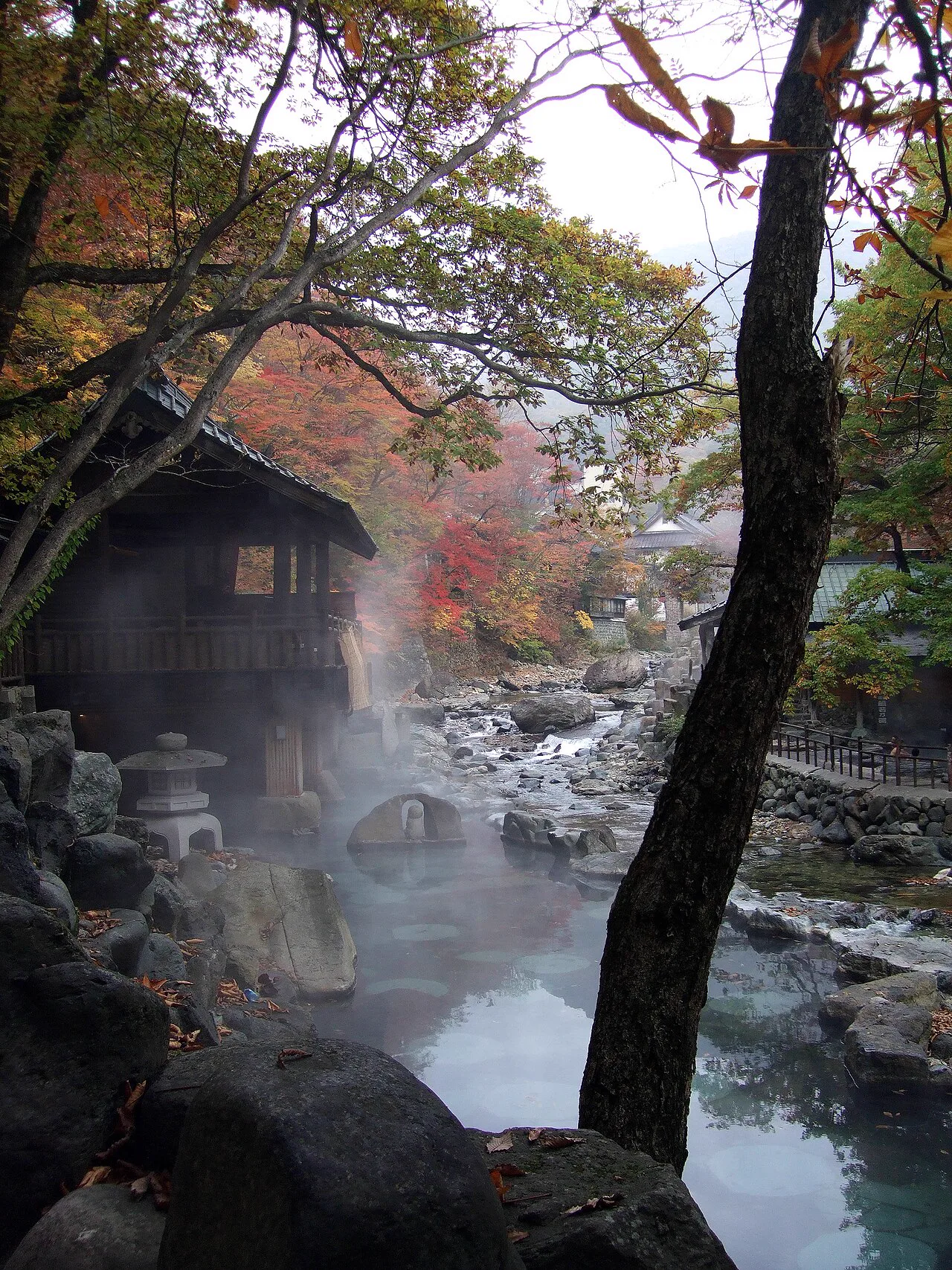
Tsuta Onsen is a proper day trip from Aomori, not a quick detour. The bus takes about two hours each way, and public bathing is limited to 10 a.m.–3 p.m. Kyuan-no-yu has separate men’s and women’s time slots, so check those before setting out. The reward is a bath built over the spring itself: water rises through the wooden floor rather than arriving through an ordinary inlet.
Day-use hours, admission and towels
| Day-use detail | Current terms |
|---|---|
| Hours | 10 a.m.–3 p.m. |
| Last entry | 2:30 p.m. |
| Adult admission | ¥1,000 |
| Elementary-school admission | ¥500 |
| Hand towel | ¥300 |
| Bath towel rental | ¥500 |
These are the inn’s posted rates. Busy conditions can bring an earlier end to day use, and bathing may be unavailable during filming or facility work. The 2:30 last-entry time is not a guarantee that admission will remain open until then; check the inn’s bath page and current notices on the day.
There is no day-use room or rest area. If you want a private bath, the inn lists a 50-minute session for ¥4,000, booked in person at the front desk only. Phone reservations are not accepted. Day visitors may use it only until 2 p.m., and the Aomori tourism listing says admission is charged separately, so confirm the total when you arrive.
Which bath fits your schedule?
Kyuan-no-yu is a compact, older-looking bath where the spring rises underfoot. It was once mixed bathing; today, men and women use it at different times. Women’s hours are 10 a.m.–noon and 9:30 p.m.–9 a.m. the next day. Men’s hours are 1–9 p.m.
The late hours are for overnight guests. For day visitors, women have only the 10 a.m.–noon window, while men have 1–3 p.m. Couples cannot use this bath together at the same time.
Senkyo-no-yu is the simpler choice if the Kyuan schedule does not work. It has separate men’s and women’s baths and is open to overnight guests from 10 a.m. until 9 a.m. the next day. For day visitors, the inn’s public window still ends at 3 p.m. Shower facilities are listed for Senkyo-no-yu and the private bath, not Kyuan-no-yu. Basic bath amenities are provided.
What “spring water rising through the floor” means
Tsuta’s baths sit over the source, with spring water bubbling up through the wooden bath floor. That is the distinctive part of the visit. It does not mean the water is never adjusted: the inn says it adds water from the Tsuta forest spring to regulate the temperature in Kyuan-no-yu.
The inn lists the source at 45.4°C, measured when the air temperature was 4.5°C. That figure describes the spring, not a measured temperature for every bath. If you are comparing bathing temperatures, keep source temperature separate from the water you actually enter; our guide to reading onsen temperature figures explains the difference.
Getting to Tsuta without a car
JR Bus Tohoku’s seasonal Mizuumi service connects Aomori with Tsuta and the Oirase–Lake Towada area. The inn gives the Aomori-to-Tsuta journey as about 2 hours 8 minutes. Current departures are date-specific, and not every bus runs throughout the season. Check the operator’s route and timetable for both the day you travel and the return you need; a bus passing the inn does not necessarily leave enough time for a bath.
The free transfer from Shichinohe-Towada Station is for overnight guests, with advance booking required. Its scheduled arrival and departure are built around check-in and check-out, so it is not a workaround for a public day visit. For a wider look at the seasonal connections between Hakkoda’s baths, see the Hakkoda bus day-trip guide. If the long ride is the sticking point, the Sukayu and Tsuta comparison lays out how the two work as day trips from Aomori.
Winter closures and a nearby walk
Tsuta Onsen is not open for day visits year-round. The current Aomori tourism listing gives winter closure periods of November 25–December 23 and January 13 to around mid-April. The inn announces reopening dates, which can vary by year; confirm both the facility’s status and the bus service before travelling. Mountain roads also close seasonally, so a summer navigation route is not a reliable winter plan.
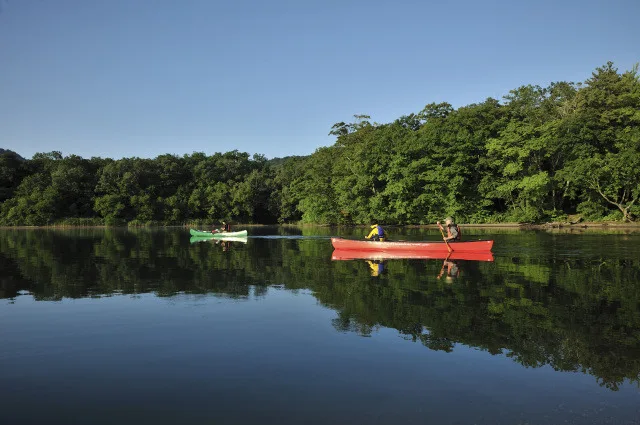
When the paths are open, Tsuta-numa and the surrounding forest ponds make a natural add-on. The pond area is a short walk from the inn; the tourism association describes Tsuta-numa as about five minutes away, while the inn’s own information gives a longer estimate. Allow extra time rather than planning around a precise walk duration. There is no day-use lounge at the inn if you return early or need somewhere to wait.
A few details to check before leaving
- If Kyuan-no-yu is your priority, arrive within your gender’s daytime slot: women 10 a.m.–noon, men 1–3 p.m. for day-use visitors.
- Carry towels or add their posted costs to your budget. Admission does not include the listed hand towel or bath-towel rental.
- Confirm the day’s public-bath availability. Crowds, filming and maintenance can change it.
- If tattoos or another bathing rule affect your plans, ask Tsuta directly. The official day-use information reviewed here does not state a tattoo policy, so do not assume either way.
- Check the date-specific bus timetable before committing to the trip. Seasonal service and departure days change.
For another perspective on Tsuta’s bathing water, see how Japanese onsen spring types are described. If you are choosing among the area’s day baths, the Hakkoda day-use comparison covers the broader options.