Why Tsukioka Onsen Turns Emerald Green—and Which Baths Use the Spring
Find which Tsukioka Onsen ryokan baths use its sulfur-rich green spring, and where indoor pools use heated water instead.
The emerald colour is what makes Tsukioka Onsen stand out in photos. It is also easy to assume that every bath at every inn has the same water. That is not how these three properties describe their facilities. If you are choosing a stay for the spring itself, the useful question is where the source water goes—not whether the hotel advertises an onsen.
Why the water can look different from one visit to the next
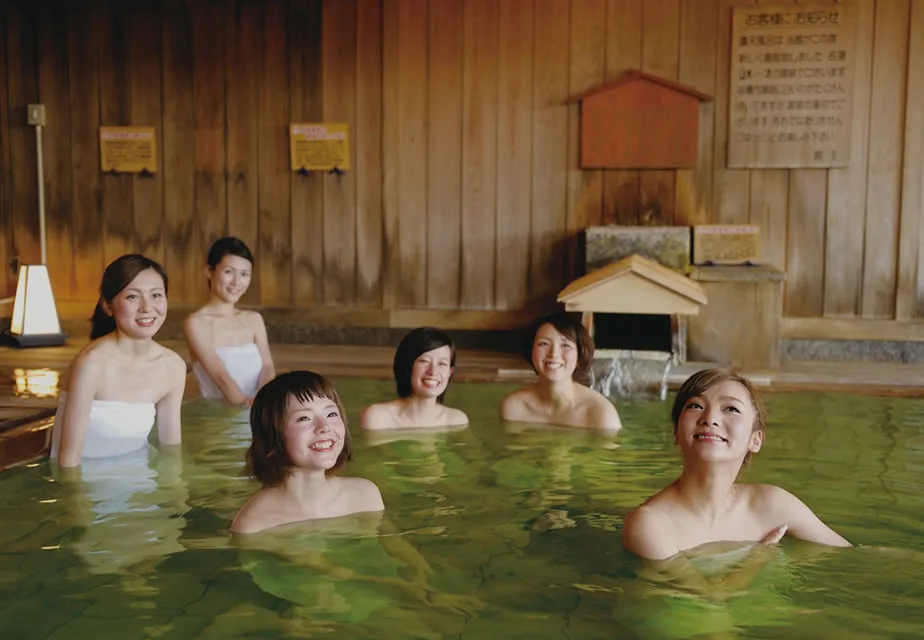
Tsukioka’s sulfur spring is known for its clear, green appearance. Masyuu links the hue to the spring’s sulfur compounds and notes how direct sunlight can make the water look brighter; as the light fades, it can seem deeper and darker. The local ryokan association says the colour also shifts with the season and weather, sometimes turning cloudy or milky. Those are the operators’ descriptions of what visitors may see, not a complete account of the chemistry behind the colour.
That variation is a poor way to judge a bath’s quality or strength. The roughly 50–51°C figure published for the source is its spring temperature, not the temperature of the bath you enter. Each inn manages the water in its own baths, so check the facility details rather than applying the district’s chemistry to every tub.
Where each ryokan uses Tsukioka’s source water
| Ryokan | Public baths | Private bath | In-room open-air bath |
|---|---|---|---|
| Shiratama-no-Yu Kahou | Its official page identifies the cypress and rock outdoor baths, sleeping bath and seated bath as being filled with its Shiratama-no-Yu source. | Source-water open-air bath; 60 minutes, up to six guests, ¥4,400. | Confirm the water for the exact room; the public page does not establish that every room bath uses the source. |
| Shiratama-no-Yu Senkei | The Tsukikagami and Hanakagami outdoor baths use the inn’s source. Public-bath hours are 5:30–10:00 and 15:00–24:00. | Two source-water baths, Tsubaki-no-Yu and Sakura-no-Yu; 40 minutes for ¥3,850, book by phone. | Heated water, not the hot spring. |
| Masyuu | Source water is used in the outdoor baths only. Indoor baths use heated water. | Akadama-no-Yu; 45 minutes for ¥2,200, by advance reservation after booking a stay. | Check the room description; its semi-open-air and view baths are heated water. |
Kahou is the easiest fit if you want several styles of outdoor bath and a longer private-bath slot. Senkei also has source-water charter baths, but its guest-room tubs are not a shortcut to the spring. Masyuu draws a clear line between its outdoor source-water baths and heated indoor or in-room baths. It does not accept day visitors, so access to its baths requires an overnight booking.
A private source bath is a separate booking
| Property / private bath | Price, duration and reservation |
|---|---|
| Kahou, either outdoor bath | ¥4,400 per 60-minute session; up to 6 people; phone reservation; available 6 a.m.–midnight |
| Senkei, Tsubaki-no-Yu or Sakura-no-Yu | ¥3,850 per 40 minutes; phone reservation; morning and evening availability |
| Masyuu, Akadama-no-Yu | ¥2,200 per 45 minutes; reserve after booking lodging; listed start times 4–10 p.m. |
These terms can change, and a room reservation does not necessarily hold a private-bath slot. Confirm the available time and how to reserve with the inn. At Masyuu, the two public baths also rotate between men and women by time of day; check the schedule for your stay if you have a particular outdoor bath in mind.
One other small detail matters at Masyuu: it says the outdoor source-water baths are not diluted with tap water, but they are circulated, filtered and heated, with fresh spring water added as used water overflows. “Undiluted” is accurate; describing them as wholly free-flowing is not.
What to check before choosing a room
If the green spring is the reason for your trip, decide whether the public outdoor bath is enough. A private source-water bath gives you a reserved slot; an in-room tub gives you privacy on your own schedule, but may use heated water instead. Senkei explicitly labels its open-air room baths as heated. Kahou’s public information names the outdoor source-fed baths and its charter baths, but does not verify every guest-room tub. Masyuu’s room page should be checked for the specific category you are considering.
Sulfur can darken silver and other precious-metal jewellery. Masyuu asks guests to remove jewellery before bathing; it is sensible to leave it in your room safe rather than risk discoloration. If you are sensitive to sulfur or strong smells, start with a short soak and see how you feel. The source temperature is not a recommended bathing temperature, and none of the spring’s promotional language is a guarantee of a health result.
For a quick comparison of Tsukioka lodging and bathing options, see the Tsukioka ryokan comparison and the private-bath and meal-plan guide.
Tsukioka Onsen, Niigata
Check which baths use the source
Bath access, private-bath reservations and room facilities differ by property. Confirm the details for your dates with the inn.
Sources
- [Tsukioka Onsen Ryokan Association: spring characteristics and colour](https://www.tsukiokaonsen.gr.jp/hot-springs/) - [Kahou: public baths, source water and private spa](https://www.kahou.com/onsen/) and [private-bath rates and hours](https://www.kahou.com/rt2016/iframe/onsen/private.html) - [Senkei: public and private baths](https://www.senkei.com/onsen/) and [guest rooms with open-air baths](https://www.senkei.com/room/open-air-bath/) - [Masyuu: bath water, colour, circulation, hours and jewellery notice](https://www.masyuu.co.jp/onsen/) and [room types](https://www.masyuu.co.jp/room/) - Photo credit: [Tsukioka Onsen Ryokan Association](https://www.tsukiokaonsen.gr.jp/)Checked: September 27, 2026
Tags: Niigata, Shibata, Tsukioka Onsen, sulfur spring, emerald-green hot spring, ryokan baths