Okuhida Ryokan with Free Private Baths: Four Inns Compared
Compare four Okuhida ryokan with included private baths, from Gizan’s four outdoor pools to Nakaodaira’s six all-private baths.
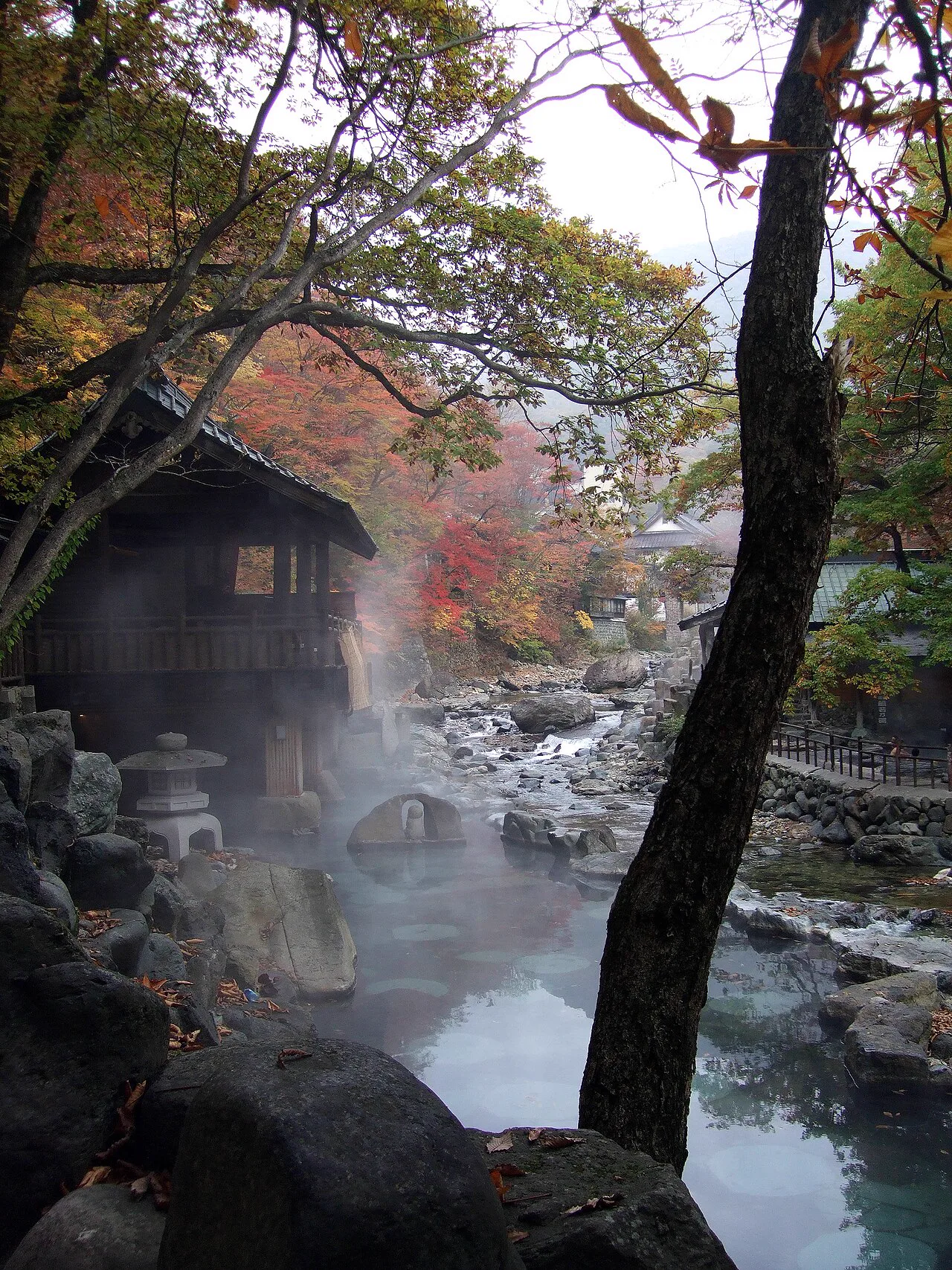
Four Okuhida inns include private bathing with an overnight stay, but “free private bath” describes very different arrangements. Ryokan Gizan has four outdoor baths guests can use without booking. Katsuragi-no-Sato has two. Miyama Ouan offers four pools, split between indoor and outdoor baths, with an electronic vacancy indicator. At Nakaodaira, all six baths are private-use, with no advance booking or fixed time limit.
The useful comparison is how much privacy you get, whether you can wash there, and how much planning the bath requires—not simply the number of pools. If you have not chosen an area yet, start with the Okuhida guide to its five hot-spring areas.
| Inn | Included private bathing | Access | Main trade-off |
|---|---|---|---|
| Ryokan Gizan | Four outdoor baths | Free, no booking; check the door indicator; listed as available 24 hours | No washing area in the private baths |
| Katsuragi-no-Sato | Two outdoor baths with hinoki indoor baths | Free and unreserved; listed bathing window is 3 p.m. to 10 a.m. | Fewer pools, so a popular time may mean waiting |
| Miyama Ouan | Four baths: two outdoor and two indoor | Free, no booking; use the electronic vacancy display | The baths are for soaking, not washing; published suggested session length differs between pages |
| Nakaodaira | All six baths are private-use: two outdoor, two large indoor and two small indoor | No booking or time limit; available to overnight guests when vacant | Only six rooms, farther into the mountains, and no regular day-use bathing |
Gizan: the clearest low-friction option
Ryokan Gizan in Shin-Hirayu lists four free private outdoor baths, available around the clock and used without reservations. Guests check the sign at the entrance and go in when a bath is vacant. That is a straightforward setup for couples and families who want to soak together without adding a per-session charge or coordinating a booking at check-in.
There is an important catch: the private outdoor baths do not have washing facilities. The inn directs guests to wash in the public bath first, then use a private pool for the soak. If avoiding shared changing and washing areas is the point of booking a private bath, confirm whether that routine works for your group before choosing a room.
Katsuragi-no-Sato: two baths within a secluded-stay setting
At Fukuchi Onsen, Katsuragi-no-Sato has two free private outdoor baths with hinoki indoor baths. They do not require advance reservations. The published bathing window runs from 3 p.m. until 10 a.m. the following morning, so guests can use them late into the night.
The property’s character is part of the choice: it is a small, detached-cottage-style inn with private dining in an irori setting. Choose it if that quieter format matters as much as the bath. Two pools are fewer than at Gizan or Miyama Ouan, and availability is still first come, first served.
Miyama Ouan: four baths plus a larger public-bath experience
Miyama Ouan in Hirayu has four free private baths—two outdoor and two indoor. Guests do not reserve a slot; an indicator shows whether each one is in use. The baths are available after check-in into the following morning, including late at night.
They are for soaking rather than washing, so guests who need shampoo and shower facilities still use the public bath. There is also a small inconsistency in the inn’s current pages: one recommends around 30 minutes per visit, another around 45. Treat those as guidance, not a guaranteed fixed rule, and ask the property if timing matters to your plans. Miyama Ouan also has a larger public bathing area and sauna, which makes it a different stay from a small inn built primarily around quiet and privacy.
Nakaodaira: a private-use bath is the normal way to bathe
Nakaodaira has six guest rooms and six baths, all used privately: two outdoor baths, two large indoor baths and two smaller indoor baths. Staying guests can use an unoccupied bath at any time, without reserving a slot or keeping to a stated time limit. This is not an extra perk attached to a conventional public bath; it is how the inn’s bathing setup works.
The inn publishes unusually detailed water-treatment information. Its source water is about 94.9°C, so it is cooled through heat exchange and dilution before reaching the supply point at roughly 44–47°C. The stated flow is around 45–80 litres per minute; the water is not recirculated or chlorinated. Those details do not mean the bath uses undiluted source water. They explain how a very hot spring is made suitable for bathing while continuing to flow through the tubs.
Nakaodaira sits farther into the Shinhotaka area and has very limited room inventory. It does not offer ordinary day-use bathing, so compare overnight availability and transport before building an itinerary around it.
Which arrangement fits your trip?
For a simple, included private outdoor soak, Gizan is easiest to understand. Katsuragi-no-Sato is a better fit if the detached rooms and quiet atmosphere are part of what you want. Miyama Ouan suits travellers who want private baths but also value a larger public bath and sauna. Choose Nakaodaira if avoiding shared bathing is the priority and you are comfortable staying farther from the main transport hubs.
Families should check the wash-up routine, not just the bath count. Gizan and Miyama Ouan explicitly separate washing from the private soak. Katsuragi-no-Sato’s bath includes a hinoki indoor tub, but its published details do not clearly establish every washing facility. At Nakaodaira, ask about the facilities in the specific bath you expect to use.
Private use should not be taken as an automatic tattoo-policy waiver. Where a formal policy is not published, ask the inn before paying. Room rates also vary by date, meals and room type; compare the same dates and cancellation terms rather than treating an association’s sample rate as a live quote.