Gokurakuyu Aomori: Hours, Prices, Baths and Getting There
Gokurakuyu Aomori charges ¥530, stays open until 1 a.m. and takes cash only; check the last bus and tattoo ban before a late visit.
Updated September 27, 2026.
Gokurakuyu is in Higashi-Ono, south of central Aomori. Its draw is practical: a natural-spring bath, outdoor pools, a carbonated bath, sauna and cold plunge for the same ¥530 adult ticket, with opening hours that outlast most day-use baths in the city. It is less useful if you need a private family bath or are relying on a late bus.
What admission costs—and what to bring
| Admission or item | Current price |
|---|---|
| Adult, age 12 and over | ¥530 |
| Child, age 6 and over | ¥200 |
| Child, age 3 and over | ¥100 |
| Age 2 and under | Free |
| Ten-visit ticket | ¥5,000 |
| Face towel | ¥220 |
| Rental bath towel | ¥220 |
| Toothbrush or razor | ¥100 each |
The adult price is the same on weekdays, weekends and public holidays. Shampoo and body wash are provided, so someone arriving without towels can budget ¥970 for admission plus one face towel and a rental bath towel. Bring your own towel if you would rather keep the cost at ¥530.
Admission and the ten-visit ticket must be paid for in cash. This is an easy detail to miss when most of the rest of a Japan trip has been contactless; stop at an ATM before arriving if cash is running low.
Children aged seven or older, or at least 120 cm tall, may not bathe in the opposite-sex bathing area. The operator’s rule uses either age or height, so check with staff if a child is near either threshold.
The natural spring is only one part of the water story
The indoor Shizen no Yu uses natural hot-spring water drawn from 986 metres below ground. The operator specifically says this bath is supplied without dilution. That statement applies to this named pool; it does not establish that every bath is undiluted, unheated, non-circulating or untreated. Current bath-by-bath handling details and a recent water analysis are not published.
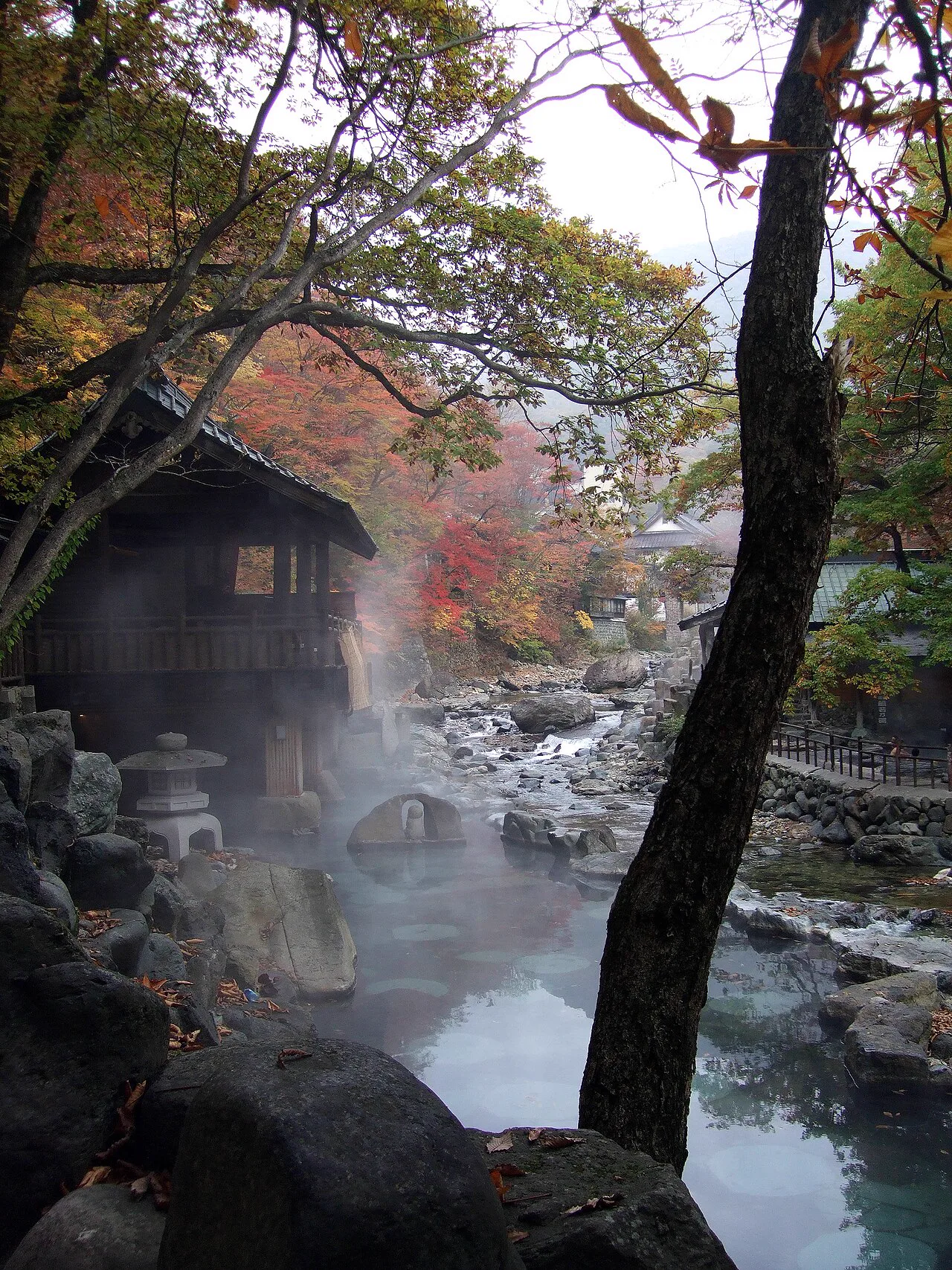
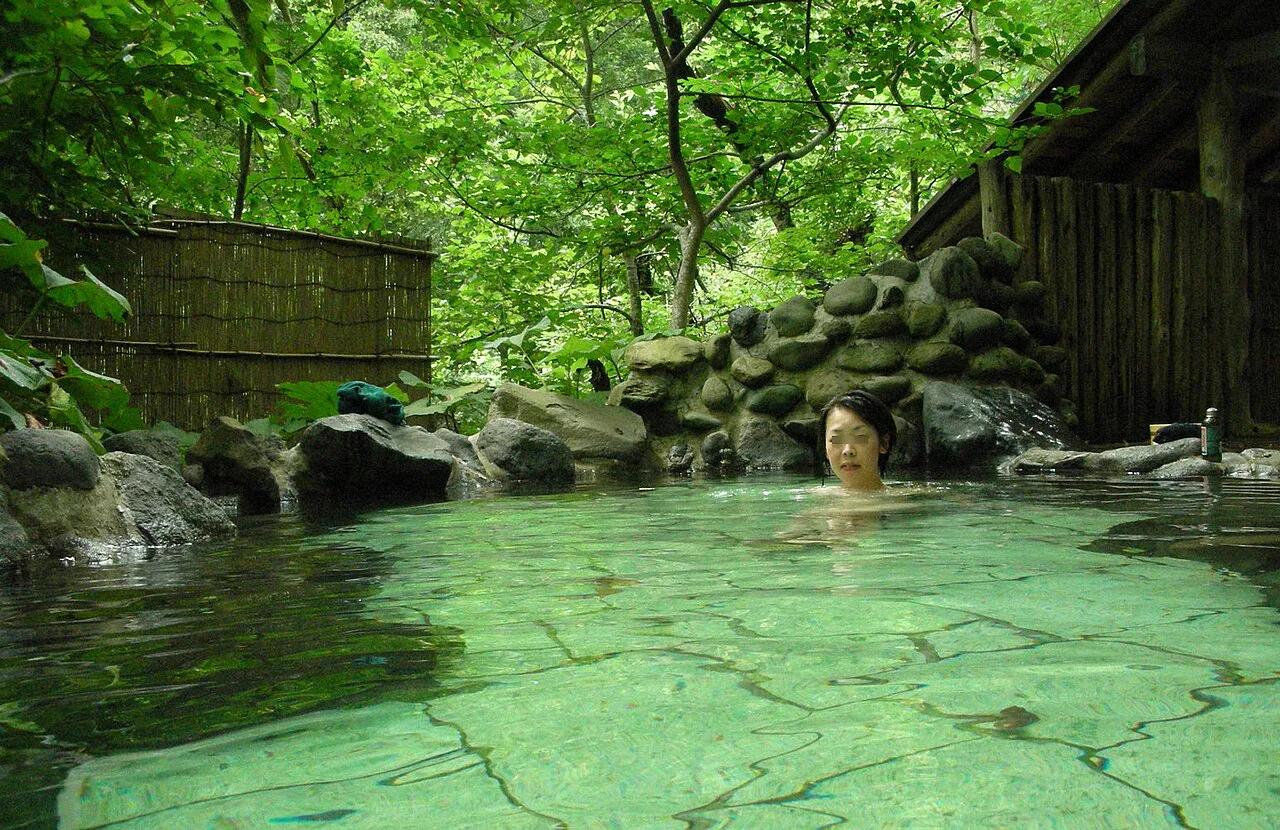
Other pools marked as natural spring include the outdoor rock bath and three individual ceramic tubs. The Aomori hiba bath in the outdoor Gokuraku-an area is labelled both natural hot spring and carbonated bath. That describes the bath’s features; it is not evidence that the source itself is naturally carbonated.
The rest of the layout gives you a few different ways to spend the visit: jet and shaping baths, a low-frequency electric bath, a far-infrared tower sauna and a cold plunge. The outdoor ceramic tubs are single-person pools, while the rock bath is the more open shared option. You can use the sauna without making a cold plunge part of the routine.
Late opening, earlier dinner service
| Service | Hours | Last admission/order |
|---|---|---|
| Bathing | 6 a.m.–1 a.m. | 12:20 a.m. |
| Restaurant, weekdays | 11 a.m.–11:45 p.m. | 11:30 p.m. |
| Restaurant, weekends and public holidays | 7 a.m.–11:45 p.m. | 11:30 p.m. |
The bath stays open later than the restaurant, so a late arrival can still soak but should not count on ordering a meal.
The building’s long hours are most useful after a day in Aomori or when dinner runs late. They do not guarantee a bus home at the same hour. Check the return service for your date before setting out; if the last departure has passed, arrange a taxi rather than planning around the bathhouse’s closing time.
Getting there from Aomori Station
The bathhouse is about a 15-minute ride from Aomori Station by Aomori City Bus. Use the station’s No. 6 boarding area. The operator lists Chuo Koko-mae on the M35 Asahimachi-dori line, B1 Shinmachi line and Hamada loop, or Maeda-dori on the M44 Asahimachi-dori line. It is not a station-front bath, and the facility’s access page does not give a walking time from either stop; check the map and route for the stop you choose.
Driving from Aomori-Chuo Interchange takes about five minutes, and the facility lists parking for 190 cars, including spaces behind the building. The Aomori Museum of Art and Sannai-Maruyama Site are each roughly 15 minutes away by car, making the bath a possible end-of-day stop on a driving itinerary rather than a natural extension of a station-area walk.
For a rail-based evening near Aomori Station, Aomori Machinaka Onsen is much closer to the station, though it closes earlier. The same city guide compares Gokurakuyu with other neighborhood baths by opening time, location and private-bath availability. If the next day is planned around the mountain route, see the Hakkoda day-use onsen guide before deciding whether a city bath or a mountain stop fits better.
Two restrictions to settle before you go
Gokurakuyu Aomori does not admit anyone with tattoos, including fashion tattoos. Tattoo stickers must be removed before entry. The operator says visitors who enter by mistake will still be asked to leave, so covering a tattoo or hoping staff will make an exception is not a workable plan.
The current facility and bathing pages do not list a reservable private or family bath. If a shared bathing area will not work for your group, look at a facility that explicitly offers private rooms, such as Asunaro Onsen, and check that property’s booking conditions before travelling.
Gokurakuyu makes the most sense when its late closing time and range of baths solve a specific scheduling problem. For a station-area soak, a private room or a tattoo-permitted facility, choose around that need rather than the ¥530 entry price alone.
Sources
- Gokurakuyu Aomori: admission, hours and access
- Gokurakuyu Aomori: bath facilities and spring-water descriptions
- Gokurakuyu Aomori: first-time visitor information and house rules
- Gokurakuyu Aomori: facility and restaurant hours
- Aomori City Bus: current web timetable and route lookup
Gokurakuyu Aomori, Aomori onsen, day-use hot spring, Aomori sauna, late-night bath, Aomori Station bus.