Atami Day Trip or Overnight Stay? Decide by What You Want After Sunset
Compare an Atami day trip with an overnight stay by train time, evening beach lights, fireworks, next-morning walks and the cost of moving hotels.
Atami makes an easy day trip from Tokyo. The Kodama Shinkansen takes about 50 minutes, so you can reach the coast, have lunch and visit a day-use bath without turning the journey into an expedition. The case for staying overnight is less about squeezing in another bath. It is about what you lose when you have to leave before the evening—and what the town is like the next morning.
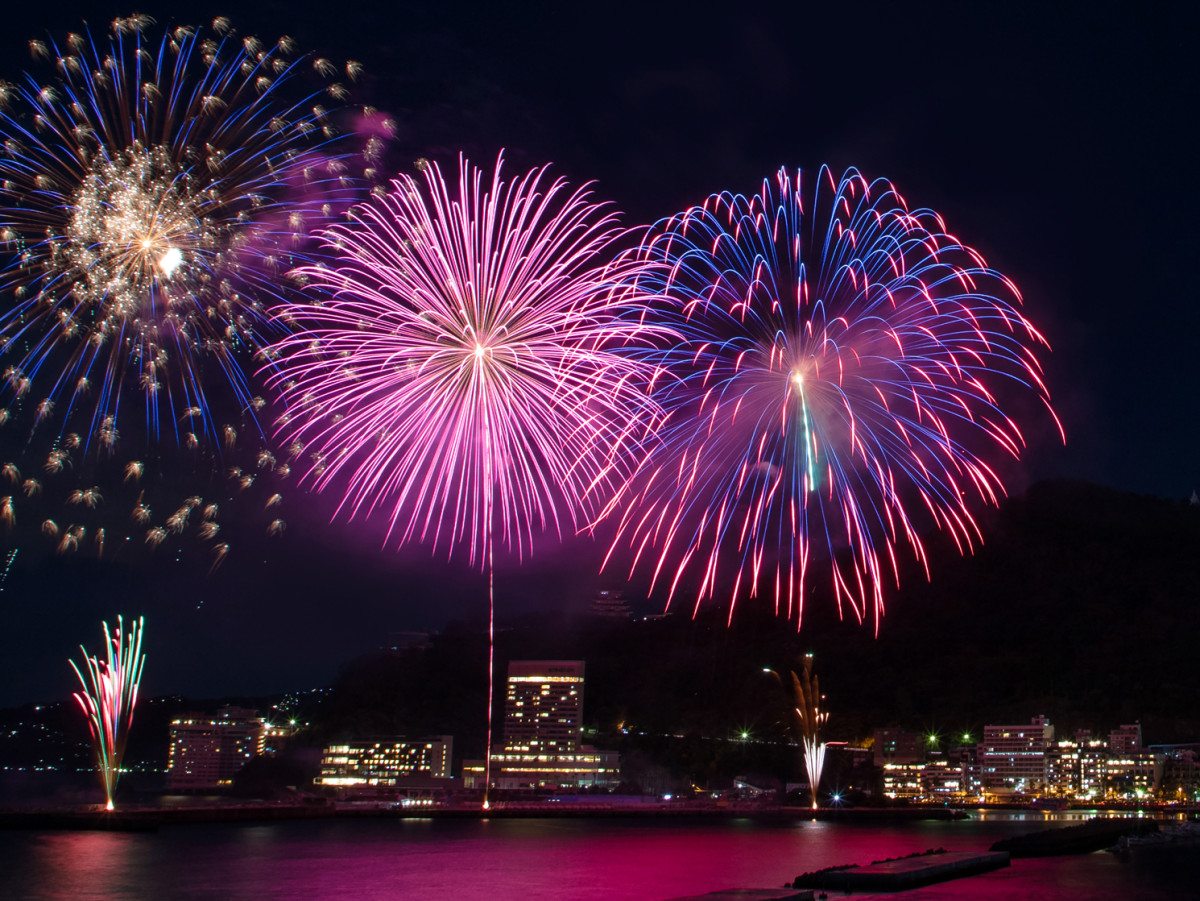
Sun Beach is lit from sunset until 10 p.m. on ordinary nights, and the Atami sea fireworks run on dates across the year. If either is central to your visit, a bed nearby changes the shape of the trip. If your plan is lunch, a stroll and one onsen before heading back, a day trip is often enough.
The Atami fireworks guide has current viewing and crowd details.
A day trip works when you keep it to one part of town
The train is quick; the local geography still takes time. Sun Beach is downhill from Atami Station, while MOA Museum of Art and some hotels sit above it. A day with a beach walk, lunch and one onsen is relaxed. Add several far-apart sights and multiple baths, and the trip starts to revolve around buses and slopes.
One sensible outline is: arrive in the morning, explore the station area or waterfront, have lunch, choose one main walk or attraction, then spend the afternoon at a single day-use bath before returning. The best bath is the one whose opening hours leave enough room for your return train, not necessarily the one with the longest facility list.
Day-tripping also makes sense if you already have a Tokyo hotel booked and do not want to pack, store luggage and move rooms for one night. You can leave your base alone and come back after dinner, provided the return train fits your plans.
Staying changes the evening, not just the number of hours
Sun Beach’s nightly lights run from sunset to 10 p.m., except while fireworks are being launched. A visitor heading back to Tokyo has to choose between staying for the evening and making the train. Someone sleeping nearby can have dinner, take another walk along the water and return to the hotel without watching the clock.
Fireworks make that choice especially clear. The 2026 displays are scheduled on dates in spring, summer, autumn and winter, usually from 8:20 to 8:40 p.m. The official event page warns that Atami Station is very crowded after the show.
It asks visitors to prepare return tickets or IC cards in advance and notes that buses and taxis can be difficult to board immediately after the display. If the show is the point of the trip, staying overnight is the lower-stress option. Check the current date and transport notices before booking around an event.
The following morning is another quiet window. At the waterfront you can walk before the day’s visitors arrive; near the station, you can have breakfast and leave straight from the JR hub. Where you stay should match whether the evening or the early train matters more.
The official Sun Beach guide also points to sunrise over the horizon. That gives the same stretch of coast three distinct windows: daytime swimming in season, lights after sunset and a quieter walk in the morning. You do not need to schedule all three, but the morning is one of the things a day trip cannot easily add.

What does a night actually add?
There is no reliable single price for “one night in Atami.” Rates vary with the date, room, meal plan, cancellation terms and proximity to fireworks. Compare the total for the same room and conditions, then add transport and any day-use admission. A solo room rate is not a useful stand-in for a couple’s total, and a dinner-included plan should be compared with another dinner-included plan.
It may be worth staying if the inn itself is part of your itinerary: an included dinner, a room with a bath or time to use the hotel’s public baths all take more than a quick check-in. If you will arrive late, leave early and spend most of the visit outside, a day trip may give you more of what you came for at lower total cost.
Three trip shapes that tend to work
A straightforward day out: Take a morning train, spend the day around the station and beach, visit one bath, then head back before the last stretch of the evening rush.
A slower overnight: Arrive after lunch, leave your bags, explore one area, enjoy dinner and the lit waterfront, then take an easy morning walk before checking out.
A fireworks stay: Arrive early enough to check in before the crowds build, confirm your dinner timing, watch from a suitable spot and walk back rather than trying to catch an immediate taxi. Summer hotel viewing areas can have their own eligibility rules, so ask the property rather than assuming any guest can use them.
The short answer
Go for the day if you want a beach, a meal and one good soak, or if moving hotels would be a nuisance. Stay if the night sea, fireworks, ryokan dinner or next-morning walk matters to you. Atami is close enough that neither choice is a compromise; the useful question is whether you want the town only by day.
Who can skip the overnight?
A day trip is usually enough if you plan to visit one high-quality bath, have little interest in the night view and will not be using Atami again the next morning. It is also a sensible choice if your Tokyo hotel is already booked and moving bags for a single night would cost time. There is no need to stay simply because Atami is a hot-spring town.
Who will get more from staying?
An overnight stay is easier to justify when the fireworks are the main event, when you want a ryokan dinner and its baths to be part of the trip, or when seeing the waterfront after dark and before the day crowds arrive matters to you. It is also a practical buffer for an afternoon arrival from Haneda: come to Atami, check in, then explore the following day instead of squeezing a return to Tokyo into the same evening.
A simple two-person cost check
There is no single fair price for “day trip versus one night.” Compare the actual round-trip fare, two day-bath tickets, meals and hotel total for the same date and room conditions. Fireworks dates, weekend demand, a sea-facing room and a dinner plan can all shift the lodging total. If the hotel price is not yet confirmed, keep it as an open line rather than substituting a solo rate or an unrelated date.
Tattoo policy
There is no city-wide rule for every bath in Atami. If you plan to visit a day-use facility or hotel bath, check its own policy before travelling; a policy at one property does not carry over to another.
Sources
- Atami City Tourism Association: Sun Beach hours and access
- Atami City Tourism Association: 2026 fireworks dates and post-show guidance
- Atami City Tourism Association: Enjoying the fireworks
- JR Central: Atami Station
- Wikimedia Commons: Atami Sun Beach at night
- Wikimedia Commons: Atami Sun Beach
- Wikimedia Commons: Atami fireworks photo
Tags: Atami day trip, Atami overnight stay, Atami fireworks, Sun Beach at night, Tokyo onsen trip