Tokyo to Atami: Shinkansen, Local Trains and the Easiest Route from Haneda
Compare Shinkansen and local trains to Atami from Tokyo or Haneda, with 2026 fares, transfer times, beach access and fireworks-night advice.
Atami is close enough to Tokyo for a day trip, but the ride you choose changes how much of the day you get back. The Tokaido Shinkansen’s Kodama takes about 50 minutes from Tokyo; the conventional Tokaido Line costs less but takes longer. Coming off a flight at Haneda, the simplest rail connection is usually Keikyu to Shinagawa, then a Shinkansen to Atami.
The Atami fireworks and viewing guide covers the evening crowds and where to watch. For a normal day, start with the route that fits your schedule rather than defaulting to the fastest train.
From Tokyo Station: pay for the shorter ride when the day is tight
The Kodama is the straightforward choice if you want a proper stretch of time in Atami. The city’s tourism association quotes a journey of around 50 minutes from Tokyo. JR Central’s timetable shows the trains that stop at Atami; check the service name and stops when booking rather than assuming every Tokaido Shinkansen does.
Conventional Tokaido Line trains are useful when the fare matters more than the clock. They run from Tokyo-area stations, including Shinagawa and Yokohama, but the journey is substantially longer. That can work well for an unstructured day with no timed spa booking or fixed dinner. It is less appealing if you only have a few hours in Atami.
JR East revised its fares on March 14, 2026, and the Tokyo–Atami fare calculation now treats the conventional line and the Shinkansen as separate routes. Check the fare for your date and ticket type in the JR planner. A Shinkansen total includes a separate limited-express charge, and reserved seats can cost differently from non-reserved seats.
For a baseline, the adult one-way fare on the conventional Tokaido Line is about ¥2,090; two adults travelling there and back pay about ¥8,360 before any local connections. That is not the Shinkansen total. Add its limited-express charge and check whether you are buying a reserved or non-reserved seat. From Haneda, the Keikyu fare to Shinagawa is another separate leg.
Landing at Haneda? Change at Shinagawa
Keikyu lists its fastest Haneda Airport–Shinagawa journey at about 14 minutes. From Shinagawa, transfer to a Kodama bound for Atami. That avoids travelling north into Tokyo Station only to head southwest again.
The 14-minute figure is the train ride, not the airport-to-hotel journey. International arrivals still need time for immigration, baggage collection and the walk to the Keikyu platforms. At Shinagawa, allow time to leave the Keikyu area, find the Shinkansen gates and wait for a train that stops at Atami. Keikyu’s fare is separate from the JR ticket.
Your flight’s arrival time is only the first leg. Allow for immigration, baggage, the walk to Keikyu, the Shinagawa transfer, the next Kodama and local transport to the hotel. If dinner is included, plan to reach the inn before meal service; arriving at Atami Station is not the deadline.
If your hotel serves dinner at a fixed time, work backwards from the dining-room deadline. “The flight lands at 4” is not the same as “I’ll be at the hotel by 6.” Hotels on the waterfront or up in the hills may add a bus, shuttle or taxi leg after Atami Station.
Atami Station is uphill from the beach
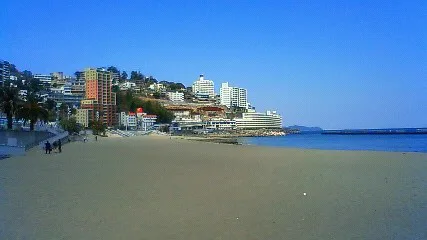
Reaching Atami by train does not put you on the sand. The city tourism site puts Sun Beach about a 20-minute walk from the station, or around five minutes by bus toward Atami Port or Momijigaoka followed by a short walk. The walk down is manageable for many people; the return climb with a suitcase is a different proposition.
MOA Museum of Art sits in the other direction, above the station. Local buses serve the museum; check the current timetable before leaving the station rather than counting on a spontaneous walk. Atami’s attractions are spread between the station, the shoreline and higher ground, so allow for local transport in addition to the intercity train.
For a short visit, it helps to decide whether the day is centred on the waterfront or on the higher-ground sights. Sun Beach is about 20 minutes downhill from the station on foot; the MOA Museum is reached by a separate bus in roughly ten minutes. With luggage, leave it at the station or your accommodation before choosing either route.
When a local train is the better fit
The conventional Tokaido Line makes sense if you are starting from Shinagawa, Yokohama or another station on the route, have no timed reservation and would rather keep the fare down. It is also a good fit for a relaxed day with no tight dinner seating or evening connection. The trade is a longer ride, so it becomes less attractive when you have only half a day or want to fit in an afternoon bath with a fixed opening window.
On a fireworks date, decide on the return train first. The show usually ends at 8:40pm, but the walk out and station crowd take time. If you do not want to leave early or wait through the post-show crush, an overnight stay makes more sense than relying on a tight last-train plan.
Fireworks nights need a return plan
Atami’s official 2026 schedule lists fireworks throughout the year, generally from 8:20 to 8:40 p.m. (the July and August displays begin at 8:15). The tourism association warns that Atami Station gets crowded after the show and recommends buying the return ticket or charging an IC card beforehand. Buses and taxis around the venue can also be hard to board immediately after the display.
If you are returning to Tokyo that night, decide on your last train before you plan dinner or an onsen visit. Staying overnight avoids the rush to get back to the station and gives you time for the beach after dark. The current event schedule can change, so check the official listing close to your date.
Which train fits your day?
Take the Shinkansen if Atami is a one-day trip, you have a timed reservation, or you need the evening back in Tokyo. Use a conventional train when the lower fare is worth a longer ride and you can keep the schedule loose. From Haneda, connect through Shinagawa and build in a generous airport buffer.
The useful comparison is not simply “cheap versus fast.” It is the amount of Atami time you want to buy back, weighed against the separate Shinkansen surcharge and your onward plans.
Continuing south to Ito or the Izu Peninsula
Atami is also a useful change point if you are heading to Ito or the east coast of the Izu Peninsula. JR Central lists the Tokaido Line at Atami, alongside the JR East Ito Line. You can stay in Atami for a night, then continue south the next day instead of returning toward Tokyo. A station-area hotel is handy with bags; choose a waterfront stay if the evening in Atami matters more than making an early onward connection.
Three routes that work in practice
Tokyo day trip: Tokyo Station → Kodama to Atami → one main area, lunch and one day-use bath → return to Tokyo. Best when the saved time matters more than the Shinkansen fare.
Haneda arrival and overnight: Haneda → Keikyu to Shinagawa → Kodama to Atami → check in, have dinner and use the hotel bath. Build in an airport buffer and do not book dinner against the flight’s landing time.
Lower-cost, unhurried day: Take a conventional train from Tokyo, Shinagawa or Yokohama, keep the schedule open and return before the evening becomes a hard deadline. It works when the train ride is not the main thing you are trying to avoid.
Tattoo policy
This transport guide does not establish a single tattoo rule for Atami. Policies vary by bath and hotel; check the specific facility before adding it to your route.
Sources
- Atami City Tourism Association: Access
- Atami City Tourism Association: Sun Beach access and lighting
- Atami City Tourism Association: 2026 fireworks schedule and crowd guidance
- Atami City Tourism Association: Local bus routes
- JR Central: Atami Station
- JR Central: 2026 Tokaido Shinkansen timetable
- JR East: 2026 fare revision
- Keikyu: Haneda Airport train access
- Wikimedia Commons: JR Atami Station photo
- Wikimedia Commons: Atami Sun Beach photo
- Atami City Tourism Association: Sun Beach photo and listing
Tags: Tokyo to Atami, Haneda to Atami, Atami Shinkansen, Atami transport, Atami day trip