Yutagawa Onsen’s Two Public Baths: Shomen-yu and Ta-no-yu
Compare Shomen-yu and Ta-no-yu in Yutagawa Onsen, with ¥300 admission, short opening hours, entry steps, child pricing updates and access notes.
Yutagawa Onsen has two small community baths, Shomen-yu and Ta-no-yu. They share the same current adult contribution—¥300—and the same published hours, but the rooms feel quite different. Shomen-yu is the more spacious, central bath beside the footbath and the route to Yuzusame Shrine. Ta-no-yu, in front of Kyubei Ryokan, is only about four tatami mats in size and feels much closer to a neighbourhood bath.
Check the clock before you go
Both baths are open 7:30–8:30 and 11:00–19:00, with cleaning from 8:30 to 11:00. That one-hour morning session is easy to miss. If you arrive from central Tsuruoka around 9 a.m., neither bath is available until 11; for most day-trippers, arriving shortly before the second opening is less rushed than chasing the early slot.
| Detail | Shomen-yu | Ta-no-yu |
|---|---|---|
| Adult contribution | ¥300 (junior high age and over) | ¥300 (junior high age and over) |
| Children | Current July 2026 notice says children through elementary-school age are free | Same notice applies |
| Hours | 7:30–8:30, 11:00–19:00 | 7:30–8:30, 11:00–19:00 |
| Feel | Roomier and near the centre’s main sights | Very compact, in front of Kyubei Ryokan |
The tourism association’s fee notice, dated 7 July 2026, says children through elementary-school age are free. A static page elsewhere on the same site has older wording about elementary-school children paying, so confirm at the shop if travelling with children.
Which bath should you choose?
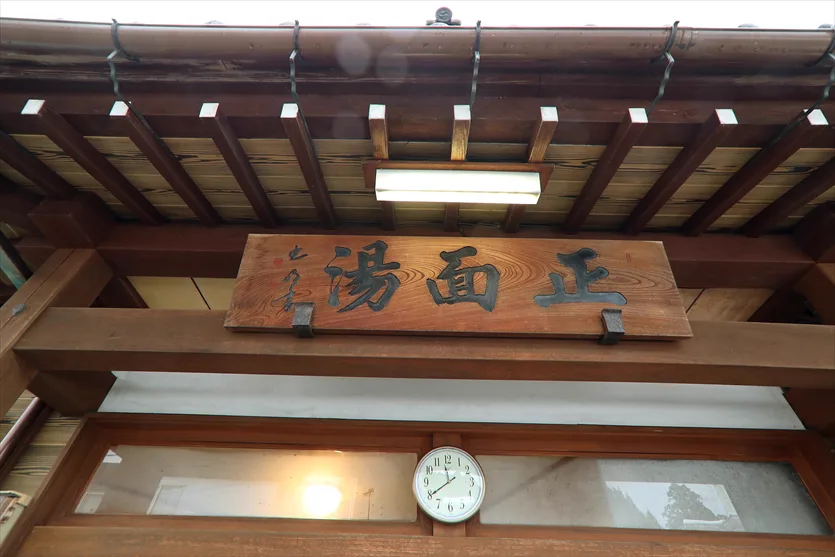
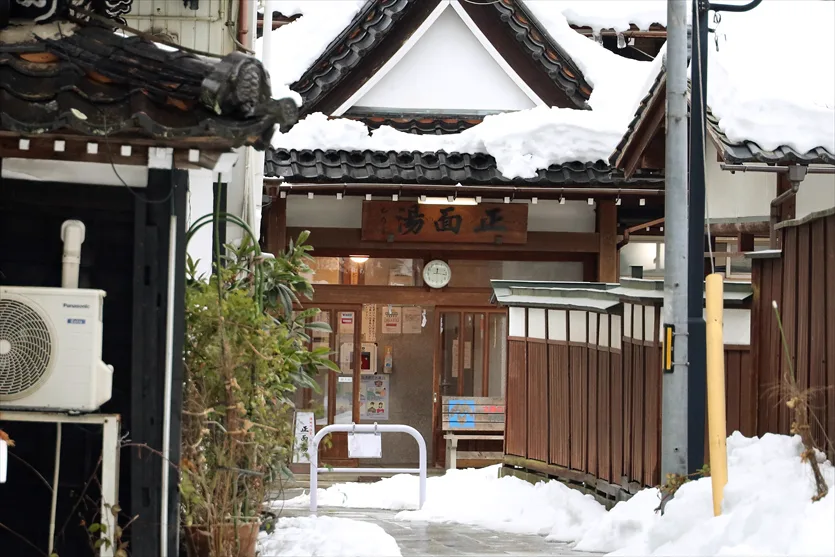
For a first visit, Shomen-yu is the straightforward pick. It stands at the heart of the hot-spring district, with the small Shirazagi-no-yu footbath and the approach to Yuzusame Shrine nearby. The building’s traditional roofline is part of the scene, and the bath is described by the association as the roomier of the two.
Ta-no-yu is not a scaled-down spa. Its roughly four-mat footprint means the experience depends on how many people are there at once. Go when you want a short, quiet soak in a very local setting, not a broad range of facilities. If you are with a large group, splitting up or choosing Shomen-yu is more considerate.
Neither is a full-service bathing complex. The association says Shomen-yu has no shower, soap, shampoo, washbasin or hair dryer. Bring a towel and washing supplies rather than expecting hotel-style amenities. Its current public pages describe both baths as natural, free-flowing hot springs without added water, reheating or recirculation.
A note on the spring temperature
The latest analysis sheet cited by the association records the Yutagawa No. 1 source at 42.0°C, pH 8.6, with a sodium-calcium sulfate classification. That is the source temperature, not a guaranteed temperature in either bath. The association says the communal baths do not add heat, but the water can still lose heat between the source and the tub; it does not publish a fixed bathing temperature for Shomen-yu or Ta-no-yu.
Entry is not a walk-up ticket machine
Day visitors should stop at Funami Shoten to buy an admission ticket and ask the shop to help open the bath. Guests staying at a Yutagawa inn should follow their accommodation’s instructions. This is a small operational detail, but one worth knowing before you arrive at the door.
The bus from Tsuruoka Station takes roughly 30 minutes. Check Shonai Kotsu’s timetable for your travel date, and leave enough time for the gap between the two bathing sessions. Yutagawa’s seasonal Shirazagi-no-yu footbath generally operates from late March to late November; the association says it is not available at night.
Sources
- Yutagawa Onsen: communal baths and local information
- Yutagawa Onsen Tourism Association: current bath contributions, 7 July 2026
- Shonai Kotsu: local bus information
Tags: Yutagawa Onsen, Tsuruoka, public baths, day-use onsen, Yamagata