Hijiori Onsen Day-Use Baths: Which One Is Open, and Which Fits Your Day?
Caldera Onsenkan is Hijiori’s clearest public-bath option. Check the status of Kaminoyu, ryokan day-use availability and limited bus service before going.
Checked: September 27, 2026
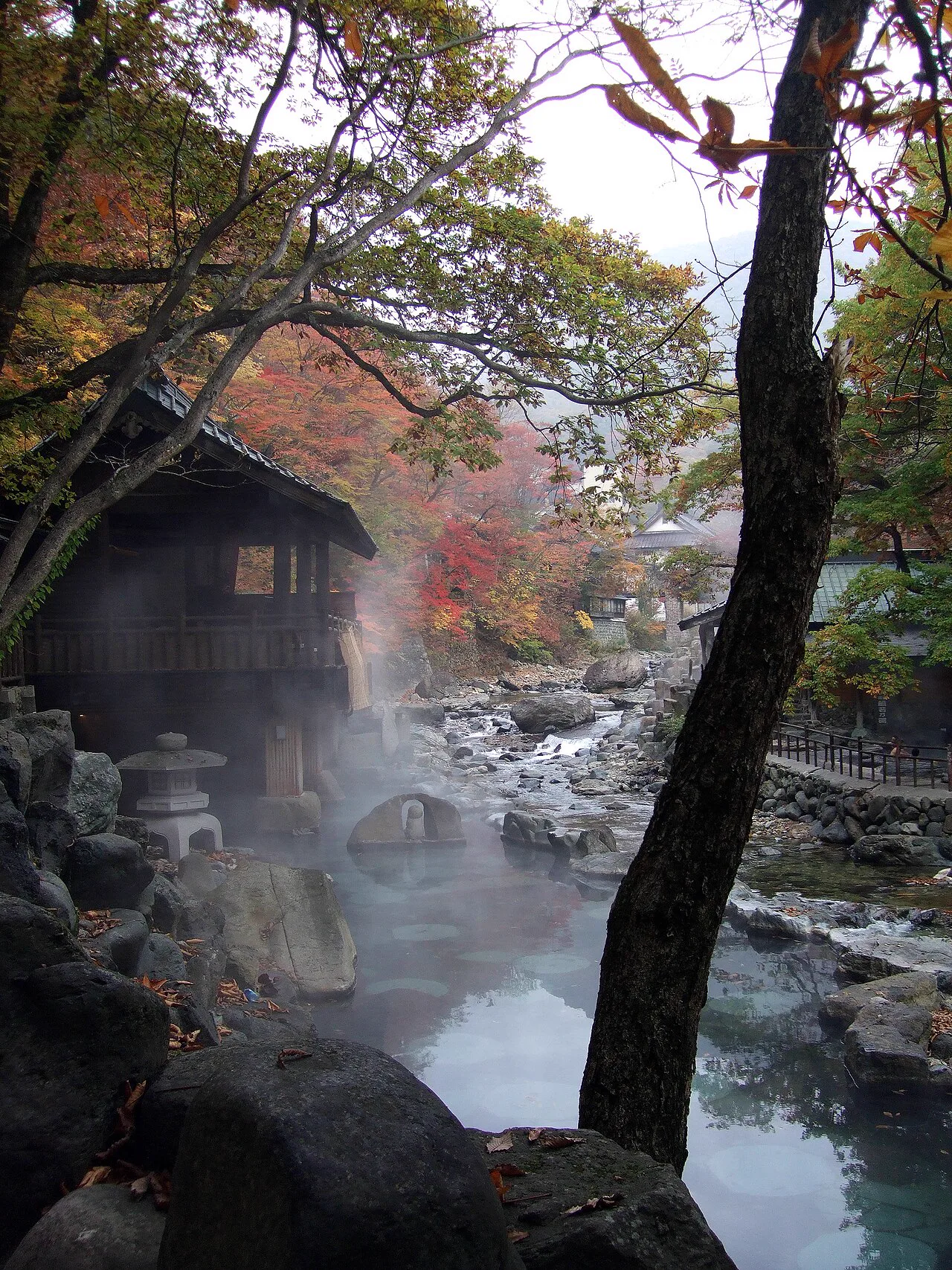
Hijiori is a small hot-spring town with a strong toji tradition: people have long stayed here to spend time in the baths, rather than treating the place as a quick stop between attractions. That changes how day-use bathing works. Alongside the ryokan baths, there is one public facility outside the main street, and the status of the town’s communal bath can change.
If you want one easy-to-understand choice, start with Caldera Onsenkan. Pick Oyado Daikokuya for an inexpensive ryokan bath with an optional private bath, or Yuyado Motokawarayu for a short visit built around its mountain-and-river-facing baths. As of September 27, 2026, do not build a plan around Kaminoyu: the tourism association’s current notice list does not show a reopening notice after its September 1 temporary-closure announcement.
| Bath | Adult admission | Published day-use hours | What makes it different |
|---|---|---|---|
| Caldera Onsenkan | ¥500 | Apr–Nov, 9:30 am–7 pm; Dec–Mar, 10 am–4:30 pm; reception closes 30 minutes earlier | A hot bath plus a separate natural cold carbonated spring |
| Oyado Daikokuya | ¥400 for the large bath | Noon–5 pm; the inn may close to day visitors when busy | Low-cost ryokan bath; private and room-rest options are separate plans |
| Yuyado Motokawarayu | ¥600 | Usually 1–4 pm | Fourth-floor baths with views; the inn describes its water as 100% source-fed and neither diluted nor heated |
| Kaminoyu | ¥400 on the regular listing | Normally 8 am–6 pm Apr–Nov and until 5 pm Dec–Mar | A central communal bath; check its current operating status before relying on it |
Caldera Onsenkan has two different kinds of water
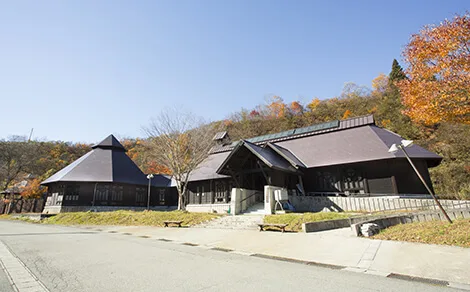
Caldera Onsenkan sits in the Golden Onsen area, roughly 1.5 km from Hijiori’s main street. The indoor bath and alternating-gender outdoor bath use the Golden Onsen No. 7 spring. There is also a separate cold mineral spring rich in carbon dioxide, called Caldera Tansansen. It is used for drinking and partial hand-and-foot bathing; it is not simply the hot bath cooled down.
| Detail | April–November | Winter |
|---|---|---|
| Hours | 9:30 a.m.–7 p.m. | 10 a.m.–4:30 p.m. |
| Admission | Adults ¥500; elementary-school pupils ¥200; younger children free | Same listed admission |
| Last reception | 30 minutes before closing | 30 minutes before closing |
The facility is usually closed Tuesdays and Wednesdays, with holiday exceptions. Check its notice before making a special trip.
The outdoor bath alternates between men and women, and there is no washing area in that section. Wash in the indoor bath first, and confirm the day’s arrangement if the outdoor bath is the reason you are going. In winter, the walk from town is a more serious consideration than the map suggests: Hijiori gets heavy snow, and 1.5 km on a snowy road is not the same as a casual summer stroll.
Daikokuya is the budget ryokan option
Daikokuya’s current day-use plan lists its shared large bath at ¥400 per person, generally from noon to 5 pm. The inn notes that day-use access is not guaranteed when it is busy. A private bath is listed at ¥1,000 per person for roughly 30 minutes, while a separate room-rest plan costs ¥2,000 and runs between 10 am and 4 pm. Confirm the arrangement directly if you are travelling a long way or need the private bath.
The ryokan draws on a blend of springs. Its published source analysis gives 84.6°C and pH 6.9, while its Q&A says the bath is adjusted to around 43°C. Those figures describe different things: the source is very hot, but the bathing water is moderated. Daikokuya says the water flows through the bath, with water added for temperature control; “flow-through” does not automatically mean “never diluted.” Its detached rock bath closes in winter because of snow.
Motokawarayu is a short, view-focused stop
Yuyado Motokawarayu usually accepts day visitors from 1 pm to 4 pm for ¥600. Day visitors use the fourth-floor Jizō-no-Yu and Kannon-no-Yu baths, whose large windows face the surrounding mountains and river. The inn describes its water as 100% source-fed without dilution or heating.
That three-hour window is the catch. Maintenance or the inn’s own operating needs can also affect day-use access, so a late arrival is risky. A source-temperature table on the inn’s site refers to a different spring combination from the water described for the fourth-floor baths; it should not be copied over as the precise source temperature for the day-use tubs.
Check Kaminoyu and Ideyu-kan before using older guides
Kaminoyu is Hijiori’s central communal bath. Its normal listing gives adults a ¥400 admission and seasonal hours, but the Okura Village Tourism Association announced a temporary closure on September 1, 2026. The association’s notice page, checked September 27, has newer general event posts but no visible reopening notice. That does not establish that the bath is permanently closed; it means the regular-hours listing is not enough to confirm that it is open today. Call the tourism association before going.
Hijiori Ideyu-kan is a separate case: day-use bathing there ended on March 23, 2025. The building still has tourist information, a dining room and a rest area, but older pages describing it as a day-use bath are out of date.
Getting there without a car
The Hijiori Yukemuri Line connects Hijiori Onsen with Shinjo. Okura Village lists six departures from Hijiori on weekdays and four on weekends and public holidays.
The village timetable page was last updated in December 2023, and its linked seasonal holiday PDF is for December 2024–January 2025. These establish the route, not a current departure time. Check the official timetable for your date in both directions before choosing a bath.
For a no-car visit, it is usually simpler to spend time in the main street and choose one ryokan bath there than to walk out to Caldera Onsenkan and double back. If the public facility is your priority, make it the destination and plan your return around the bus. The separate airport taxi service is seasonal and has its own eligibility conditions; it is not a substitute for checking local bus times.
For other small-town bathing options in the region, see Semi-no-Yu in Semi Onsen and Akakura Yukemurikan.
Sources
Sources
- [Hijiori Onsen: day-use baths](https://hijiori.jp/day/) - [Hijiori Onsen: announcement ending day-use bathing at Ideyu-kan](https://hijiori.jp/ideyukarudera202504/) - [Caldera Onsenkan: official site](https://www.ideyukaruderakan.com/) - [Okura Village Tourism Association: Kaminoyu](https://ohkura-kanko.com/archives/kanko-info/kaminoyu) - [Okura Village Tourism Association: notices](https://ohkura-kanko.com/news) - [Okura Village: Hijiori Yukemuri Line bus information and timetables](https://www.vill.ohkura.yamagata.jp/kurashi_tetsuzuki/doro_kotsu/kokyokotsu/1/bus.html) - [Oyado Daikokuya: day-use plans](https://www.oyado-daikokuya.com/plan.html) - [Oyado Daikokuya: baths](https://www.oyado-daikokuya.com/furo.html) - [Oyado Daikokuya: hot-spring Q&A](https://www.oyado-daikokuya.com/qp.html) - [Yuyado Motokawarayu: baths and day-use visits](https://irori.in/hotspa/)Tags: Hijiori Onsen, Yamagata, day-use onsen, Caldera Onsenkan, ryokan baths