Ryujin Onsen Day Trip: Motoyu, Kirari Ryujin or Shimogoten?
Compare Motoyu’s longer day-use window, Kirari Ryujin’s 11 a.m.–3 p.m. access and Shimogoten’s conflicting published hours.
Ryujin Onsen is often described as one of Japan’s “three beauties’ baths.” For a day trip, the useful distinction is less romantic: how late you arrive, whether you have a car, and whether you want a simple public bath or a hotel setting. Niuyamasemi Onsen is also in Ryujin Village, but it uses a different spring and sits about a 40-minute drive from the main hot-spring town. It is not a fourth stop to add on foot.
The details below follow operator and tourism-association pages reviewed on September 7, 2026. The day-use hours at Shimogoten and the seasonal schedule at Niuyamasemi have conflicting or temporary notices; confirm directly before travelling.
Compare the day-use options
| Bath | Adult admission | Planning hours | Best fit |
|---|---|---|---|
| Ryujin Onsen Motoyu | ¥1,000 | 7 a.m.–9 p.m.; last entry 8:40 p.m. | A first visit, a flexible schedule or a soak after the bus ride into the mountains |
| Kirari Ryujin | ¥1,000 | 11 a.m.–3 p.m. for day visitors | A hotel-style bath if you arrive around midday |
| Shimogoten | ¥1,200 | Plan around noon–2:30 p.m.; verify first | A historic inn and riverside setting, when day use is confirmed |
| Niuyamasemi Onsenkan | Listings show ¥700 or ¥800 | Temporarily limited dates; call before going | A separate forest-and-river outing by car, not a town-centre bath stop |
Motoyu and Kirari cost the same for adults, but they do not offer the same amount of time. For an afternoon arrival, Motoyu is the safer choice. Kirari makes more sense around lunch, when its shorter window still fits.
Motoyu: the simplest first stop
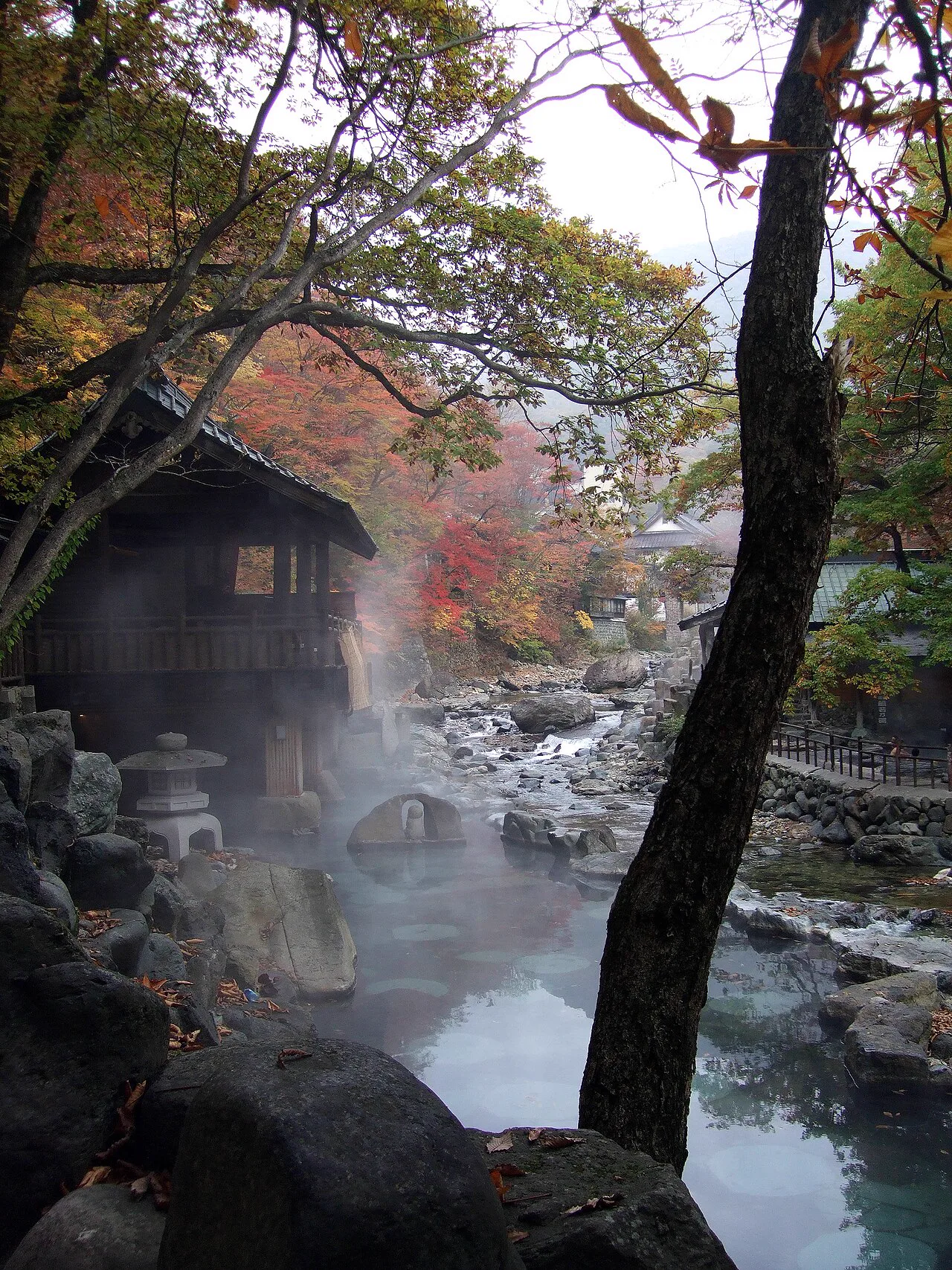
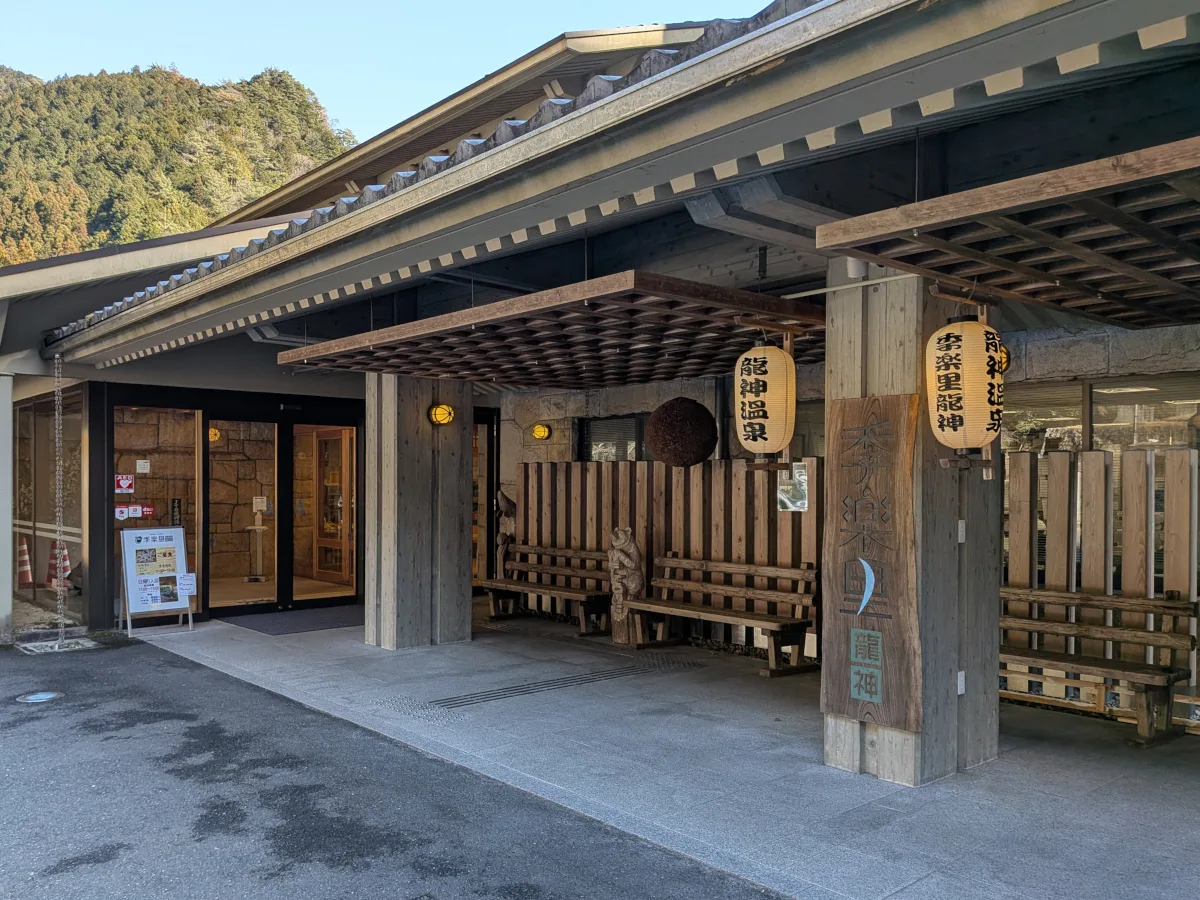
Motoyu is Ryujin’s public bath. The operator and Ryujin Tourism Association identify the spring as a sodium bicarbonate hot spring. Indoor baths include hinoki and rock baths, and the outdoor bath looks over the Hidaka River.
| Motoyu day use | Published terms |
|---|---|
| Adult | ¥1,000 |
| Elementary-school child | ¥500 |
| Preschool child | Free |
| Hours | 7 a.m.–9 p.m. |
| Last entry | 8:40 p.m. |
The tourism association describes Motoyu as a source-fed public bath and says its water is replaced daily. Technical listings describe a combination of recirculation and flow-through use, with some pools treated differently from others. Avoid turning that into a claim that every tub is untreated, continuously flowing source water.
Winter schedules can differ from the usual 7 a.m. opening. If you are travelling by bus from Kii-Tanabe, check the return service before you settle in; the mountain route is not frequent enough to assume another bus will come soon.
Kirari Ryujin: comfortable, but only a midday day-use window
Kirari Ryujin’s day-use admission is also ¥1,000 for adults and ¥500 for elementary-school-age children. The hotel currently says that, for the time being, day visitors may bathe from 11 a.m. to 3 p.m. Its baths include indoor and outdoor areas, with a sauna in both men’s and women’s facilities.
This is a good match if you reach Ryujin around midday and prefer a hotel setting. It is not an all-afternoon backup for Motoyu: the operator’s current window ends at 3 p.m. Some association pages still show a later closing time, so use the hotel’s own onsen page for the current day-use notice.
The hotel draws from the Ryujin spring system, but its water treatment is not identical to Motoyu’s. The operator describes the source as a sodium bicarbonate spring; the prefectural hot-spring association lists recirculation and heating for Kirari. Shared source-area branding does not mean the baths have identical operating methods.
Shimogoten: go for the inn, not the extra ¥200
Shimogoten is a historic riverside inn, and the reason to choose it is the setting rather than a longer opening window. The Ryujin Tourism Association lists day use from noon to 2:30 p.m. at ¥1,200 per adult. A prefectural hot-spring page still lists a much later closing time, so plan around the shorter window and phone the inn before setting out.
Shimogoten publishes a spring analysis for its own “Shimo-no-yu” source: 46.0°C, pH 7.8 and a flow rate of 68 litres per minute. Those figures are not interchangeable with Motoyu’s published Ryujin spring data. The prefectural association lists different treatment conditions for the inn’s baths as well, including heating and recirculation.
Niuyamasemi: a separate outing in the forest
Niuyamasemi Onsenkan sits inside the Niuyamasemi no Sato forest park beside the Niu River. It has indoor and outdoor baths, a rest room and a view of the surrounding mountains. Its alkaline simple spring is different from the Ryujin Onsen source used by Motoyu and Kirari.
| Niuyamasemi listing | Published terms |
|---|---|
| Older facility page | April–October; adult ¥800 |
| Tourism association page | Adult ¥700 |
| Notice dated March 30, 2026 | Temporarily open Fridays, Saturdays, Sundays and holidays; some months have extra date calendars |
| Drive from Ryujin Onsen town | About 40 minutes |
The listings disagree on the adult rate. Treat it as a separate car trip and call 0739-78-2616 to confirm the date and price.
Without a car, plan around the last bus
Ryujin is a mountain destination, not a station-side onsen street. Buses run from Kii-Tanabe toward Ryujin, and a seasonal pilgrimage service connects Koyasan, Ryujin and Kumano on selected dates. Frequencies and operating days vary, so check the current Ryujin Bus timetable and any seasonal service before choosing your bath.
For a car-free day, make Motoyu the anchor and add Kirari or Shimogoten only if their shorter hours line up with your arrival. Niuyamasemi is not a practical no-car extension. In this part of Wakayama, the return journey should decide how long you stay in the water.
Which one should you choose?
- First visit or later arrival: Motoyu, for its longer and clearer public-bath window.
- Midday arrival and a hotel-style facility: Kirari Ryujin, provided you can enter before 3 p.m.
- Historic inn atmosphere: Shimogoten, after confirming day-use access and hours by phone.
- Forest setting and a different spring: Niuyamasemi, only if you have a car and confirm its limited operating calendar.
For another mountain-onsen day trip in Wakayama, see the guide to Yunomine, Kawayu and Watarase. If you are comparing published source temperatures with bathing-pool temperatures, read how to interpret onsen temperature figures.