Four Large Day-Use Hot Springs in Tokyo, Compared by Time and Location
Choose among Saya-no-Yudokoro, Niwa no Yu, Spa LaQua and Thermae-Yu by visit length and location; check age and tattoo rules.
These four facilities all have natural hot-spring water, but they are built around different kinds of day out. The useful question is not which one is “best”; it is how much time you have, where you will be, and whether everyone in your party can enter.
| Your window | A sensible starting point | Why it fits | Main catch |
|---|---|---|---|
| Around 90 minutes | Saya-no-Yudokoro | Admission is comparatively straightforward and the spring bath is the focus | About an eight-minute walk from Shimura-sakaue Station |
| Two to four hours | Niwa no Yu | Garden, bathing and the shared-swimwear Bade area give adults a reason to stay | Guests under 13 are not admitted; tattoos are prohibited |
| Three to six hours near Tokyo Dome City | Spa LaQua | A long opening window, rest areas and central location make it easy to fold into a city day | Higher, date-dependent admission; tattoos are prohibited |
| Late night or early morning | Thermae-Yu | Open around the clock in Shinjuku | Bathing area closes daily from 3 to 6 a.m.; overnight fees may apply |
Saya-no-Yudokoro is built for a shorter visit
Maeno-hara Onsen Saya-no-Yudokoro opens 9 a.m.–midnight, with last admission at 11 p.m. Adult admission is ¥970 weekdays and ¥1,300 weekends and public holidays. Its representative spring-fed bath is heated but not diluted or recirculated; treatment differs between baths.
Shimura-sakaue Station is about an eight-minute walk away. That last stretch makes it less convenient with bulky luggage, but manageable for a focused soak. The venue permits only tattoos fully covered by up to two of its own 11 × 20 cm stickers; declare them at reception. The sticker rule is specific to Saya-no-Yudokoro.
Niwa no Yu makes more sense when you can stay awhile
Toshimaen Niwa no Yu is open 10 a.m.–11 p.m., with final reception at 10 p.m. Regular admission includes facility wear and towels. Adult weekday admission starts at ¥2,600; weekends, holidays and designated dates cost more. An evening rate starts after 6 p.m. Check the official calendar for your date.
The Bade zone is the distinguishing feature for adult couples and friends: it is a shared area where guests wear swimwear, followed by separate-gender baths and saunas. Guests under 13 are not admitted. Tattoos and sticker-like marks are prohibited, without a cover-sticker exception. This is not a family choice for young children, nor a good use of the ticket if you only have an hour.
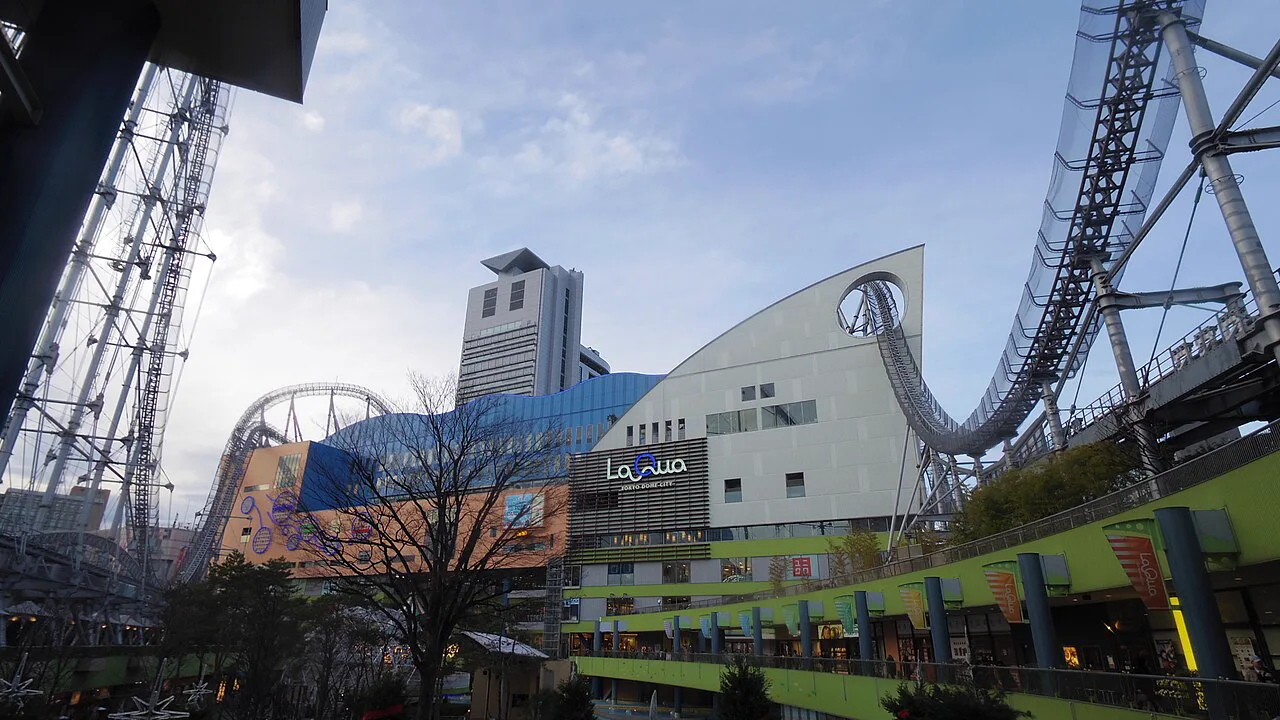
Spa LaQua is convenient when Tokyo Dome City is already on the itinerary
| Admission detail | Published terms |
|---|---|
| Adult, age 18+ | From ¥3,500; varies by date |
| Entry after 7 p.m. | ¥1,000 off the listed calendar price |
| Stay overlapping 1–6 a.m. | ¥2,500 late-night surcharge |
Spa LaQua opens at 11 a.m. and closes at 9 a.m. the following day.
The ticket buys more than a quick dip: towels, indoor wear, rest spaces and a choice of bathing and sauna areas make a longer stay plausible. Its position inside Tokyo Dome City is the practical advantage if you are attending an event or spending the day in Korakuen and Suidobashi. The spring is drawn from roughly 1,700 metres underground and is used in a heated, circulated system.
Children aged five and under are not admitted. Guests aged six to 17 have additional guardian and time restrictions. Tattoos, body art, paint and seals are prohibited.
Thermae-Yu fills the late-night gap, with one important pause
Thermae-Yu in Shinjuku is open around the clock, but the second-floor bathing area closes daily from 3 to 6 a.m. for cleaning.
| Admission detail | Published terms |
|---|---|
| Adult, Monday–Thursday | ¥3,100 |
| Adult, Friday / weekend / public holiday / designated date / holiday eve | ¥3,200; some holidays carry a further surcharge |
| Stay between midnight and 6 a.m. | Separate overnight / early-morning charge |
Its natural spring water is transported from Izu and is heated, diluted, circulated, filtered and disinfected. Guests must be at least 13; those aged 13 to 17 need a guardian and may use the facility only until 8 p.m. Tattoo admission depends on gender and visitor status; read the separate tattoo guide before counting on entry.
Check the deal-breakers first
Children under 13 cannot enter Niwa no Yu or Thermae-Yu. Spa LaQua excludes children five and under and sets extra conditions for older minors. Saya-no-Yudokoro is the most flexible of these four for young families, but its mixed-bathing rules still depend on age and height.
For tattoos, only Saya-no-Yudokoro has a standard cover-sticker route, and it is limited to two venue-issued stickers. Niwa no Yu and LaQua prohibit tattoo marks; Thermae-Yu divides eligibility by gender and visitor status. Check the current rules if this is relevant to anyone in your group.
If two venues remain in contention, compare the one detail that matters to your day: a spring bath, a shared activity, an event-adjacent rest stop or a place to wait out the early hours. For LaQua’s facilities, read the Spa LaQua guide; the other venues’ own pages list their current bath and admission details.
Sources
- [Saya-no-Yudokoro: official visitor information](https://www.sayanoyudokoro.co.jp/english-3/) - [Niwa no Yu: current prices, hours and visitor information](https://www.seibu-leisure.co.jp/niwanoyu/information/index.html) - [Spa LaQua: current prices, hours and visitor information](https://www.laqua.jp/spa/information/) - [Thermae-Yu Shinjuku: current prices, hours and visitor information](https://thermae-yu.jp/user-guide/) - [Thermae-Yu Shinjuku: hot-spring water](https://thermae-yu.jp/spa-sauna/) Checked: 2026-09-27Tags: Tokyo day-use onsen, Saya-no-Yudokoro, Niwa no Yu, Spa LaQua, Thermae-Yu