Fujiya Hotel or Yamani Senyukan in Owani Onsen?
Compare Fujiya Hotel and Yamani Senyukan in Owani by baths, rooms, meals, stairs, child rules and station access before choosing a stay.
Fujiya Hotel and Yamani Senyukan share an onsen town, but the stay feels quite different on paper. Fujiya has the familiar ryokan-hotel setup: a public bath, garden open-air bath, sauna, seasonal meals and a station pickup. Senyukan has only 11 rooms, a main building from 1897 and a bath reserved for overnight guests. Pick by the stay you want, then check the room and mobility details.
| Fujiya Hotel | Yamani Senyukan | |
|---|---|---|
| Scale | Standard hotel with several Japanese and Japanese-Western room types | 11 rooms; historic inn and registered tangible cultural property |
| Bath | Public indoor bath, garden open-air bath and sauna | Small public bath using the source spring; overnight guests only |
| Room facilities | Some rooms have a private bath and toilet; others have a toilet only | Many rooms share bath, toilet and washbasin facilities |
| Station | About a 15-minute walk; free pickup by previous-day reservation | About a 12-minute walk; no station pickup |
| Children | Family room options are listed | Only elementary-school age and older |
| Main constraint | Pickup operates within stated time windows | No elevator; rooms, bath and dining areas require stairs |
The baths answer different expectations
Fujiya’s bathing area is the more varied. Guests have an indoor public bath, the garden open-air bath and a sauna. The hotel publishes its spring type as calcium-sodium chloride-sulfate water, but the text pages reviewed do not give a complete treatment record for each tub. A third-party listing describes the bath as free-flowing; that is not enough to claim every pool is untreated year-round.
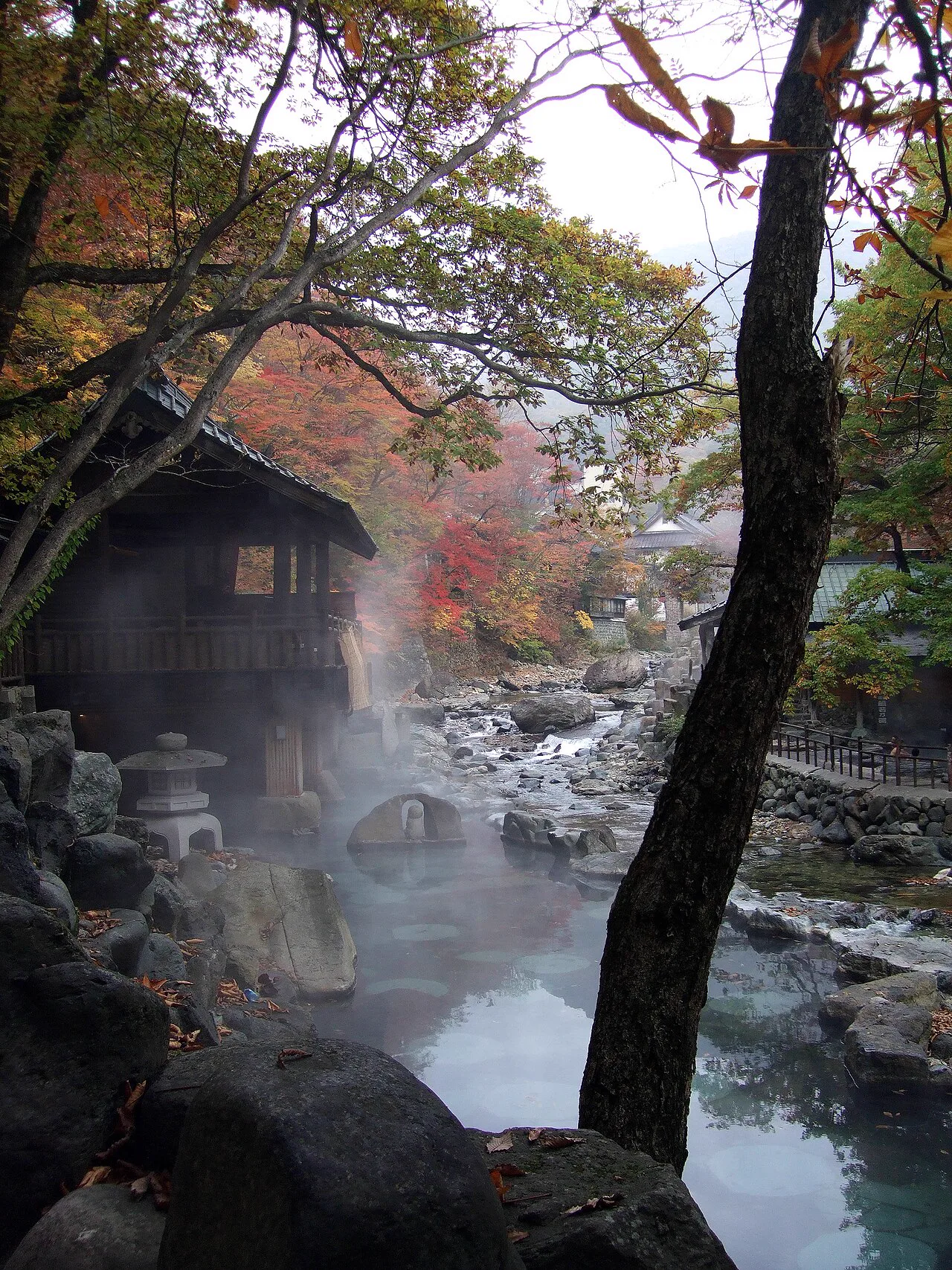
Senyukan makes a more specific claim about its bath: the inn says the source-fed bath is free-flowing and for overnight guests only. It does not accept day visitors for bathing. The bath, called Roman-no-Izumi, was renovated in 2022 using Japanese majolica-style tiles inspired by an earlier bathhouse. The listed bathing window is around 4–11 p.m. and 5–8:30 a.m.; the bath is small and intimate rather than an all-day spa with an outdoor pool or sauna.
If a verified free-flowing bath is the deciding factor, Senyukan has the clearer statement on its own site. If the open-air bath, sauna or choice of bathing spaces matters more, Fujiya offers more to do. Neither property publishes every technical figure needed to compare source temperature, pH, yield and tub-by-tub treatment on the same basis.
One has conventional rooms; the other preserves an old building
Fujiya’s current room list includes a 12-tatami main-building Japanese room and a 12-tatami Japanese-Western room, both with a bath and toilet. The annex Japanese rooms have a toilet, but no private bath. Room layouts are straightforward enough for a family or a guest who would rather not share a bathroom, provided the correct category is booked.
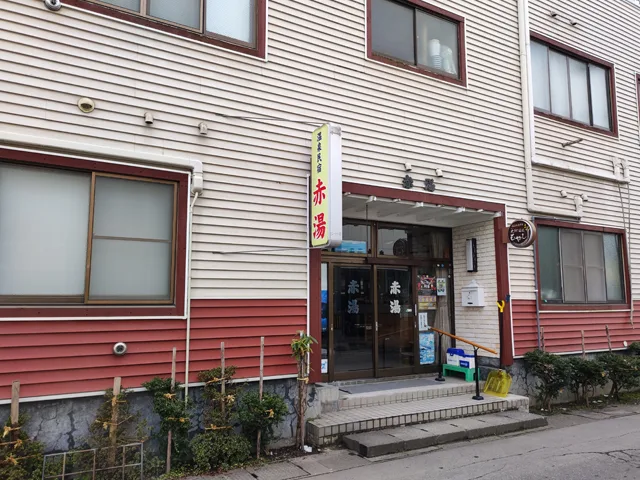
At Senyukan, the historic building is part of the point—and also explains the limitations. Some rooms are in the 1897 registered building; the inn says their washbasin, toilet and bath are shared. It lists a total of 11 rooms. The property has been in business since 1872, though the existing main building dates to 1897. This is a stay for people who value the architecture and atmosphere enough to accept fewer modern conveniences.
The stairs deserve more weight than the room photos. Senyukan has no elevator, no rooms on the ground floor, and says guests need to use stairs to reach the bath and dining area. Anyone with knee trouble, a wheelchair, a large mobility aid or a young child in a stroller should speak with the inn about the complete route before booking. Fujiya is the more conventional choice, but guests with access needs should still confirm their assigned room and route rather than assume every area is step-free.
Meals: a ryokan dinner or a small-town evening
Fujiya’s meals follow a standard overnight-ryokan rhythm, with seasonal Japanese dishes using ingredients from Aomori’s mountains and coast. Special add-on dishes can be requested at least four days ahead. The dining area may sometimes be a large banquet room, so guests hoping for an intimate or private setting should ask how their meal will be served on the date.
For a dated price reference, Senyukan’s booking system showed these examples for some rooms for two guests in July 2026:
| Plan | Example per-person rate |
|---|---|
| Room only | About ¥10,000 |
| Breakfast | About ¥12,000–¥13,000 |
| Two meals | About ¥15,000–¥16,000 |
These were live examples for specific dates and rooms, not fixed rates. Fujiya also varies by date and meal plan, so compare the same night, occupancy and meals before drawing a price conclusion.
Senyukan offers a more local arrangement. Its breakfast, available by advance request, centres on everyday Tsugaru home-style side dishes. Dinner may be served at the inn’s renovated storehouse restaurant or arranged at a participating restaurant in the hot-spring town. The inn says allergy requests should be made by the previous day for breakfast; confirm requirements for the dinner plan when booking.
For a full dinner-and-breakfast stay without arranging another venue, Fujiya is simpler. Senyukan is more appealing if trying a small-town restaurant is part of the plan. Do not assume that every room rate includes the same meals; compare the actual plan and arrival time.
Getting there by train
Fujiya is about a 15-minute walk from JR Owani-Onsen Station. Its free pickup needs to be reserved by the previous day. Pickups run from 2 p.m. to 6:30 p.m. around arriving trains, while morning drop-offs run from 7 a.m. to 11 a.m. around departures. In winter, or with children and luggage, request the ride rather than counting on the walk.
Senyukan is closer on foot at around 12 minutes, but has no station shuttle. A taxi is the simplest alternative with luggage. The inn also describes a Kōnan Bus route from Hirosaki Bus Terminal, by Nijinomart, to Oyu-mae near the inn; the ride takes about 34 minutes, with roughly hourly service.
Check the operator’s timetable for your date. Both station walks are short by town standards, but snow, ice and luggage can make the three-minute difference more significant.
Who should choose which inn?
Choose Fujiya for a first Owani stay, a family room with a private bathroom, an open-air bath or sauna, or a station transfer that can be arranged in advance. It is also the more practical fit for older travellers, though room-specific accessibility still needs confirmation.
Choose Senyukan when the building, literary associations and quiet scale are as important as the hot spring. The inn accepts elementary-school children and older; preschoolers are not accepted. Its bath is not open to day visitors, and the stairs rule it out for many guests with limited mobility. Those are firm booking constraints, not minor preferences.
Tattoo policies
Neither inn’s current public information gives a clear tattoo rule. Contact the property before booking if this affects your choice; Senyukan’s bath is for overnight guests only, while Fujiya’s day-use access should also be confirmed directly.
For more properties across the town, see the Owani Onsen ryokan comparison. If you are only looking for a daytime soak, use the Owani day-trip guide instead of assuming an inn bath is open to walk-ins.
Sources
Checked: September 28, 2026. - [Fujiya Hotel: rooms](https://www.fujiya-hotel.net/rooms/), [baths](https://www.fujiya-hotel.net/spa/), [meals](https://www.fujiya-hotel.net/meals/) and [station pickup](https://www.fujiya-hotel.net/access/). - [Yamani Senyukan: facilities and bathing policy](https://senyukan.com/inside.html), [room categories and room count](https://senyukan.com/room.html), [history](https://senyukan.com/about.html) and [regional food](https://senyukan.com/ryouri.html). - [Yamani Senyukan: access](https://senyukan.com/) — station walk, taxi, and the listed Kōnan Bus connection from Hirosaki. - [Owani Onsen Inn Association: English lodging directory](https://owanionsen.com/en/hotels).Tags: Fujiya Hotel vs Yamani Senyukan, Owani Onsen ryokan comparison, Fujiya Hotel Owani, Yamani Senyukan, Aomori ryokan, historic inn Japan, registered cultural property, free-flowing onsen, open-air bath Aomori, sauna ryokan, family stay Owani, child policy, station pickup, Owani without a car, Tohoku travel