Private natural-spring rooms near Osaka: Yamanobe Rikyu or Ushitaki Onsen Shikimatsuri?
Compare Yamanobe Rikyu’s detached cottages with Shikimatsuri’s special rooms for private spring baths, group space, public facilities and access.
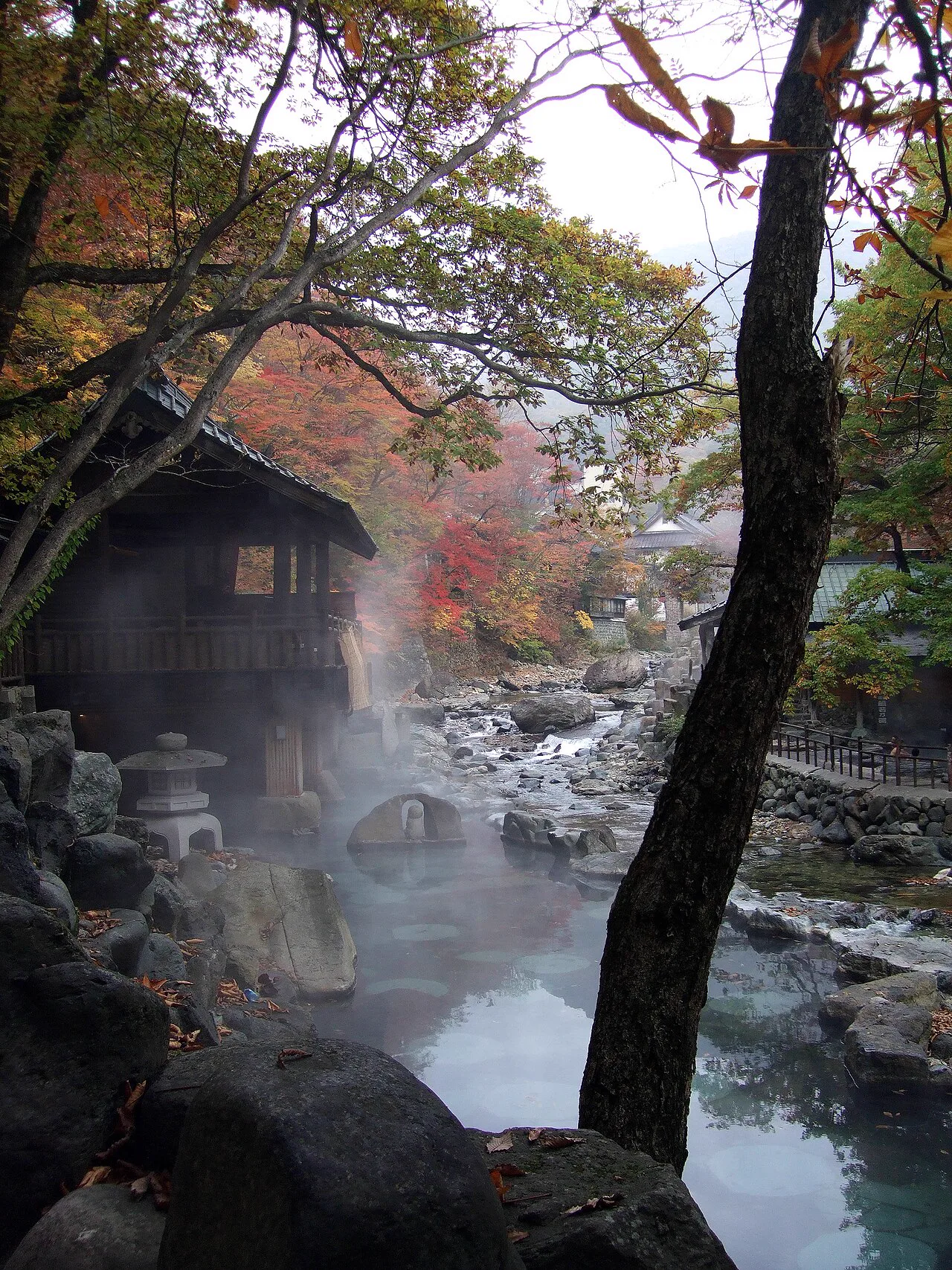
If “bathroom included” is not enough and you want a private bath that actually uses natural spring water, two Osaka-area stays stand out in the source material: Yamanobe Rikyu at Nose Onsen and the two special rooms at Ushitaki Onsen Shikimatsuri. They solve different problems. One is a small detached-cottage stay for privacy; the other is a large room inside a broader resort with more facilities around it.
The short version
| Yamanobe Rikyu | Shikimatsuri special rooms | |
|---|---|---|
| Layout | Three detached cottages | Two special rooms in the main accommodation |
| Private bath | Outdoor bath in each cottage, listed as 100% source water | Outdoor spring bath in rooms SA and SB, listed as natural radon spring water |
| Room capacity | Confirm the chosen plan’s occupancy | 2–6 guests; 95 m² |
| Shared bathing | Guests may use the main Nose Onsen bath | Shared baths include Ushitaki spring water outdoors and a separate radon spring indoors |
| Best match | Two people prioritizing privacy and a private bath | Families or groups wanting a larger room, meals and resort facilities |
Both operators identify the private bathing water as natural spring water. That is a more useful distinction than the words “open-air bath” alone, which describe the bath’s location rather than its water source.
Choose Yamanobe Rikyu for a separate cottage
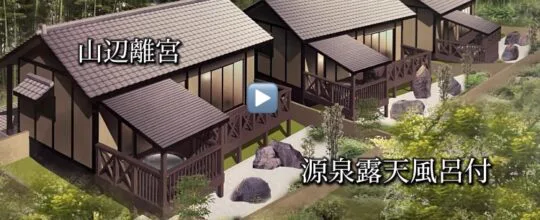
Yamanobe Rikyu has three detached cottages, each with an individually made Shigaraki-ware outdoor bath described by the operator as using 100% source water. Guests can also use the public bath at the main Nose Onsen inn. Its appeal is the layout: you are booking one of a small number of separate stays rather than a large room inside a busy complex.
The regular guest rooms at the main inn should not be mistaken for this product. Some special rooms have a unit bath, but the inn describes that water as plain heated water, not spring water. If you want the private natural bath, select Yamanobe Rikyu by name and verify the exact plan.
Nose Onsen is in the north of Osaka Prefecture. The property is about an hour by car from central Osaka; public transport depends on a requested inn shuttle, which is for overnight guests and has limited departures. It is less suited to a flexible, car-free weekend than an urban hotel.
Pick Shikimatsuri for space and more to do on site
Shikimatsuri’s two special rooms, SA and SB, are each 95 square metres and sleep two to six guests. The room listing confirms a private outdoor bath, and booking details identify the water as a natural radon spring. The bath is described as large enough for three adults at a time.
These rooms are part of a multi-style property with Japanese rooms, western rooms, glamping and other group accommodation. There are also shared baths: the outdoor bath uses Ushitaki Onsen, while the indoor Taki no Yu bath uses another radon spring. It suits a group that will make use of the room, meals and shared facilities, rather than someone seeking a secluded cottage above all else.
The standard special-room capacity is 2–6, but check the exact meal plan before booking. A discounted weekday plan for two may have different bed-room access and age restrictions from the general room listing. Those are plan conditions, not a rule that applies to every stay.
Compare the full stay price, not a headline per-person rate
Room rates move with dates, occupancy and meals. The source booking pages show different price structures for the two properties, so a “from” figure is not a reliable like-for-like comparison. Choose the same night, number of guests and meal plan on each official booking site. For Shikimatsuri, check whether a two-person special plan includes access to every bedroom; for Yamanobe Rikyu, verify whether the displayed total is per person or per cottage.
Shikimatsuri has a route bus from Nankai Kishiwada Station toward the Ushitaki area, plus a reservation-based guest shuttle for qualifying plans. Yamanobe Rikyu uses the Nose Onsen guest shuttle from Ikeda or Yamashita, but the schedule should be confirmed when booking. Neither is a station-front property, so account for the last leg before you commit.
The room rate depends on what is included
As of September 2026, Japanese booking pages showed Yamanobe Rikyu at roughly ¥57,000 per room for two guests on a room-only plan, about ¥64,040 with breakfast and ¥80,540 for a dinner-and-breakfast plan. These are live-plan examples, not fixed tariffs. Shikimatsuri’s weekday special for up to two guests started at ¥27,830 per person with dinner and breakfast (about ¥55,660 for two, before any applicable accommodation tax). A separate four-person plan showed ¥22,330 per person, but that is not a fair comparison with a two-person stay.
For two people who would eat dinner at the property, Shikimatsuri’s weekday package can come in below Yamanobe Rikyu’s room-only example. That does not make the rooms interchangeable: Yamanobe Rikyu sells a quieter detached-cottage experience, while Shikimatsuri’s price includes meals and a much larger resort setting. Recheck the exact date, guest count and meal plan before comparing totals.
Shikimatsuri’s special rooms are 95 m² and sleep two to six, with five semi-double beds and a sofa bed. The outdoor tub is listed as large enough for three adults at once.
The weekday two-person promotional plan is narrower than the general room listing: guests use the main bedroom only, and children under 12 are not accepted on that plan. Families need another rate plan. Confirm Yamanobe Rikyu’s cottage capacity and meal conditions in the live booking details.
Private does not mean the same atmosphere
Yamanobe Rikyu’s three detached cottages put distance between guests and shared resort activity. It is the more focused choice for a couple who wants to spend the evening in a private bath and a quiet room. Shikimatsuri is also in a mountain setting, but the grounds include glamping, barbecue, river activities and group stays. That can be a plus if you want more to do; it is not the same kind of low-key seclusion.
There is a meaningful difference in shared bathing, too. Yamanobe Rikyu guests can use the main Nose Onsen bath. At Shikimatsuri, the outdoor shared bath uses Ushitaki Onsen water and the indoor Taki no Yu bath uses a separate radon spring. Choose Shikimatsuri if you want to alternate between your private room bath and more than one shared spring bath; choose Yamanobe if the private cottage is the main event.
Getting there without a car
For Shikimatsuri, Nankai buses from Kishiwada Station take about 53 minutes to the Ushitaki Onsen Seseragiso-mae stop. Some accommodation plans also qualify for a reserved, complimentary shuttle: the published pickup is 2:15 p.m. at Kishiwada and 2:30 p.m. at JR Higashi-Kishiwada, with the return at 11:15 a.m. the next day. Reserve well ahead—current guidance asks guests to contact the property about a week in advance—and check exclusions, since some breakfast-only, economy and day-use plans do not qualify.
Yamanobe Rikyu uses the Nose Onsen lodging shuttle. It is reservation-based and not frequent: the published pickup is 2:20 p.m. at Hankyu Ikeda, while the Yamashita information shows conflicting times. Confirm the pickup directly when booking. By car, Nose Onsen is about an hour from central Osaka; Shikimatsuri is roughly 15 minutes from the Kishiwada-Izumi interchange. Driving removes much of the access difference, leaving room size, quiet and meal plans as the more useful comparison.
Which one fits your trip?
Yamanobe Rikyu is the more focused private-bath stay: three separate cottages, a source-water bath attached to each, and the option of using the inn’s public bath. Shikimatsuri is the more flexible group stay, with a large room, two-to-six-person capacity, shared baths and additional resort activities.
If you are bringing an older guest or anyone with limited mobility, ask about stairs, bath access and luggage assistance for the exact room. A detached cottage is not automatically step-free, and Shikimatsuri’s special-room conditions can differ from those of accessible rooms elsewhere on the property.
For an anniversary or a stay where privacy matters more than on-site activity, Yamanobe Rikyu’s three-cottage scale is the stronger match. A group of three to six adults gets more value from Shikimatsuri’s 95 m² special room and larger tub. Families should avoid applying its weekday two-person promotion to children under 12; book a family-eligible plan instead. Tattoo policies are not clearly confirmed in the cited accommodation material, so contact both properties before booking if that affects your choice.
For day-use bathing at Nose, see the Nose Onsen guide. If you are still comparing other private-bath formats, begin with the couples’ bathing guide.