Tsurunoyu or Kyukamura Nyuto Onsenkyo? Choosing Where to Stay
Compare Tsurunoyu and Kyukamura Nyuto Onsenkyo for rooms, baths, meals, accessibility, prices and bus access before booking.
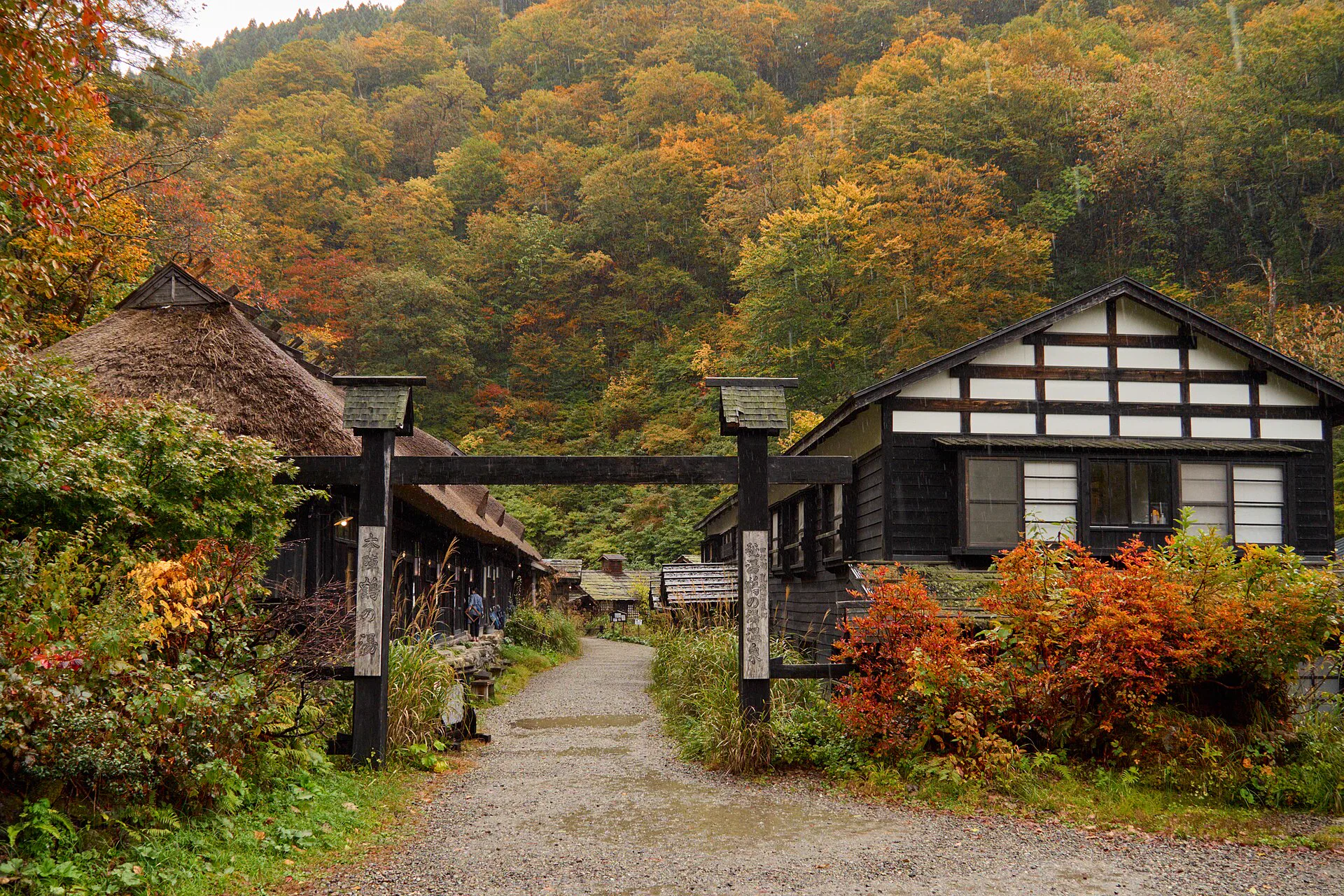
Stay at Tsurunoyu if the old wooden buildings, four named springs and mountain-inn atmosphere are the reason you are coming to Nyuto. Kyukamura Nyuto Onsenkyo is easier to plan around: the bus stops at the property, its room and accessibility information is clearer, and the buffet and family amenities suit a wider range of travel groups.
They are both in Nyuto Onsenkyo, but they solve different problems. Tsurunoyu asks you to accept a more traditional, less equipped stay in exchange for a distinctive setting. Kyukamura keeps more of the practical details familiar without giving up the forest location or hot springs.
| If your priority is… | Better fit | Why |
|---|---|---|
| Staying in Nyuto’s best-known historic inn | Tsurunoyu | Thatched buildings, an irori dining setting and four different named springs shape the stay. |
| An easier arrival by public bus | Kyukamura | The Nyuto Line stops at Kyukamura-mae; Tsurunoyu guests need a separate inn pickup from Arupa Komakusa. |
| A lift, more room types and family items | Kyukamura | It lists a wheelchair-usable elevator, a ramp, a multipurpose toilet and children’s rental items. |
| A simple room is fine if the baths are the point | Tsurunoyu | Some rooms have shared toilets and there is no elevator or air conditioning. Check the exact room category. |
| A buffet with several choices | Kyukamura | Dinner and breakfast are served buffet-style, with Akita dishes and a children’s menu. |
What the rooms are actually like
Tsurunoyu is a working historic inn, not a modern hotel with an old-fashioned façade. Room facilities depend on the building and plan: the inn’s listing distinguishes rooms with toilets from those without, and its facilities page lists no elevator or air conditioning. In winter, a heating fee applies. If a private toilet, a bed, or a particular level of comfort matters, confirm the building and room details before paying a deposit.
There is a small inconsistency in the facility listing: it gives 34 rooms in total, while the listed room counts with and without toilets add up to 35. That is another reason to confirm the exact room category with the inn rather than infer its facilities from the headline count.
That room-by-room distinction comes up in guest accounts too. Reviews on Tripadvisor and Rakuten Travel describe the remote, old-fashioned setting, and some guests specifically mention shared toilets or limited outlets. Those are individual experiences, not a guarantee about every room; the inn’s own room categories are the better source for what a particular booking includes.
Kyukamura has 38 rooms: Japanese-style rooms, Western rooms, Japanese twin rooms, and three Western rooms with an attached bath. The bath attached to those rooms is not listed as an onsen bath. Its facility information shows partial barrier-free access, including a ramp, an elevator usable by wheelchair, wheelchair loan equipment and a multipurpose toilet. That does not make every route or room step-free, so contact the property with specific mobility needs before booking.
For families, Kyukamura lists items such as children’s pillows, toilet-seat adapters, step stools, bath chairs and children’s yukata. Stock may be limited; request the item you need rather than relying on it being available on arrival.
Four springs at Tsurunoyu, two at Kyukamura
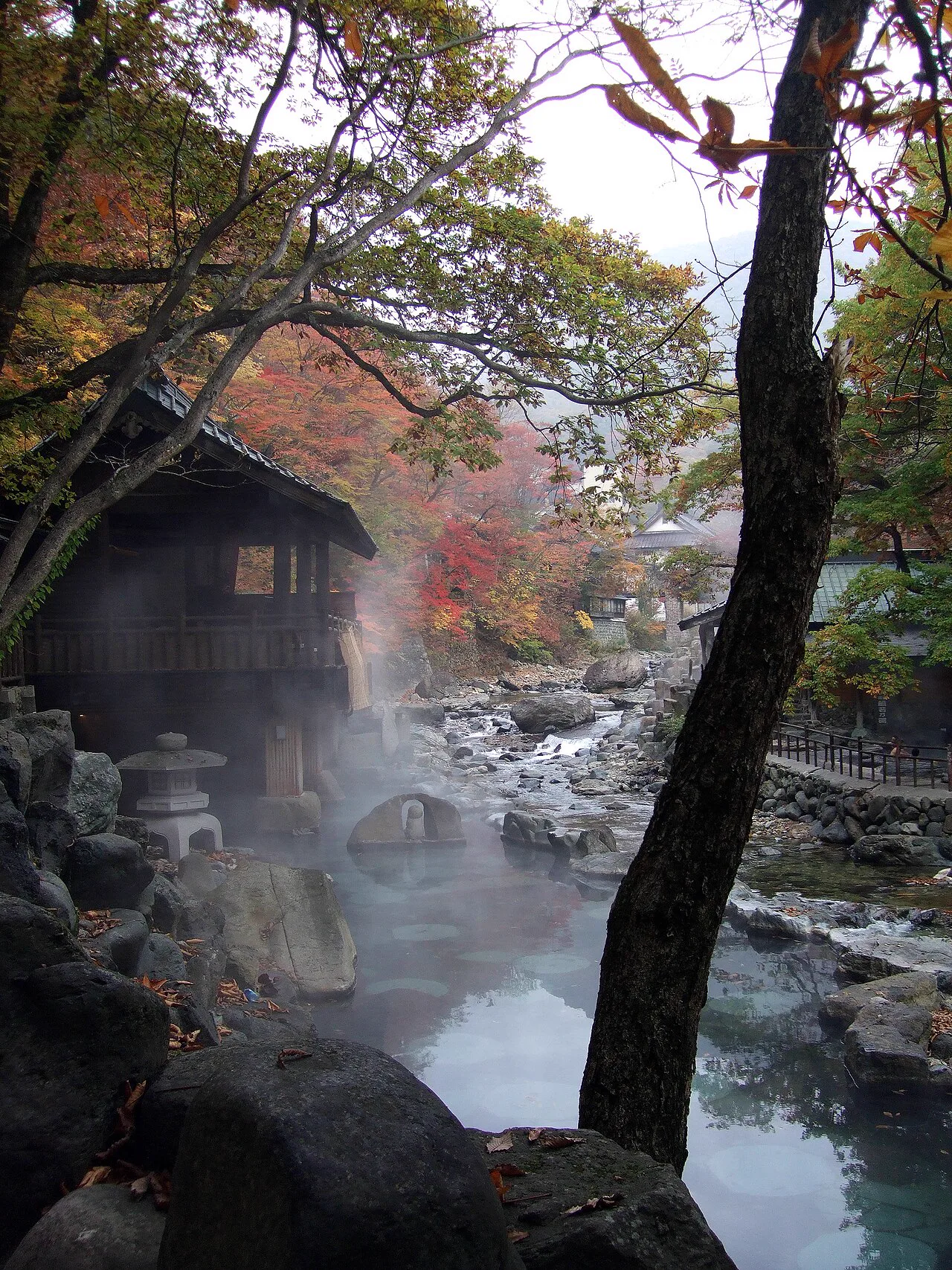
Tsurunoyu names four sources: Shiro-yu, Kuro-yu, Naka-no-yu and Taki-no-yu. The bathing areas include gender-separated baths and the well-known large mixed outdoor bath. If mixed bathing is not for you, the inn also has separate bathing options; check the current bath layout and any seasonal closures before your visit. Its appeal is the variety within one property, not a single source that can stand in for all four.
Kyukamura’s current information lists two natural springs: Nyuto-no-Yu, a sodium bicarbonate spring, and Tazawako Kogen-no-Yu, a simple sulfur spring. The property offers shared indoor and outdoor bathing areas. Its published facilities do not list a private onsen bath in the rooms; the three Western rooms with attached baths have regular room baths.
The choice is less about which inn has “better” water than how you want to spend the evening. Tsurunoyu makes the baths and historic inn the main event. Kyukamura works well if you want two spring types on site and a more straightforward hotel-style stay.
Meals and the shape of the evening
At Tsurunoyu, the inn highlights mountain vegetables, its yam hot pot and hearth-grilled char. Its English accommodation page says meals are served in the guest room except for guests in Buildings No. 2 and No. 3; rooms with an irori hearth can dine around it. That setup suits travelers who want dinner to feel tied to the inn rather than like a separate restaurant stop.
Kyukamura serves an Akita-focused buffet. Guests can choose across dishes, and the property says it also offers a children’s menu. That can make dinner simpler for families or groups with different appetites. If you have allergies or other dietary requirements, contact either inn before booking; the available pages do not promise that every request can be accommodated.
The bus is the biggest practical difference
Kyukamura is a direct stop on the Ugo Kotsu Nyuto Line from JR Tazawako Station. The current fare table, effective April 1, 2026, lists ¥950 one way to Kyukamura-mae.
Tsurunoyu is not beside the bus stop named “Tsurunoyu Onsen Entrance.” For the inn’s pickup, take the bus to Arupa Komakusa, then use Tsurunoyu’s pre-arranged shuttle. The inn asks guests to contact it in advance and confirm the bus they plan to take. The current one-way bus fare from Tazawako Station to Arupa Komakusa is ¥750; the separate pickup is arranged with the inn. Do not mistake the similarly named Tsurunoyu Onsen Entrance stop for a drop-off at the property.
Ugo Kotsu runs a limited local service, and its timetable warns that weather and road conditions can cause delays. Check the current schedule and leave room for your train connection. The Tazawako Station to Nyuto access guide has the stop-by-stop route notes; where to stay in Nyuto Onsenkyo compares access to the other inns as well.
Compare the booking details, not just the starting rate
Tsurunoyu’s English page lists room fees of ¥11,700–¥24,350, tax included, for stays from November 2026. It also lists a winter heating fee of ¥1,320 per room. Treat that as the inn’s published range, not a like-for-like nightly price for every room or party size. Kyukamura’s plans change with the date, room, occupancy and meal option.
Before comparing totals, use the same check-in date and guest count, then check whether dinner and breakfast are included, which room building is offered, and whether heating or other fees apply. A low advertised rate at Tsurunoyu may refer to a simpler room; a Kyukamura plan may include a different meal or room category.
If you are considering Kyukamura alongside another inn, the Taenoyu vs Kyukamura stay comparison covers that pairing. For a broader look at the area, the Nyuto day trip vs overnight guide explains when staying in the mountains makes sense.
Tsurunoyu’s listed 2026 starting examples were about ¥11,000 per person in Building No. 2, ¥14,850 in the Honjin and ¥17,050 in the New Honjin; room type and date change the total. Kyukamura’s 2026–27 standard two-meal plans generally run ¥16,500–¥26,800 per person.
Kyukamura’s buffet plan lists ¥8,000 for elementary-school children, ¥4,000 for ages four to six, and free for ages zero to three when no meal or bedding is needed. Compare the same date, room occupancy and meal conditions rather than treating these ranges as booking quotes.
A seven-part editorial scorecard
On comfort / bath variety / upkeep / atmosphere / quiet / access / value, our scores are Tsurunoyu 75 / 95 / 70 / 100 / 55 / 40 / 95 and Kyukamura 90 / 80 / 90 / 90 / 80 / 55 / 85. The access scores account for the pickup needed at Tsurunoyu versus Kyukamura’s direct bus stop; the higher Tsurunoyu atmosphere score reflects its historic buildings and distinctive baths. These are guide judgments, not operator ratings.
Tattoo rules at Tsurunoyu and Kyukamura are unconfirmed. Contact each inn separately before booking if this affects your choice.