Sakihana Onsen in Autumn or Winter? What Changes by Season
Compare a Sakihana autumn walk with a winter onsen stay, including foliage timing, day-bath access and train checks that shape each trip.
Sakihana does not need an elaborate itinerary. It is a compact onsen stop beside the Agano River, and the season changes what you will want to do between trains and baths. In autumn, leave room for daylight outdoors. In winter, make the bath and your return journey the centre of the plan.
| Autumn | Winter | |
|---|---|---|
| Best reason to go | Riverside walk, changing hillsides, foliage | A slower inn stay and a warm bath |
| Day-trip shape | Walk first, then bathe while a confirmed slot is available | Go straight to the inn; keep the outdoor part short |
| Main uncertainty | Foliage timing varies by year and location | Train/weather disruption and the bath’s day-use availability |
| A good fit | Travellers who want scenery between stops | Travellers happy to let the ryokan be the main event |
Autumn gives you more to do outside
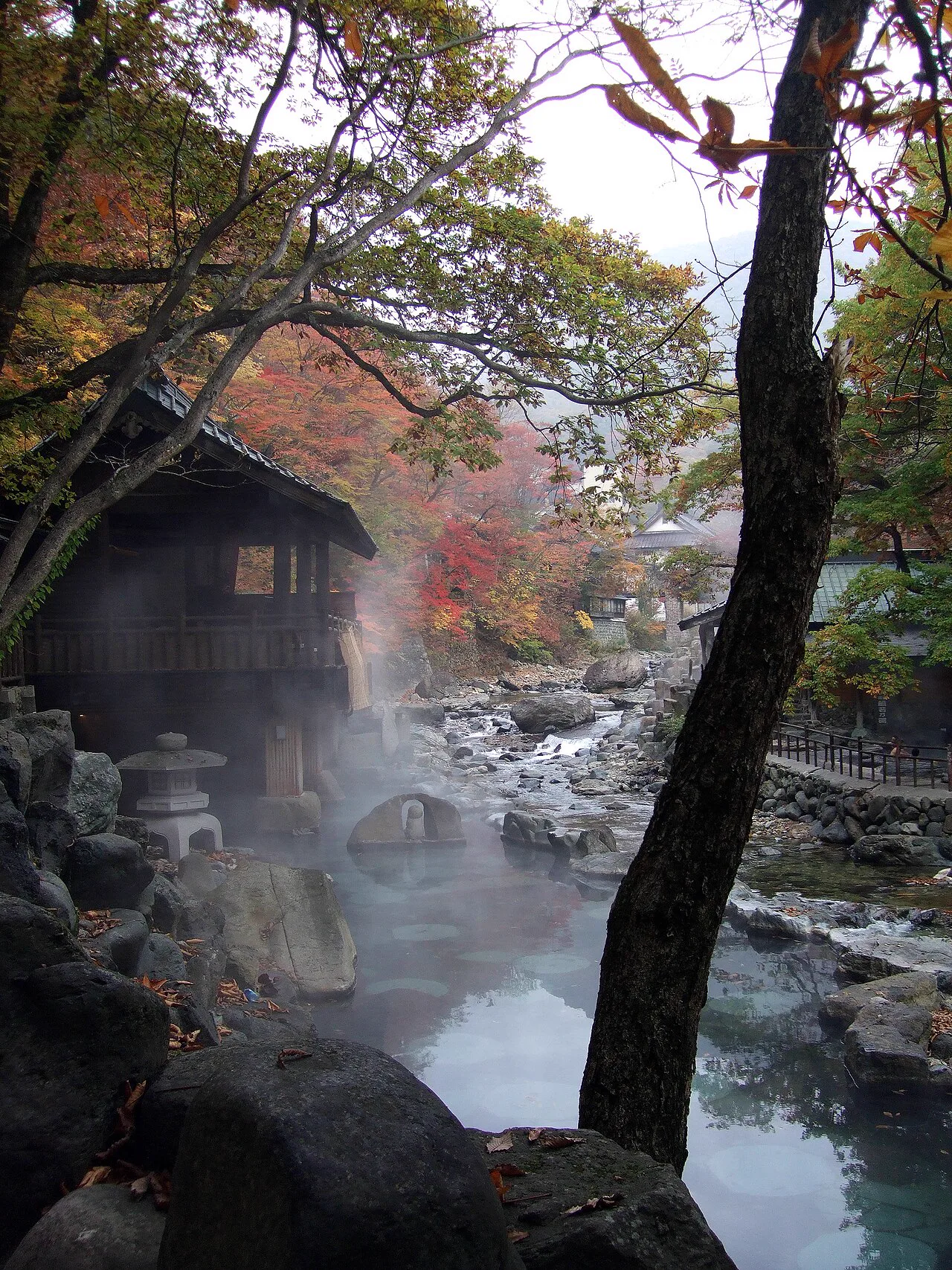
Autumn is the better fit if you want to add a riverside walk before soaking. Foliage timing is uneven around Gosen: the city’s historical records show that different sites peak from late October into November and can be weeks apart. There is no dependable “Sakihana peak weekend” to book months ahead. Check the live city update and the inn’s latest photos close to your date.
For a day out, Sakihana Station, the river area and a ryokan bath can fit into one outing, provided the inn is accepting day visitors. The public bath schedule is not uniform across the inns, and busy dates can mean a pause in reception. If the leaves matter more than the soak, get the foliage update first and make the bath the flexible part.
Winter rewards a slower stay
In winter the outdoor walk shrinks, and staying overnight starts to make more sense. You can take your time with the river view, dinner and a morning bath without letting a short daylight window or the last train set the pace.
Bousenkaku’s official bath information says its outdoor bath is 100% free-flowing; in cold weather the water can feel cooler because it is exposed to wind and outside temperatures. That is part of the real winter trade-off: an open-air soak beside the river, but not a guaranteed hot-tub temperature. The inn’s indoor bath is operated differently, so check the facility details if water handling matters to you.
Winter does not rule out a day visit. It just makes the logistics less forgiving. Check the JR Ban’etsu West Line both ways, ask the ryokan whether it will admit day visitors that day, and leave enough margin to reach the station before the train. A winter overnight is the relaxed option; a day bath is for travellers who already have the train and admission confirmed.
The riverside route is seasonal, not a year-round checklist
Gosen’s model walk links Sakihana Onsen with the Satori battlefield site and the Kinase embankment beside the Agano River. The tourism association positions the riverside rest area for April through October. That makes late October a reasonable final window to plan around, but river level and weather still decide whether a stop is comfortable. From November, treat the bank as a short optional stroll rather than the backbone of the visit.
For an autumn half-day from JR Sakihana Station, the practical sequence is station → Satori battlefield → river and Kinase embankment → one confirmed day bath → station. Give the walk the time you actually want; there is little benefit in trying to squeeze in a second bath. The Agano River Line boat trip is easier to add by car than by train: it needs its own transfer and does not fit neatly into a short car-free visit.
Autumn baths: pick the view or the simplest admission
The six inns differ in what their bathing area actually overlooks. Satorikan and Bousenkaku both have baths facing the Agano River. At Bousenkaku, day entry is cheaper but must be confirmed that morning and is limited to one hour. Satorikan publishes a more defined daytime window, although its last reception is earlier than its closing time. Ask about the bath’s same-day availability before walking over.
Ryusuien is the clearest autumn stay for foliage close to the room: Gosen’s tourism listing notes maple trees around the property. Day bathing costs ¥600 and runs 9 a.m.–8:30 p.m., but the inn closes irregularly and asks visitors to call. Choose an overnight room if you want the window-side autumn atmosphere; the day-bath price alone does not make it a foliage-viewing stay.
Hekisuiso is better understood as a riverside overnight option than as a guaranteed panoramic public day bath. Issuiso is a quieter hillside inn rather than a river-view pick.
| If the main draw is… | Start by checking… | The catch |
|---|---|---|
| River scenery from the bath | Satorikan or Bousenkaku | Confirm that day’s admission and reception time |
| The lowest day-bath price | Ryusuien (¥600) or Issuiso (¥700) | Both can require a phone check; Ryusuien closes irregularly |
| Maple trees near the room | Ryusuien | The foliage date varies; a day ticket does not include a room |
| A river-side ryokan stay | Hekisuiso | Its guest-room view does not guarantee the same view from the public bath |
Winter lodging earns its keep through extra bathing time
An overnight stay matters most when you will use the evening and morning baths. Issuiso lists guest bathing from 3–11 p.m. and 6–9 a.m.; Satorikan’s large bath runs 4:30 a.m.–midnight. Bousenkaku has separate evening and morning bathing periods, and its morning start shifts from 5 a.m. to 6 a.m. between late December and late March. Check each property’s current schedule when booking.
Marumatsu is a different winter proposition: its guest baths are available for long periods outside cleaning, with an indoor bath and an outdoor rock bath on the men’s/family side and a primarily indoor bath on the other side; the sides alternate. Its ordinary day-use window is much shorter, generally 10 a.m.–3 p.m. with a phone check. The draw is repeated access to the spring during a stay, not a large spa complex.
For private bathing, Issuiso’s overnight plans can include one private outdoor-bath session, while Hekisuiso offers a 45-minute private bath when space is available. Satorikan has a bookable private outdoor bath; check whether day use can add it and what the current charge is. Those options make more sense in winter, when you have time to use the room and bath without rushing between outdoor stops.
Ryusuien’s winter appeal is its small, old-fashioned inn and hot sulfur water, not a full-service dinner program. Current lodging plans focus on room-only or breakfast; there is no dinner plan listed. If you want a full kaiseki dinner and drinks on site, choose another inn rather than assuming that a low-cost stay includes it.
A winter bath needs a closer look at the water temperature
Bousenkaku is unusually explicit about seasonal water management. Its outdoor baths are 100% free-flowing and can cool in low outside temperatures. The indoor Hagoromo bath is generally free-flowing from spring to autumn, but may use circulation and reheating on cold days; in winter it is heated with circulating spring water. That is a comfort measure, not a reason to label every tub the same. If you feel the cold easily, warm up indoors and keep the outdoor soak brief.
The spring’s colour is variable too. Bousenkaku says mineral ions change colour after contact with air, producing shades from green to pale or clear; water temperature and exposure affect the look. A photo of emerald water cannot guarantee the same colour on your visit.
Three itineraries that match the season
Autumn day visit (3–4 hours): arrive at Sakihana Station, stop at the Satori battlefield and riverbank while the weather is comfortable, then use one bath whose admission you have confirmed. Do not add a second inn if you want time for the foliage.
Winter day visit (about 3 hours): check the train and admission first, go straight to one bath, allow 60–90 minutes there, and take only a short riverside walk if conditions permit. Return to the station early enough to absorb a train delay.
Winter overnight: arrive in the afternoon, bathe before dinner, return for a shorter evening soak if you like, then use the morning bath before breakfast. Keep the next day’s outdoor plan flexible around snow and road conditions.
Travelling with children or older relatives strengthens the case for an overnight only when it removes a tiring transfer or gives you more time to bathe. Sand bathing is not suitable for every health condition; follow the facility’s guidance. For anyone who tires easily, check pickup arrangements and dinner availability rather than relying on the station being close.
Season does not change each inn’s tattoo policy. Ask the property you plan to visit; do not assume a private bath or an overnight stay automatically changes its admission rules.
Which season should you pick?
Choose autumn if your priority is colour and fresh air around the river. Choose winter if you are drawn to a quiet onsen stay and do not mind making the inn the main attraction. For exact 2026 foliage status, see our Sakihana autumn guide; for current day-bath prices, use the budget comparison.
Sources
- [Gosen Tourism Association: Sakihana Onsen and Agano River model route](https://gosen-kankou.niigata.jp/course/course06/) - [Gosen City: foliage information](https://www.city.gosen.lg.jp/hyande/2/3/index.html) - [Gosen Tourism Association: historical foliage dates](https://gosen-kankou.niigata.jp/information/7989/) - [Bousenkaku: bath details and onsen water handling](https://www.bousenkaku.co.jp/spa/) - [Bousenkaku: day-use and evening-use plans](https://www.bousenkaku.co.jp/plan/day/) - Photo credits: [Gosen Tourism Association](https://gosen-kankou.niigata.jp/)Checked: September 27, 2026
Tags: Niigata, Gosen, Sakihana Onsen, autumn, winter, day-use onsen, overnight stay