Izanro Iwasaki in Misasa: What a Day Visit Actually Includes
Izanro Iwasaki’s ¥1,500 ticket covers one side of its bath circuit, assigned by gender each day. Weekend visits end at 3 p.m.; check calendar and last entry.
Izanro Iwasaki’s ¥1,500 day ticket buys access to one side of its large “Yama-no-yu” bath circuit, not a tour through all twelve baths. Which side you can use depends on the inn’s daily men’s and women’s calendar. Check that calendar and the day-use hours before travelling; weekend visits finish much earlier than weekday ones.
Hours and admission
| Day-use detail | Current listing |
|---|---|
| Adult admission | ¥1,500 |
| Children | ¥750 for elementary-school children and younger; age 2 and under free |
| Weekdays | 2–9 p.m.; last entry 8 p.m. |
| Saturdays, Sundays and public holidays | 11 a.m.–3 p.m.; last entry 2 p.m. |
| Day after a closure | Opens for day visitors at 3 p.m. |
| Small towel / bath towel | ¥200 to buy / ¥150 to rent |
Bath-only visits do not take advance reservations. The inn asks visitors to contact it on the day, since irregular closures, cleaning and busy periods can suspend day use without notice. Check its official day-use page before leaving, especially if you are planning around the weekend’s 2 p.m. last entry.
The bath calendar matters more than the “twelve baths” headline
Yama-no-yu is divided into Hidari-no-yu (the left bath) and Migi-no-yu (the right bath). The inn’s “twelve baths” description refers to the combined circuit, including different indoor and outdoor pools and the radium steam baths. Day visitors are assigned to one side by gender for that date, so a single entry does not let you use both. The inn changes the sides for overnight guests at 5 a.m.; that early-morning exchange is not part of a day visit.
Check the live calendar rather than trying to memorise a weekly pattern. It also marks dates when day-use admission is suspended, even if the inn is otherwise operating.
Left side: the 2025 refresh and a cooler pool
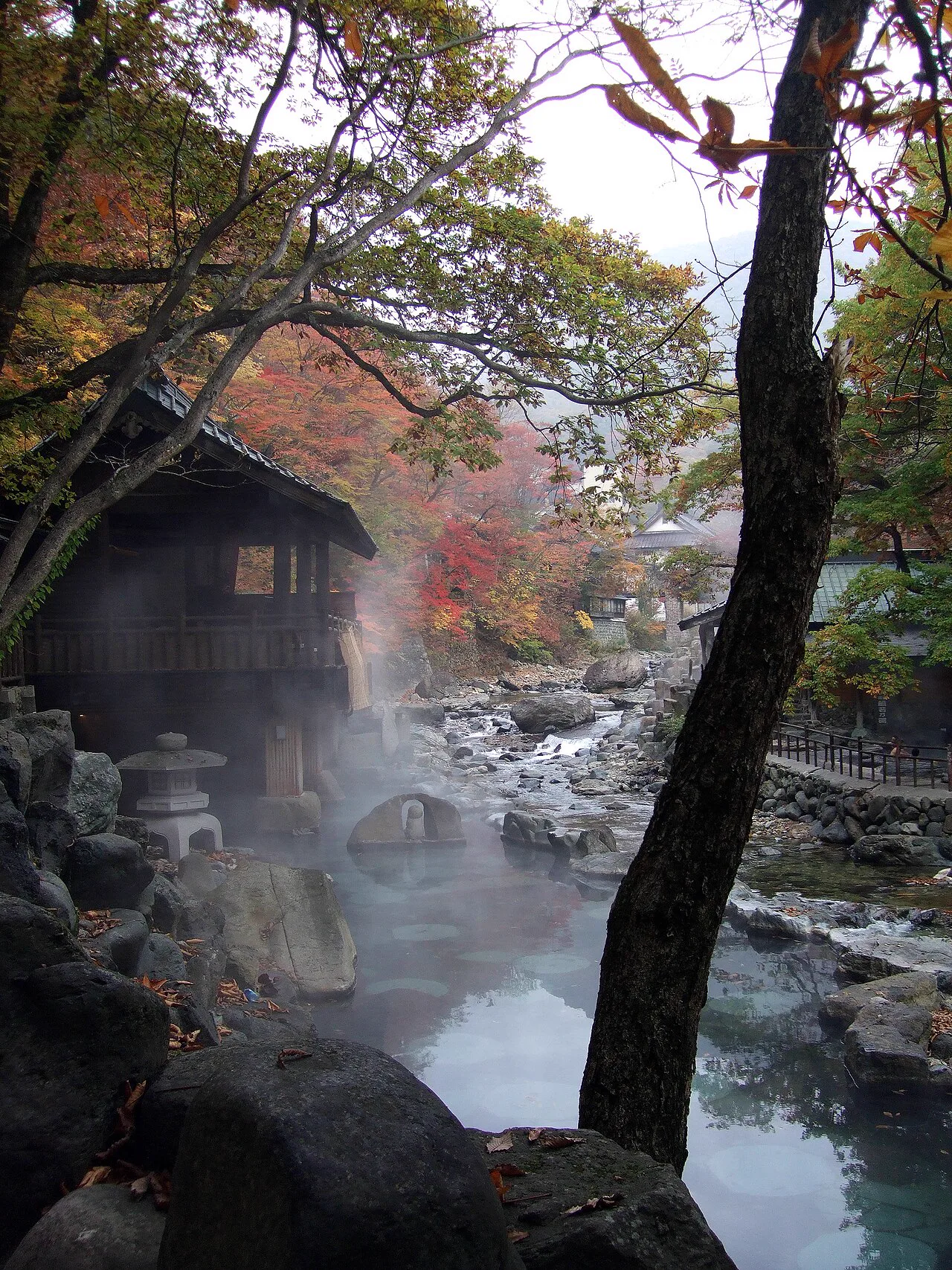
Hidari-no-yu reopened after a renovation in July 2025. Its route combines indoor and outdoor bathing, a footbath corridor, walking and reclining pools, a cave bath modelled on Mitokusan’s Nageiredo, and a radium steam bath. A 29–30°C pool beside the steam room gives visitors a place to cool down; the inn calls it a “lukewarm bath,” not a cold plunge.
If the Nageiredo-inspired cave or that cooler pool is the reason you are coming, confirm that the left side is assigned to you on the day. The official calendar is the deciding detail.
Right side: a more old-fashioned garden-bath route
Migi-no-yu has a more traditional feel, with five bathing areas listed by the inn: a large indoor pool, two open-air baths, another indoor bath and the radium steam bath. The route takes you between the pools rather than keeping everything in one room. It has its own character, but visitors still need to check the same daily gender assignment.
The inn describes spring water as flowing through some of its facilities, but the public information does not give a pool-by-pool breakdown of water treatment across the full circuit. Its separate “Doku-zan-no-yu” private open-air bath is listed as source-flowing; that detail should not be extended to every pool.
A day ticket does not include private bathing
The private open-air bath, Doku-zan-no-yu, is for overnight guests. Its posted 45-minute ¥1,100 rate belongs to that guest-only option; day visitors cannot add it to a regular admission ticket. If two people need a private session during a day trip, Seiryuso’s day-use guide covers a bookable alternative. For a broader choice between the two inns, see Seiryuso or Izanro Iwasaki?.
Getting there from Kurayoshi
Local buses connect JR Kurayoshi Station with the Misasa Onsen district, followed by a walk to the inn. For most visitors, that is the clearest day-trip plan. Izanro Iwasaki also offers a station shuttle, but it must be booked by the previous day. Its first pickup is scheduled for 2:20 p.m., and the service is described around train arrivals; do not assume it is available for an earlier day-bathing visit. Confirm eligibility and timing with the inn if you hope to use it.
The Misasa no-car half-day route covers the bus connection and return timing. If you are choosing among the town’s public baths and ryokan, the Misasa day-use overview puts Izanro Iwasaki alongside Kabuyu, Kawara-buro and Seiryuso.
Before you set out
- Pick the date first, then check whether day bathing is available and which side is assigned to you.
- Leave enough time to arrive before last entry; the weekend window ends at 3 p.m.
- Bring towels or budget for the inn’s small-towel sale and bath-towel rental.
- If private bathing is essential, choose a facility that explicitly accepts day-use reservations rather than relying on Izanro Iwasaki’s guest-only bath.
- Contact the inn directly if tattoos or another bathing policy could affect your visit. The pages reviewed here do not state a tattoo rule.
The existing Misasa–Kaike comparison can help if you have not settled on a hot-spring area yet.