ASOBIYUKU Kyoto Rurikei Onsen: Day-Use Prices, Pools and Access
ASOBIYUKU’s day ticket includes hot-spring baths, swimsuit area and pool; the pool closes at 6 p.m. Shuttles run from Sonobe and Nissei-Chuo.
ASOBIYUKU Kyoto Rurikei Onsen suits couples, families and friends who want to spend time together in a swimsuit area as well as use a conventional gender-separated bath. It sits in the highlands of Nantan, well outside central Kyoto. The standard day-use ticket includes the large baths, swimsuit hot-spring area, sauna and pool: ¥800 for adults on weekdays and ¥950 on weekends and public holidays. Children aged four and over pay ¥400 or ¥500; children under four are free.
The timing matters more than the headline closing time. The spa is open 7 a.m.–11:30 p.m., with last admission at 11 p.m., but the pool closes at 6 p.m. Arriving in the evening means buying a ticket for the baths, swimsuit area and sauna without the pool.
What the basic ticket includes
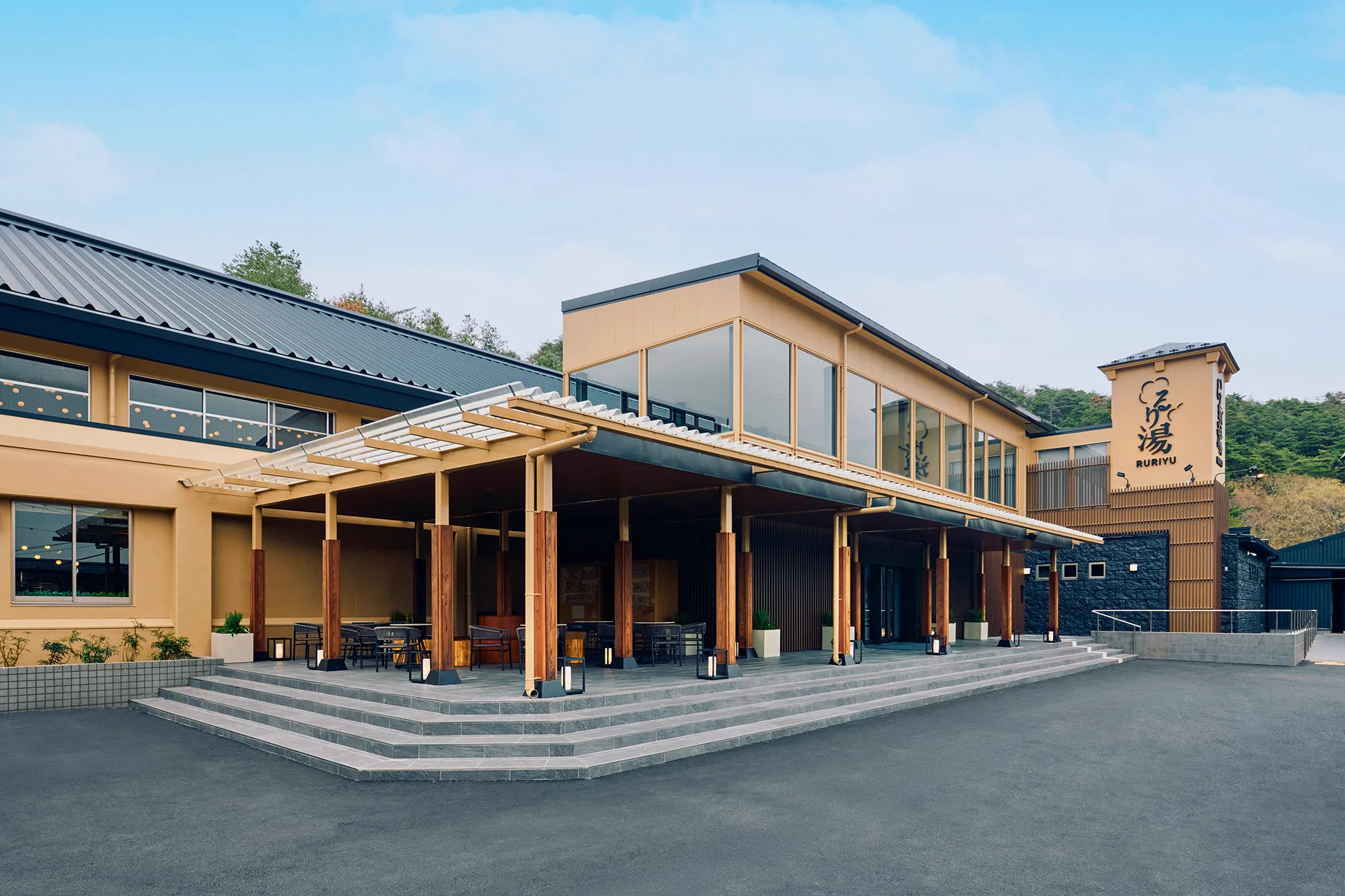
The renovated Ruri-yu area reopened under the ASOBIYUKU name on April 24, 2025. Its current spa information distinguishes the gender-separated public baths from the swimsuit area. The latter is designed for mixed-gender use; bring a swimsuit or rent one for ¥400. A towel set costs ¥300. These extras can change the cost substantially if you arrive without either.
There is also a separate bedrock-bath and Lantern Terrace area. It is an add-on, not part of the standard admission: adults pay an extra ¥800 on weekdays or ¥1,000 on weekends and public holidays. The official pages list different child add-on rates. Check the current price table for the age band in your party before buying.
For a first visit, the basic ticket is enough if the plan is mainly bathing and using the swimsuit area. Add the bedrock-bath option only if you expect to spend time in those rooms and the relaxation area; the higher ticket is not automatically better value for a short soak.
Go early if the pool is part of the plan
The pool runs 9 a.m.–6 p.m., while the spa stays open until 11:30 p.m. A mid-afternoon arrival leaves time for the pool, swimsuit area and separate baths. An evening visit can still make sense, but it is a different, smaller version of the day out. The food park also keeps its own schedule, so do not assume every facility shares the spa’s hours.
The property is in Okochi, Sonobe-cho, Nantan City. Official access information lists free shuttle buses from JR Sonobe Station and Nose Electric Railway’s Nissei-Chuo Station. For day visitors, seats may fill and advance reservations are not available. Treat the shuttle as a useful option, not guaranteed transport; check the timetable and keep a fallback for the return journey. This is not a bath to add casually between appointments in central Kyoto.
Ruri-yu’s public baths use radon hot-spring water. The complex also has a swimming pool, sauna and other bathing features; spring-water details for those basins are unconfirmed. No current source analysis or water-treatment details are published for every pool.
Who should choose another bath?
If your main goal is a quick soak near Kyoto’s central sights, the Kyoto day-use onsen comparison covers facilities with a more urban location. For a wider look at newer shared-use bathing concepts, see the Japan new-wave onsen guide. Rurikei is most compelling when you want the swimsuit area or a longer resort-style visit and can make the highland journey work.
The operator’s current public pages do not clearly state a tattoo policy for every area. If that affects your visit, ask before travelling rather than relying on general impressions of Japanese hot-spring resorts.
Sources
- ASOBIYUKU Kyoto Rurikei Onsen: hours and prices
- ASOBIYUKU Kyoto Rurikei Onsen: spa and facilities
- Kato Pleasure Group: 2025 reopening announcement
Checked: September 28, 2026. Prices, shuttle arrangements and operating hours may change; check the operator’s current pages before travel.