Kawafuru or Hoshi Onsen? A Practical Comparison of Two Mountain Inns
Compare Kawafuru’s body-temperature soak with Hoshi Onsen’s historic mixed bath and public-transport access; day-use hours are limited.
Checked: September 28, 2026 These two inns sit in the mountains of Minakami, Gunma, and both ask you to plan ahead. Their appeal, though, is quite different. At Kawafuru Onsen Hamaya Ryokan, the draw is a warm bath kept around 37–38°C and the slower rhythm of a traditional toji stay. Hoshi Onsen Chojukan is known for Hoshi-no-yu, a wooden bathhouse where spring water rises through the stone floor.
For a quick day trip, Hoshi has the clearer public-transport option, but its bathing window is short. Kawafuru costs less and gives you more time at the baths, though the inn may suspend day visits when overnight guests take priority and there is no public transport to the door. If you want a longer soak or several nights of hot-spring rest, Kawafuru has the more explicit toji plan.
| Kawafuru Onsen Hamaya Ryokan | Hoshi Onsen Chojukan | |
|---|---|---|
| Best known for | A 37–38°C warm bath and long soaks | Hoshi-no-yu, a historic mixed bath with water rising through the floor |
| Adult day-use admission | ¥1,000 | ¥1,500 |
| Day-use window | Reception 10:30 a.m.–2 p.m.; leave by 3 p.m. | Reception 11 a.m.–1:30 p.m.; leave by 2 p.m. |
| Day-use baths | Five bathing areas, including men’s and women’s baths and two mixed baths | Hoshi-no-yu (mixed) and Choju-no-yu (women only); no access to Tamaki-no-yu |
| Public transport | No direct service; a booked pickup may be available from Yasumiishi | Limited town-bus connections via Sarugakyo |
| Best for | Drivers, slow bathing and multi-night stays | Visitors focused on the historic bathhouse and a half-day visit |
Choose by the bath you want
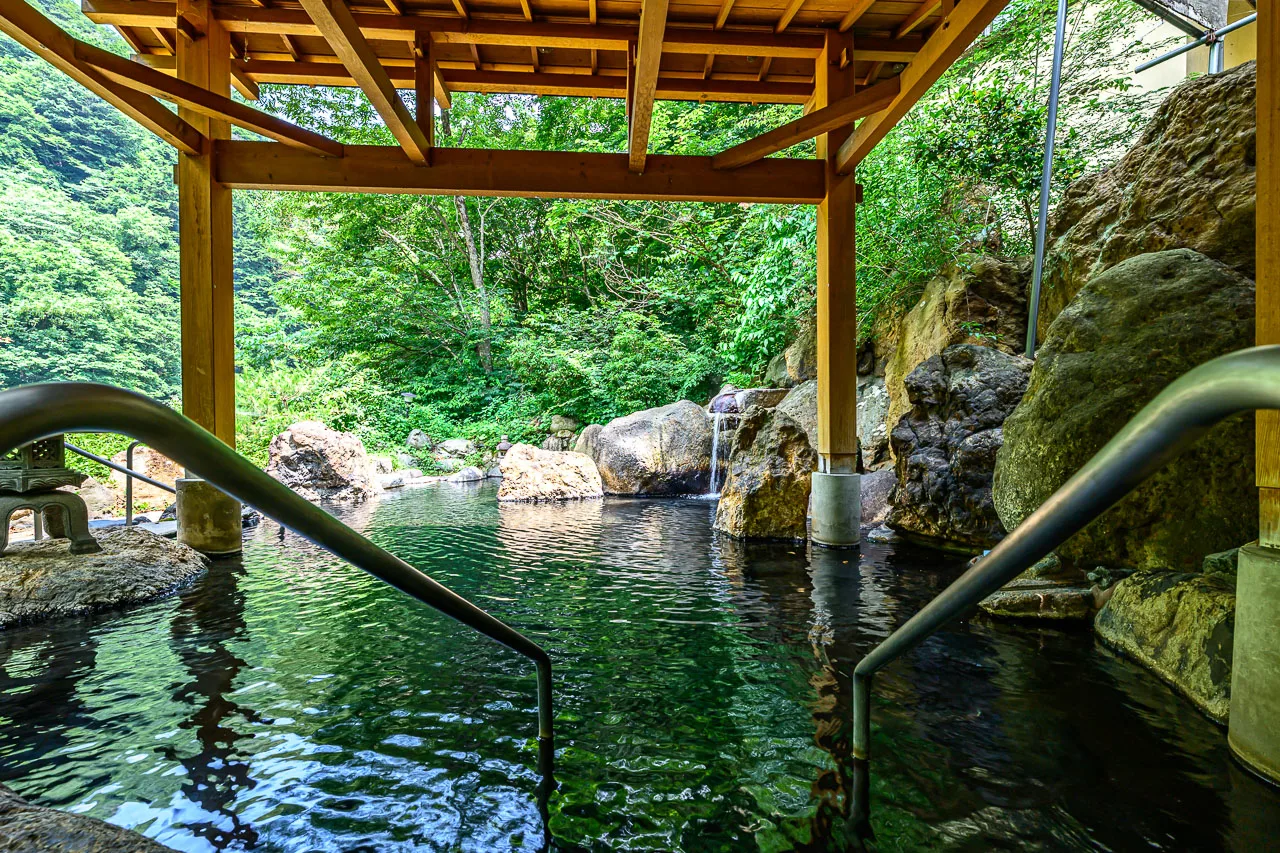
At Kawafuru, the water temperature is part of the point. Hamaya lists its source at 39.9°C and says the water flows directly into the baths. The warm bath is kept at 37–38°C by adjusting the flow. That makes it a better match if you dislike very hot water or want to stay in for a while without treating the visit like a circuit of pools.
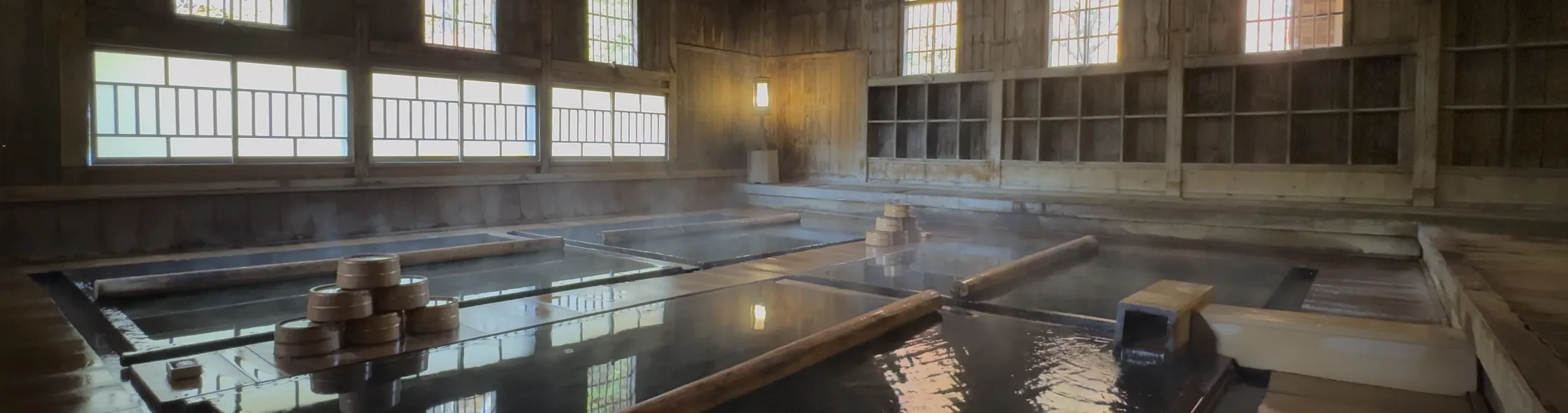
Hoshi's Hoshi-no-yu and Choju-no-yu are both ashimoto-yūshutsu baths: spring water wells up through the rock beneath the bath. The inn describes the source as around 40°C. Hoshi-no-yu is the more recognizable room, with arched windows and a high timber ceiling; the bathhouse preserves a Meiji-era, Rokumeikan-inspired design. The source temperature is not a published fixed temperature for every bathing area, so don't read “around 40°C” as a promise about each pool.
The two inns also use “fresh source water” in different ways. Kawafuru pipes its source directly to the baths. At Hoshi, the spring emerges at the bottom of two baths. If the way the water enters the bath matters to you, that distinction may settle the choice.
Day visits: Hoshi has a firm cutoff; Kawafuru has conditional opening
Hoshi’s day-use window is short, and admission can stop early when the bath reaches capacity. Wednesdays are normally reserved for cleaning; other unscheduled closures are possible.
| Hoshi Onsen Chojukan | Day-use details |
|---|---|
| Bathing hours | 11 a.m.–2 p.m. |
| Last admission | 1:30 p.m. |
| Adult admission | ¥1,500 |
| Child admission (age 3 through elementary school) | ¥500 |
Day visitors can use Hoshi-no-yu and the women-only Choju-no-yu. Tamaki-no-yu is not included in the day visit. Hoshi-no-yu is mixed bathing; the inn does not allow bathing clothes or a towel wrapped around the body. Men who are not comfortable with mixed bathing have no equivalent men-only day bath. Women have Choju-no-yu as a separate option.
Kawafuru accepts day visitors only when they will not disrupt overnight guests’ hot-spring stays. Busy weekends, holidays and cleaning days may have no day admission; call ahead.
| Kawafuru Onsen Hamaya Ryokan | Day-use details |
|---|---|
| Reception | 10:30 a.m.–2 p.m. |
| Departure by | 3 p.m. |
| Adult admission | ¥1,000 |
| Child admission (including infants) | ¥500 |
Hamaya has five bathing areas: separate indoor baths for men and women, a women-only outdoor bath, and two mixed baths. This leaves both men and women with a non-mixed option, though some of the inn's signature baths are mixed. The inn asks visitors not to wear swimsuits and prohibits towels from entering the water. Phones and cameras are not allowed in the mixed-bathing rooms.
Neither inn clearly publishes a current tattoo policy on its day-use information. If that affects your plans, ask the property directly before travelling.
Getting there without a car
Hoshi is the more practical of the two by public transport, but it still takes careful timing. The route is usually a bus from Jomo-Kogen or Gokan Station to Sarugakyo, followed by the Minakami town-operated Hoshi Line. The town bus runs only a few times a day, and missing the connection can leave you with a taxi ride from Sarugakyo. Check the current timetable and make sure the return works with the 2 p.m. departure cutoff.
Hamaya says there is no public transport to the inn. A bus from Jomo-Kogen or Gokan reaches Yasumiishi, but the walk from the stop is about 90 minutes. From Minakami Station, the inn estimates about 20 minutes by taxi.
The inn offers a pre-booked pickup for up to four people on two specified afternoon arrivals. Those times are designed around overnight check-in, not the day-use window. Ask whether another arrangement is possible rather than assuming the pickup works for a day visit.
By car, both are mountain drives. Hamaya estimates around 30 minutes from Tsukiyono Interchange. It warns that the final approach includes a steep slope and calls for snow tires or chains from December through March. Chojukan advises winter drivers to bring traction equipment as well; snow can be substantial in the area. Check road conditions before setting out.
Staying overnight changes the comparison
Hamaya offers a toji plan for stays of two nights or more, with two meals from ¥10,000 per person per night when two people share a room. Four-night stays booked directly may receive a discount of about ¥500 per night. Rates vary by date and room, and a ¥150 bathing tax normally applies per person per night; the inn waives it for toji stays of five nights or more. Staying lets you use the baths around the clock except during cleaning, which suits the long-soak approach far better than a rushed day trip.
At Chojukan, an overnight stay adds access to Tamaki-no-yu and to the inn's changing bath schedule. The stay is also a chance to spend time in the historic buildings rather than squeezing the signature bath into a three-hour window. Bath schedules can change, so check the inn's current timetable when booking.
If you are comparing a day visit with a room, see the Kawafuru day-use vs. stay guide and the Hoshi day-use vs. overnight comparison. For a transit-only itinerary, the Hoshi no-car day-trip guide lays out the bus connection.
Which one should you pick?
Choose Kawafuru if a 37–38°C bath, unhurried soaking or a multi-night toji stay is the main reason for going. It is also the easier choice for someone who wants at least one gender-separated bath regardless of which gender they are. Plan to drive or arrange a taxi, and confirm day admission before leaving.
Choose Hoshi if the historic bathhouse and spring water rising through the floor are what you want to experience. It works better for a public-transport day trip, provided the bus timetable lines up and you are comfortable with the mixed-bath rules at Hoshi-no-yu. Its day-use period is shorter, so arrive early and confirm that the inn is accepting visitors.
Trying to visit both in one day usually defeats the reason to go. Hoshi's cutoff is early, while Kawafuru's day admission is conditional and its warm bath rewards a slower visit. Pick the bath that matters more, or give each inn its own day.
More from the area
- Kawafuru Onsen Hamaya day-trip guide
- Hoshi Onsen Chojukan day-trip guide
- Day-use onsen around Minakami
Sources
- Kawafuru Onsen Hamaya Ryokan: [spring and bath details](https://kawafuru.com/onsen/), [day-use admission and *toji* plans](https://kawafuru.com/plan-reserved/), [*toji* bathing notes](https://kawafuru.com/touji/), and [access and pickup details](https://kawafuru.com/access/). - Hoshi Onsen Chojukan: [current day-use hours and fees](https://hoshi-onsen.com/), [bath and source-water information](https://hoshi-onsen.com/onsen/), and [access information](https://hoshi-onsen.com/access/index.html). - Minakami Tourism Association: [Hoshi Onsen Chojukan](https://www.enjoy-minakami.jp/spot/7695/), [Kawafuru Onsen Hamaya](https://www.enjoy-minakami.jp/spa.php?catid=11), and [bus timetable information](https://www.enjoy-minakami.jp/timetable.php). - Images: [Kawafuru Onsen Hamaya Ryokan](https://kawafuru.com/wp-content/uploads/2025/07/bath-roten02.jpg); [Hoshi Onsen Chojukan](https://hoshi-onsen.com/wordpress/wp-content/uploads/2026/03/onsen.png).Checked: September 28, 2026
Tags: Kawafuru Onsen, Hoshi Onsen, Minakami Onsen, Gunma Onsen, Onsen Comparison, Day-Use Onsen, Mixed Bathing, Onsen Etiquette, Hot Spring Water, Foot-Upwelling Onsen, Toji Stay, Japanese Ryokan, Mountain Onsen, Onsen Without a Car, Japan Travel