Ibusuki on a Rainy Day: Keep Saraku, or Switch to an Indoor Onsen?
Saraku’s sand bath usually operates in rain, though guests walk outdoors after changing. Compare bus access with indoor Kokoro no Yu and check same-day notices.
Ordinary rain is not a reason to drop Ibusuki’s famous sand bath from your plans. Sunamushi Kaikan Saraku says it remains open in rainy weather, and the nearby tourism association notes that the covered sand-bath area is used when conditions are poor. The catch is easy to miss: after changing, you still walk outside to reach the sand-bath building. If strong wind, a storm warning or a transport disruption is involved, check the day’s notices before setting out instead of assuming any bathhouse will be open.
Saraku is the better choice when the rain is manageable and you still want the sand-bath experience. Kokoro no Yu, an indoor bathhouse with several pools and saunas, makes more sense when you would rather spend a longer stretch inside. The decision depends on both the weather and how you will get there.
What rain changes at Saraku—and what it does not
The sand is heated by geothermal water, and the facility’s FAQ explicitly says the sand bath operates as usual on rainy days. At the shoreline, the sand-bathing area depends on tide and conditions; when the tide is high or the weather is poor, the covered area is used. You can still have the main experience, but a beachside session is never guaranteed.
There is one exposed part of the visit. Saraku’s own step-by-step guide says guests leave the changing area and pass outdoors on the way to the sand bath. Bring an umbrella or rain jacket for the short transfer, and keep a dry layer for afterward. Sand bathing is done in a rental yukata, not your own swimsuit or clothes. The minimum set includes the sand bath, public bath and yukata; bring or rent towels separately if you want them.
Allow about an hour for a relaxed visit, according to Saraku. Its regular schedule is 8:30 a.m. to 9 p.m., with last admission at 8 p.m. On weekdays, sand-bath reception pauses from noon to 1 p.m.; the building’s hours do not change, but that hour can disrupt a lunch-to-onsen plan. Reservations are not accepted, and the operator may close sand-bath reception earlier than scheduled when waits are long. A late arrival is therefore the least reliable way to fit it in.
As of September 28, 2026, the minimum adult sand-bath set costs ¥1,500; public-bath admission alone is ¥800. Check the facility’s live page for waiting times and date-specific notices before setting out.
Saraku lists special rates for December 29, 2026–January 3, 2027.
Choose your route before the rain gets worse
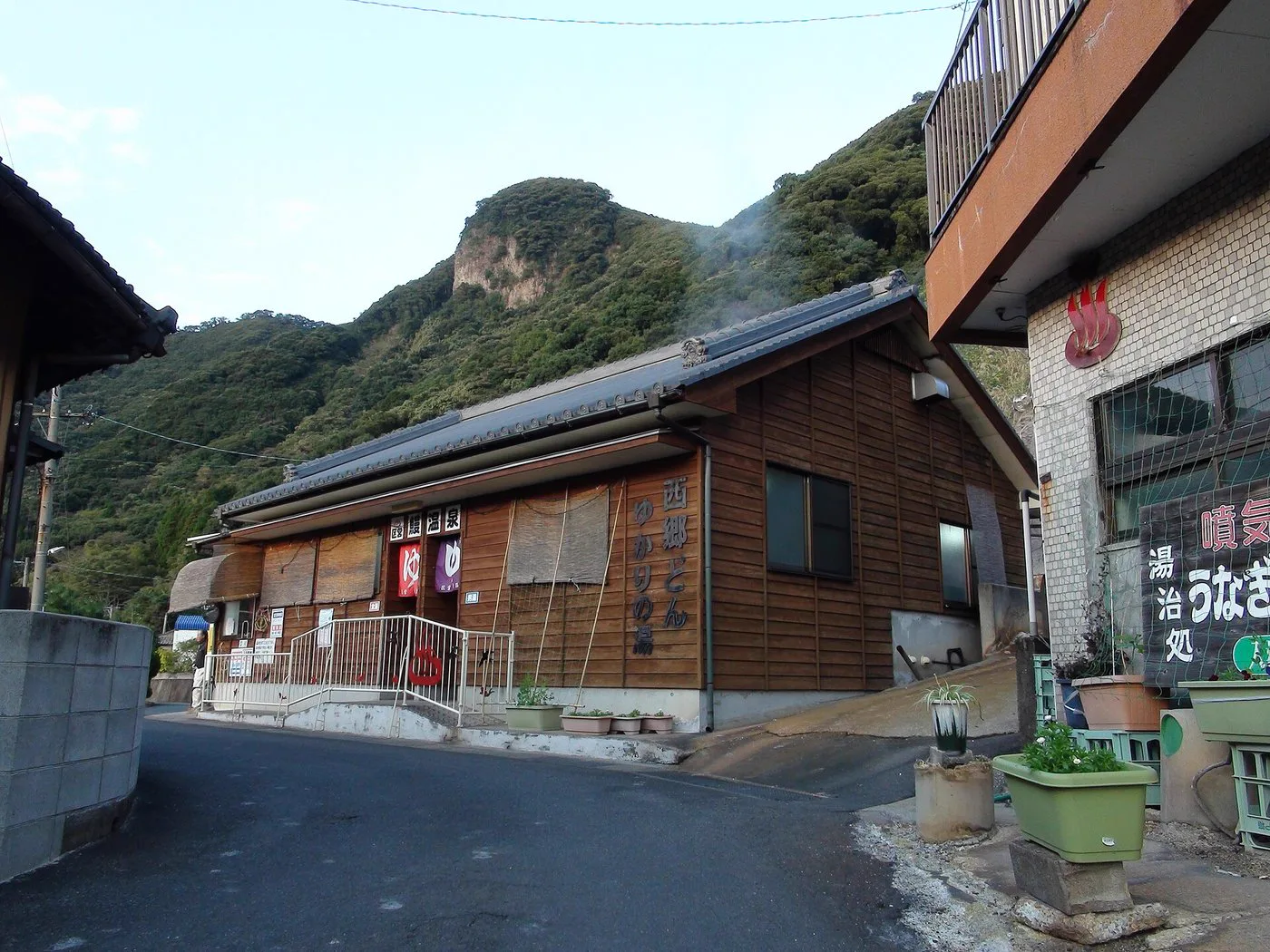
Saraku is about a 20-minute walk or a five-minute drive from JR Ibusuki Station. The sightseeing bus stops at Sunamushi Kaikan-mae, outside the facility. In steady rain, take the bus or a taxi rather than walking back in wet clothes. Check the timetable both ways: the bus makes only a few round trips a day, so a missed departure can mean a long wait.
Rain also changes the value of the walk back. After bathing, you will be warm and may have damp hair or a towel in your bag. For an onward train, a short taxi ride is a useful fallback if the next bus does not line up. The Ibusuki access guide covers the longer trip from Kagoshima and the station connections; the day-use onsen comparison maps out how Saraku differs from the baths farther south.
When Kokoro no Yu is the better rainy-day plan
Kokoro no Yu has several indoor pools, saunas and a separate heated-stone area. The morning session covers indoor baths only; regular admission includes the broader facilities.
| Visit | Adult admission | Hours and last reception |
|---|---|---|
| Morning session | ¥800 weekdays; ¥900 weekends and public holidays | 6–10 a.m.; last reception 9:30 a.m. |
| Regular session | ¥800 weekdays; ¥900 weekends and public holidays | 10 a.m.–10:30 p.m.; last reception 10 p.m. |
The longer hours give you room to linger if rain has cleared outdoor stops from the schedule. The trade-off is location: Kokoro no Yu is around a 10-minute drive from Ibusuki Station, rather than a short walk from the central station area. Its access page describes travel from the station by car or bus in about 10 minutes; check the current local service, or arrange a taxi, rather than assuming a frequent connection. For details on its private family baths and how to reach it, see the Kokoro no Yu guide.
An indoor building is not a weather guarantee. On June 2, 2026, as Typhoon No. 6 approached, Kokoro no Yu announced an expected opening time of 5 p.m. and warned that the schedule could change with conditions. Treat that as a reminder to check, not as a prediction for every storm. Saraku also says it may close temporarily for severe weather or equipment problems.
A simple plan for three kinds of weather
| Conditions | A workable plan |
|---|---|
| Steady rain, no closure notice | Keep Saraku in the itinerary. Take the bus or taxi from Ibusuki Station, allow about an hour at the facility, and carry something to cover the outdoor transfer. |
| Heavy rain but local transport is running | Check Saraku’s live status and wait time. If it is open and the exposed walk still feels manageable, go earlier rather than arriving close to last admission. Otherwise, switch to Kokoro no Yu after confirming its hours and your return transport. |
| Typhoon, strong winds, official warnings or disrupted trains and buses | Check both facilities and transport operators on the day. Delay the outing or cancel it if the route is unsafe or the return is uncertain; an indoor bath does not solve a transport shutdown. |
For a first visit in ordinary rain, the choice is fairly simple: keep Saraku and shorten the outdoor parts around it. If the weather has turned severe, stop treating one bathhouse as a guaranteed backup. The useful question becomes whether the facility, the route there and the trip back are all operating.