Awara Onsen Without a Car: A Simple Day Trip by Train and Bus
Plan a car-free Awara visit around two different stations, the bus connection, Sentopia’s long day-bath hours and shorter ryokan entry windows.
The easiest way to avoid a muddled Awara day trip is to check which station your train actually reaches. JR Awaraonsen Station is the long-distance rail stop. Awara-Yunomachi Station, on the Echizen Railway, puts you closer to the hot-spring streets, Ashiyu footbath and Saintpia Awara.
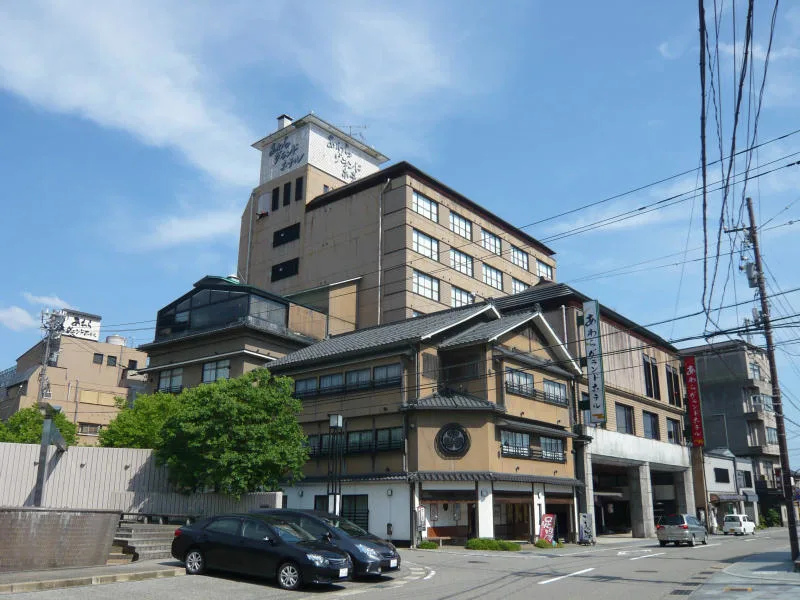
Photo: Opqr, Wikimedia Commons, CC BY-SA 3.0.
A relaxed half-day in the hot-spring district
If you arrive around 11am, allow time to reach the town before planning lunch. From JR Awaraonsen Station, the tourism association lists the Tojinbo Line bus to Awara Onsen as taking about 10 minutes; you can also take a taxi or check whether your ryokan runs a reserved shuttle. From Awara-Yunomachi Station, the main hot-spring area is within walking distance.
Once you are in town, have lunch near Yunomachi Square, take a short walk and stop at Ashiyu if you have time. Saintpia Awara is a practical final bath: it is about five minutes on foot from Awara-Yunomachi Station and currently charges ¥600 for adults. Its hours are 10am–11pm, with last admission at 10:30pm. It closes on the third Tuesday of each month; when that falls on a public holiday, the closure moves to the following day.
| Rough timing | Plan |
|---|---|
| 11:00 | Reach JR Awaraonsen Station, then take a bus into town or transfer to Awara-Yunomachi |
| 12:00 | Lunch near Yunomachi Square and a short rest at Ashiyu |
| 13:30 | Walk the hot-spring streets and nearby footbath stops |
| 15:00 | Head to Saintpia Awara for a full bath |
| 17:00 | Return to Awara-Yunomachi and connect to your next train |
This is a framework, not a timetable. Bus connections and rail departures depend on the day, so check the live schedule before choosing a departure time. The bus fare between the stations or from JR Awaraonsen Station is not included here; it varies by route and should be budgeted separately.
If you would rather use a ryokan bath
Day-use ryokan baths generally open later and for less time than the public bath. Their current listed terms differ:
| Inn | Adult admission and hours | Check before going |
|---|---|---|
| Seifuso | ¥1,500; 4–8 pm, towels included | First-floor main bath and garden open-air bath only; some holidays and full-occupancy dates excluded |
| Matsuya Sensen | ¥1,500; 4–7 pm | Call ahead; overnight guests have priority |
| Mimatsu | ¥1,500; 2–6 pm, last entry 5 pm | May refuse day visitors if baths are reserved for a private group |
Those windows make a ryokan bath a late-afternoon activity, not a substitute for Saintpia’s all-day opening hours. If you are staying overnight, compare the baths as part of the room plan instead: dinner, an evening soak and a morning bath can all happen without another ride across town.
The source guide’s seven-point editorial scores (comfort, variety, upkeep, setting, quiet, access, value) give a useful comparison, but not an objective ranking:
| Ryokan | Comfort | Variety | Upkeep | Setting | Quiet | Access | Value |
|---|---|---|---|---|---|---|---|
| Seifuso | 88 | 90 | 85 | 92 | 78 | 82 | 84 |
| Matsuya Sensen | 90 | 96 | 85 | 84 | 76 | 80 | 83 |
| Mimatsu | 86 | 84 | 84 | 94 | 86 | 80 | 82 |
Matsuya’s strength is bath variety; Seifuso also scores well for setting, while Mimatsu stands out for setting and quiet. Check room location, access and the current bath schedule against your own priorities.
Build the route around the return trip
You can add Tojinbo if you have most of the day, but avoid trying to squeeze it into a short stop between trains. Check which bus stop serves the place you want to visit, then work back from the departure you need. In summer, an early coastal visit avoids the hottest hours. In winter, fewer daylight hours and possible weather disruption make it sensible to keep the hot-spring district as the main event.
For a stay at Seifuso, the inn offers a free shuttle from JR Awaraonsen Station by reservation. Its published pickup departures are 2:30, 3, 4 and 5pm; the inn asks guests to book at least an hour ahead, and an unbooked shuttle does not operate. Other inns may have their own arrangements, so check directly rather than assuming the same service applies everywhere.
The right itinerary also depends on how much time you have. With three or four hours, stay near Awara-Yunomachi and prioritize a proper bath; with six to eight, Tojinbo can fit if you allow for the coastal bus. Spring and autumn are comfortable for walking between the district’s stops. In summer, move the coast earlier; in winter, cut a second transfer and keep a return buffer.
Compare Awara Onsen stays for a car-free trip
- Saintpia Awara: access
- Saintpia Awara: hours and admission
- Awara City Tourism Association: local transport
- Awara City Tourism Association: day-use bathing
- Seifuso: access and shuttle
- Seifuso: day-use bathing
- Matsuya Sensen: baths
- Mimatsu: baths and day-use bathing
Awara Onsen without a car, Awara-Yunomachi Station, JR Awaraonsen Station, Fukui day trip, Saintpia Awara