Asanogawa Onsen Yuraku: A Kanazawa Day-Use Guide
At Asanogawa Onsen Yuraku, ¥490 covers the baths and sauna. Check the Monday closure and 15-minute walk from Shibahara bus stop.
The short version: Yuraku is a good destination when you want a proper bathing stop and do not mind spending roughly an hour getting there. At ¥490, the two named sources and sauna are unusually good value; for a quick soak between central Kanazawa sights, the bus and final walk are a lot of effort.
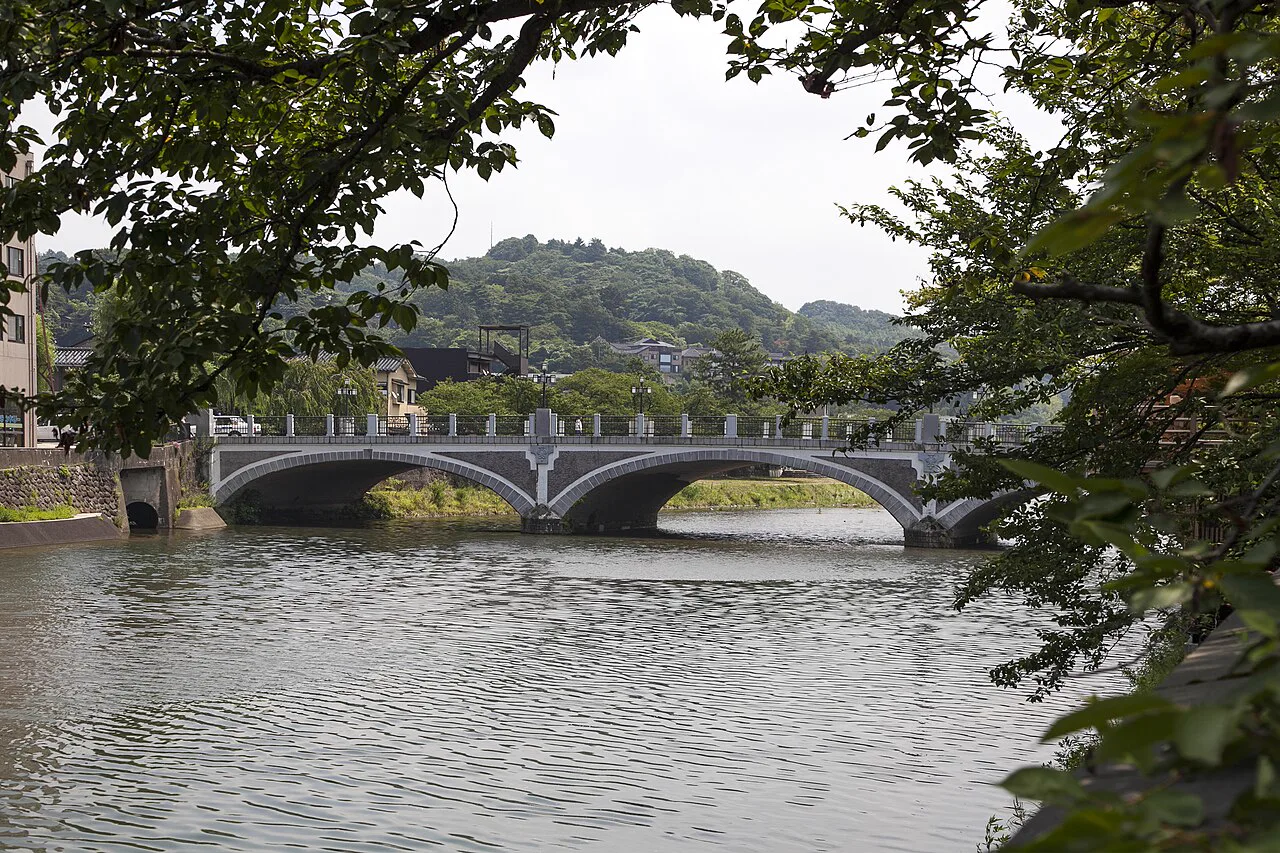
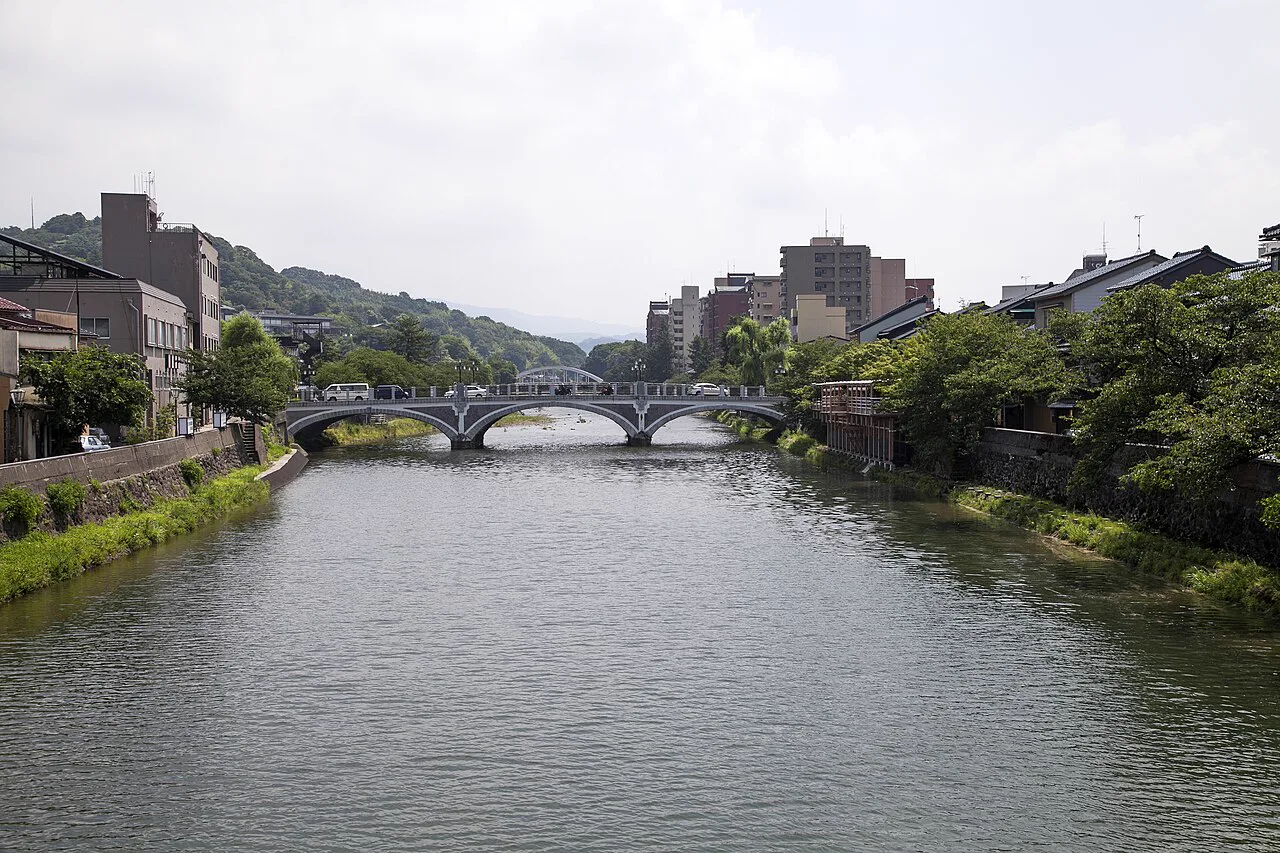
Asanogawa Onsen Yuraku is in the hills east of Kanazawa, beyond the usual station-and-market circuit. The draw is unusually specific: two separately named hot-spring sources, outdoor and indoor baths, and a sauna included in the admission price. The trade-off is the last stretch of the journey. From the city, take a bus towards Yuwaku Onsen, get off at Shibahara and walk for about 15 minutes.
For a day out built around soaking rather than sightseeing, that may be an easy choice. If you only have a short gap between Kanazawa’s main attractions, the bus and uphill-side walk take a meaningful bite out of it.
What ¥490 gets you
The standard adult fare applies on weekends and Japanese public holidays; the weekday early-bird rate has a shorter window.
| Visitor | Admission |
|---|---|
| Adult (middle-school age and up) | ¥490 |
| Elementary-school child | ¥130 |
| Child aged 4–5 | ¥50 |
| Age 3 and under | Free |
| Adult weekday early-bird rate, 8am–2pm | ¥460 |
The facility raised its adult rate on 1 April 2025. The official price page and Ishikawa’s tourism listing show the same current admission prices.
There is no complimentary shampoo or body wash in the bathing area. If you arrive without supplies, the ¥350 set includes a towel, shampoo, conditioner and body wash. A towel on its own is ¥200; single-use packets of shampoo, conditioner or body wash cost ¥50 each. The site calls the set’s item a towel, not a large bath towel, so bring your own if size matters. Admission plus the set comes to ¥840 for an adult at the standard rate.
The baths are open 8am–10pm. Yuraku closes on Mondays, or on Tuesday when Monday is a Japanese public holiday. Check its calendar before visiting.
The facility also posts road and parking updates during bad weather. A January 2026 notice said the prefectural road was open and snow would be cleared from the car park by 8am; it describes that date’s conditions.
Two sources, with different readings
The spring-water details are one of Yuraku’s more useful features, because the facility publishes an analysis for each source rather than presenting one blended figure.
The outdoor Iō no Yu uses Asanogawa Onsen No. 2. Tomuro no Yu (No. 3) supplies the indoor bath and its namesake outdoor bath. The published analyses are from different years:
| Source | Analysis date | Source temperature | Flow | Field pH | Analysed pH |
|---|---|---|---|---|---|
| Iō no Yu / No. 2 | 8 May 2023 | 48.0°C | 326 L/min, pumped | 8.0 | 7.91 |
| Tomuro no Yu / No. 3 | 30 September 2015 | 50.7°C | 448 L/min, mechanically lifted from a drilled source | 7.7 | 7.94 |
The facility describes Tomuro as a little warmer to bathe in than Iō, but does not publish a fixed 2026 temperature for either pool.
Both analyses classify the spring as a sodium-calcium chloride-sulfate spring: low-tonicity, weakly alkaline and high-temperature. Those are source readings, not the temperatures you will find in the bathing pools. Our guide to reading onsen temperatures explains why the distinction matters.
Ishikawa’s official tourism listing still gives a combined figure of 52°C and 1,200 litres per minute. Yuraku’s sheets report separate source readings, with a combined flow of 774 litres per minute. Since those analyses were conducted in different years, they do not explain the discrepancy. Keep the datasets separate; neither is a confirmed 2026 measurement.
Yuraku describes its water as 100% natural, “fresh from the source” and free-flowing, and says it adds no water or bath additives. It also says the temperature of Iō no Yu is adjusted. The site does not explain the heating, cooling, circulation, filtration or disinfection method for every individual pool, so the published information does not support more detailed claims about each tub.
Inside and out
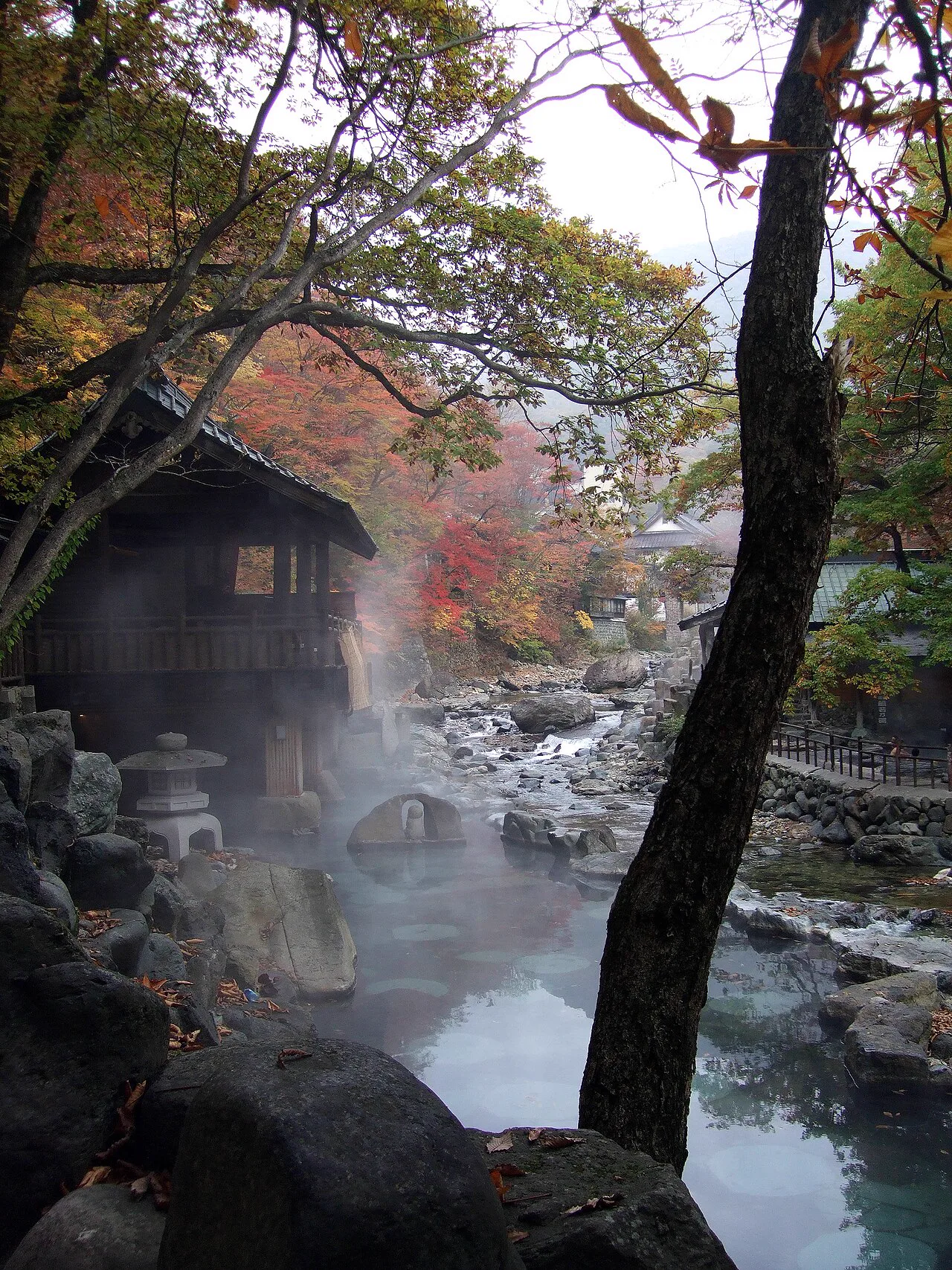
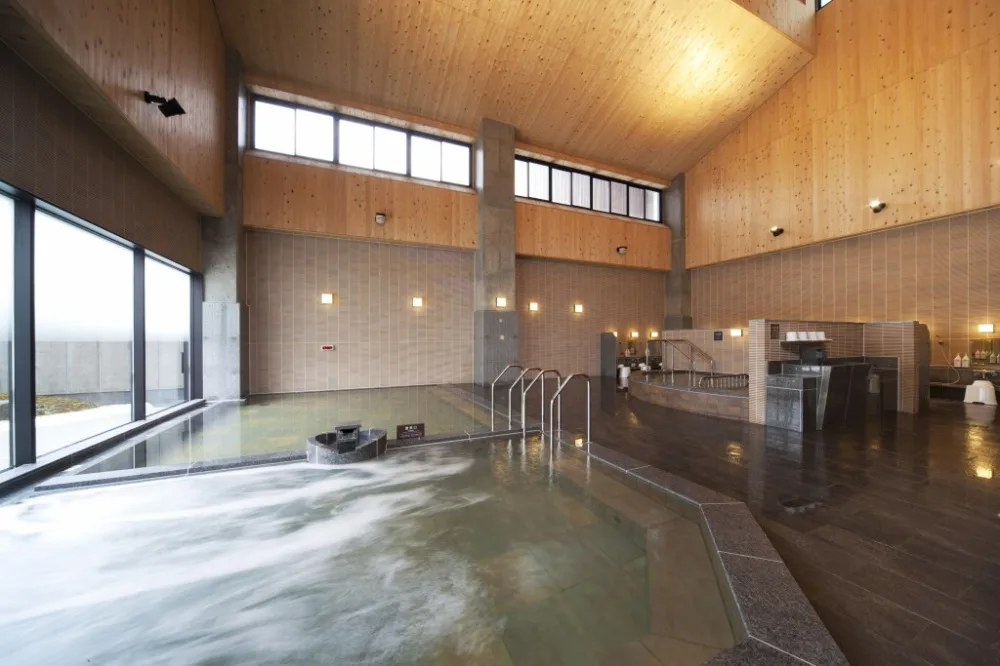
The outdoor area has the Iō and Tomuro baths, a waterfall-style shoulder rinse and a separate open-air tub intended for wheelchair users. Indoors, there is a large communal bath, a jet bath, a jacuzzi and a sauna. The sauna is listed as free to use; the facility does not publish a set sauna temperature, cold-plunge temperature, capacity or löyly schedule.
Yuraku says the bathing area is barrier-free and provides a bathing wheelchair for the dedicated accessible outdoor tub. A companion must be present to help. That is useful provision, but it does not answer every practical access question: if you need help transferring, have a larger wheelchair or require a particular kind of assistance, call the facility before visiting.
There is a firm restriction for tattoos. Yuraku’s homepage asks anyone with a tattoo not to bathe. It does not say that a cover sticker or small tattoo is an exception.
Getting there from Kanazawa
Take Hokutetsu’s Route 12, the Yuwaku Line, towards Yuwaku Onsen and get off at Shibahara. The walk from the stop is about 15 minutes. The current timetable was revised on 5 July 2026; check the operator’s time-and-fare search for the day you travel rather than relying on an older schedule.
Allow roughly 40 minutes or more on the bus from Kanazawa Station, then add the walk and any wait for a connection. In practice, budgeting about an hour each way is safer than planning around the bus ride alone. Older facility directions refer to the “JR Hokuriku Main Line” at Kanazawa Station, a legacy label left over from the conventional-line operator transfer; the useful starting point for visitors is simply Kanazawa Station.
By car, Ishikawa’s travel guide estimates about 20 minutes from central Kanazawa. Yuraku lists parking for 200 cars, including snow-melting equipment and accessible spaces. Winter weather can still change road conditions, so check current notices before driving into the hills.
Is it the right bath for your day?
Yuraku makes most sense when the baths themselves are the destination. At ¥490, the combination of two named sources, outdoor bathing and a free sauna is compelling for a public bath. The bus ride and final walk are the catch, so it is less convenient as a quick stop between central Kanazawa sights.
If you want a traditional hot-spring-town stroll alongside your bath, Yuwaku Onsen is a separate outing; its public bathhouse is Shirasagi no Yu. Kinjo Onsen Motoyu is another Kanazawa-area option with a more city-oriented trip. Neither is a substitute for Yuraku’s two-source outdoor baths; the better fit depends on whether you want a quicker city trip or a longer bath-focused outing.
How it compares with other Kanazawa baths
Yuraku’s appeal is the combination of two named sources, several outdoor pools and a sauna included in the admission price. The trade-off is the trip east of the city: bus Route 12 to Shibahara, then about 15 minutes on foot. Kinjo Onsen Motoyu is a more city-oriented option, while Shirasagi no Yu in Yuwaku works better if you want to pair a public bath with a hot-spring-town visit. They are alternatives for different kinds of day, not equivalents to Yuraku’s two-source setup.
Frequently asked questions
How much is admission? See the fare table above for adult and child rates, including the weekday early-bird discount.
Is the sauna included? Yes. Yuraku lists the sauna as free with admission; it does not publish a fixed sauna temperature or a cold-plunge temperature.
Is the water free-flowing? The facility describes its spring water as fresh from the source and free-flowing, with no added water or bath additives. It also says the temperature of Iō no Yu is adjusted. Its pages do not spell out how each pool is heated, cooled, filtered or disinfected, so avoid extending the claim beyond what is published.
Why do some listings say 52°C and 1,200 litres per minute? Ishikawa’s tourism listing gives those combined figures. Yuraku’s own analysis sheets report separate readings for sources No. 2 and No. 3, taken in different years. The two datasets do not explain the discrepancy, so keep them distinct.
Can I arrive without a towel or toiletries? You can buy a ¥350 set with a towel, shampoo, conditioner and body wash. A standalone towel is ¥200; each single-use toiletries packet costs ¥50. Bring your own if you want a larger bath towel.
Are tattoos allowed? Yuraku’s homepage asks visitors with tattoos not to bathe and does not list an exception for small tattoos or cover stickers.
How do I get there from Kanazawa Station? Take Hokutetsu Route 12 towards Yuwaku Onsen, leave the bus at Shibahara and walk for about 15 minutes. Check the operator’s current timetable for your travel date.
Related guides
Sources
- Asanogawa Onsen Yuraku: homepage and current notices
- Yuraku: hours, admission and amenities
- Yuraku: hot-spring sources and water description
- Yuraku: baths and accessible facilities
- Yuraku: official spring analyses for sources No. 2 and No. 3 (PDF)
- Yuraku: access and parking
- Ishikawa Prefecture’s official travel guide: Asanogawa Onsen Yuraku
- Hokutetsu: timetable and fare search
- Hokutetsu: current timetable and fare search (revised 5 July 2026)
Tags: Kanazawa onsen, day-use hot spring, public bath, sauna, Ishikawa, Japan travel