Is Arima Grand Hotel Worth It? A Practical Guide to the Baths, Rooms and Day Visits
Compare Arima Grand Hotel’s Kinsen and Ginsen baths, five private rooms and day-use plans. Four private baths use spring water; one does not.
Arima Grand Hotel makes the most sense when your group wants different things from the same stay. One person can soak in the iron-rich Kinsen, another can try the clear Ginsen, and children have the space and loan items that smaller, adults-focused inns may not offer. The hotel brings those options together across its hilltop property: the Unkai baths on the ninth floor, Yurari on B2, five bookable private baths and a handful of rooms with their own natural hot-spring bath.
That range is useful, but the labels can be misleading. Only four of the five private baths use hot-spring water, and the two public bath floors do not offer the same springs. The hill also makes the free shuttle more than a nice extra if you are arriving with luggage. Here is what to check before booking.
The ninth-floor bath is the easiest way to try both springs
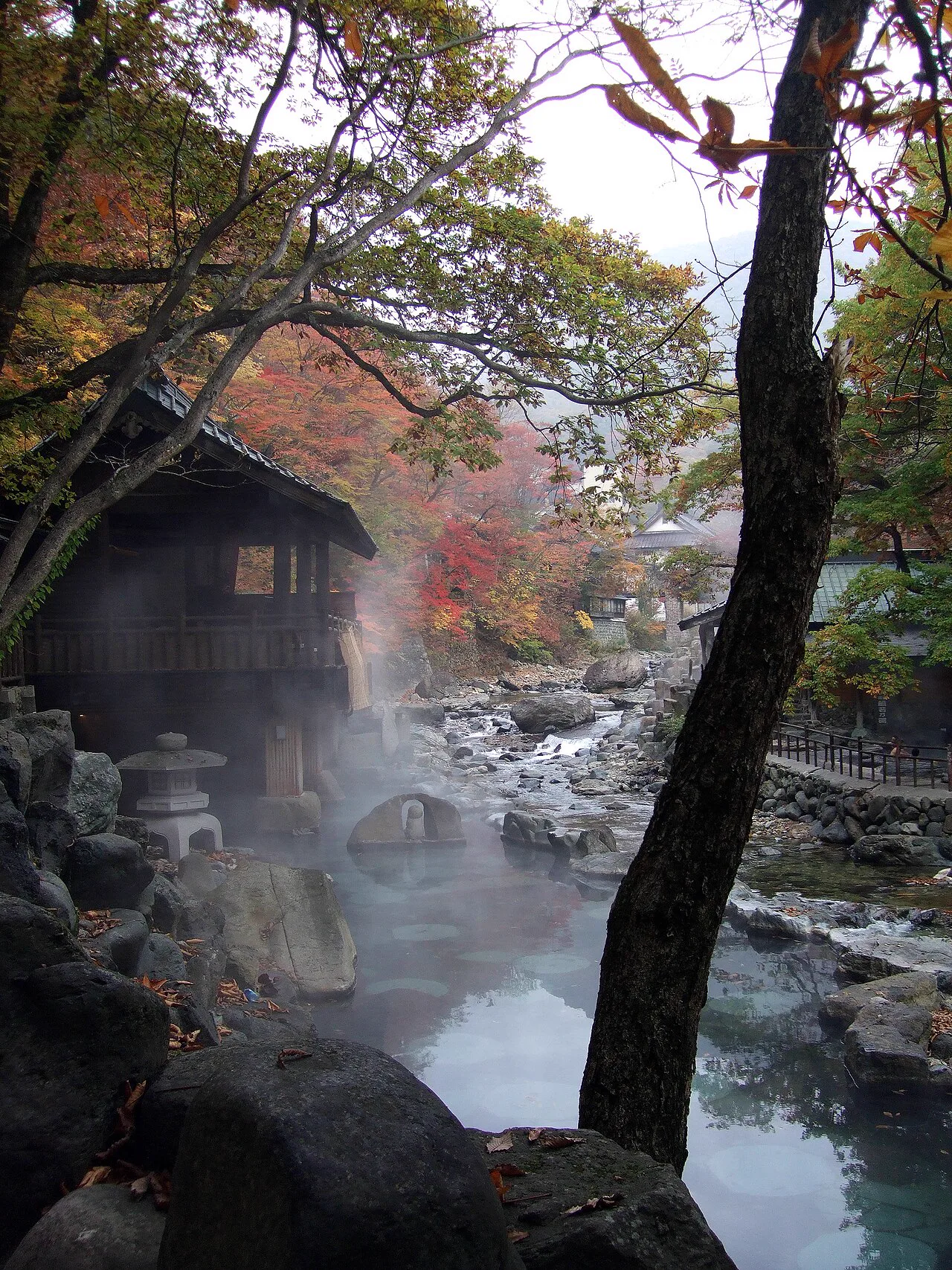
Unkai, the hotel’s largest public bath, sits on the top floor. Its outdoor baths include both Kinsen and Ginsen, so an ordinary room booking is enough to experience the two springs in one visit. There is also an indoor bath, a Kinsen bath and a sauna; the men’s bath has a waterfall-style massage bath.
Unkai is open from 5:00 to 10:30 a.m. and 11:30 a.m. to 12:30 a.m. The sauna has a shorter schedule: 6:00 to 10:30 a.m. and 11:30 a.m. to 11:00 p.m. From the hilltop, the view takes in the town below and the Rokko and Tamba ranges beyond it. Clear weather helps, of course; a sea of clouds is an occasional bonus, not a reason to pay more for a room.
The hotel says Unkai is often quieter during dinner, around 6:00–8:00 p.m., when more guests are eating. If you would rather avoid the busiest stretch, a late-afternoon soak followed by another visit after dinner is an easy rhythm. Check the room QR code for the hotel’s live bath-crowding information.
Yurari on B2 has a different feel—and mostly Kinsen
The lower-level bath, Yurari, is open from 7:00 a.m. to 10:30 p.m. Its men’s side has an indoor bath, Kinsen bath, outdoor Kinsen bath, deep standing bath and sauna. The women’s side has an indoor bath, Kinsen bath, outdoor Kinsen bath, White Ion bath and sauna. The exact layout is gender-specific, and the hotel says the sides are normally fixed, with occasional swaps during the year.
Think of Yurari as a second setting rather than a second place to compare both springs. Unkai is the clear choice for Kinsen and Ginsen together; Yurari adds another Kinsen bath, a standing bath or the White Ion bath, depending on which side is open to you. Dinner can draw guests up to the ninth floor, so B2 may feel calmer at that time.
Four of the five private baths use hot-spring water
Arima Grand Hotel has five private baths for overnight guests. Two use Ginsen, two use Kinsen, and one is a private bath without hot-spring water. Day visitors cannot book any of them.
| Bath | Water | Time and current listed price |
|---|---|---|
| Akane | Ginsen | 50 minutes ¥3,500; 70 minutes ¥4,850 |
| Hatsune | Ginsen | 50 minutes ¥3,000; 70 minutes ¥3,800 |
| Akebono | Kinsen | 45 minutes ¥2,750; 90 minutes ¥3,850 |
| Asahi | Kinsen | 45 minutes ¥2,750; 90 minutes ¥3,850 |
| Yuubae | Not a hot spring | 45 minutes ¥2,200; 90 minutes ¥3,300 |
Akane and Hatsune are described as private spas. Akebono has a level entrance that allows wheelchair access into the room, according to the hotel; ask directly about the route and transfer arrangements if you need step-free access to the bath itself. Asahi looks out over Arima, while Yuubae faces the mountain side. Prices and availability can change, so confirm the current slot when you reserve.
Reservations are accepted by phone or at check-in. The Ginsen private spa facilities list hours of 7:00 a.m.–10:10 p.m.; the other private baths list 6:00 a.m.–10:45 p.m. Capacity is five people. If bathing together in private is a must, book a room before relying on a private bath: these baths are not available to day visitors.
Choose a room by spring type, not just “open-air bath”
The higher-priced rooms are not interchangeable. At the villa-style Bessho Yura, every room on the second floor has an outdoor natural Kinsen bath; rooms on the seventh floor have natural Ginsen baths. The North Wing also lists twin rooms with an outdoor Kinsen bath.
That distinction matters if you already know which spring you want in the room. Someone who plans to use Unkai for Kinsen might prefer a private Ginsen bath upstairs. Another guest may want the mineral-rich Kinsen just outside the room for an early soak. Check the full room name and the bath-water description on the hotel’s room page; booking platforms sometimes shorten both to “open-air bath.”
An ordinary room still includes access to the public baths. If you are comfortable using a shared bath, paying extra for an in-room spring is mainly about privacy, flexibility and avoiding trips between floors—not the only way to bathe in both Kinsen and Ginsen.
The Japan Spa Association lists source temperatures of 97°C and 37.1°C for the property, but its listing does not tie either number to a verified source ID, measurement point or named tub. Those figures should not be presented as the bathing temperature of Kinsen or Ginsen. The same association lists no flow-through bath at the property. Natural spring water and flow-through operation are separate questions; do not assume that every bath is supplied by untreated, continuously flowing water.
Children are welcome, and baby items can be borrowed
This is a family-capable hotel rather than an adults-only ryokan. Children aged 0–2 stay free when they need neither meals nor bedding. Charges for older children depend on age, meals, bedding and the dining arrangement. The hotel lists loan items such as a baby bath, bath chair, high chair, stroller, baby basket and diaper bin. A cot costs ¥2,200 and a bed guard ¥1,100; quantities are limited, so request equipment ahead of time.
For a multigenerational trip, the range is practical: children can use the hotel’s family facilities, while adults can choose a public bath, a private booking or an eligible room with its own spring. Couples seeking a quieter, adults-focused stay may prefer a smaller property; check its age policy before booking, since some Arima inns do not accept young children.
Tattoo rules: a narrow cover-sticker exception
The hotel’s FAQ says guests with tattoos should not use its public baths and recommends booking a private bath. The day-use page spells out a limited exception: a small, single-point tattoo may be covered completely with one 10 × 10 cm cover sticker. Do not read that as blanket permission for larger designs, several tattoos or every facility. If the rule affects your choice, describe your tattoo to the hotel before booking and confirm which bath you intend to use.
Private baths are only for overnight guests, so a day visitor cannot rely on one as an alternative. Guests with tattoos should settle the access question before travelling rather than at the bath entrance.
Day-use tickets: compare bath access, voucher and lunch plans
Day visitors can use Yurari on B2 without booking a room. The hotel sells three options with different inclusions; the listed prices are per person.
| Ticket | Weekdays (Mon–Fri) | Weekends and public holidays | Includes and hours |
|---|---|---|---|
| Yurari with facility voucher | Adult ¥4,200; child ¥2,200 | Adult ¥4,700; child ¥2,700 | One ¥2,000 adult voucher or ¥500 child voucher, usable at hotel facilities. 10:30 a.m.–10:30 p.m.; last admission 9:00 p.m. |
| Evening Yurari bath ticket | Adult ¥2,700; child ¥1,900 | Adult ¥3,200; child ¥2,400 | Bath entry only; no facility voucher. Entry from 5:30 p.m. to 10:30 p.m.; last admission 9:00 p.m. |
| Yurari + Aqua Terrace | ¥4,250 (child rate not listed) | ¥4,750 (child rate not listed) | Bath and Aqua Terrace admission, 10:30 a.m.–10:30 p.m.; last admission 9:00 p.m. |
For these tickets, “child” means ages three through elementary-school age. The standard voucher ticket covers the B2 bath; its voucher can be used at hotel facilities, including Aqua Terrace. The separate Yurari + Aqua Terrace ticket is another option. Aqua Terrace permits same-day re-entry during its opening hours. New Year (December 30–January 3), Golden Week and August 10–14 are charged at the holiday rate.
If you want lunch and both public baths, book the “Shunsai Jiki” day plan by the previous day. It includes one entry to Unkai and one to Yurari, with bathing from 10:30 a.m. to 3:30 p.m. Unkai opens at 11:30 a.m. for this plan after cleaning; towels are provided, but there is no room or hotel clothing. Current listed adult prices are:
- Value: ¥7,000 on weekdays and ¥7,500 on weekends and public holidays.
- Standard: ¥9,000 and ¥9,500, respectively.
- Premium: ¥11,000 and ¥11,500, respectively.
The child plan is ¥3,500 with a children’s lunch. Restaurant opening days and meal choices vary; some plans are not offered every day. The hotel’s page also lists separate weekday meal-and-bath offers, including lunch sets and a cake-and-drink set. Their serving days and meal prices vary, so check the current offer before choosing one; do not add those meal prices to a bath ticket unless the booking details say they are combined.
One small, single-point tattoo is permitted only when fully covered by one 10 × 10 cm cover sticker; other tattoos are not admitted to the public baths. Day visitors cannot reserve private baths. For other Arima bathing options, see our Arima Onsen day-trip comparison.
The shuttle saves you the steep final walk
The hotel is about a ten-minute walk from Arima Onsen Station, but the last stretch climbs sharply to the property. With suitcases, a stroller or anyone who would rather skip the hill, use the free shuttle instead.
The shuttle runs from 8:00 a.m. to 9:00 p.m. It serves Kobe Electric Railway’s Arima Onsen Station, the Arima Onsen bus stops and the Arima Onsen station for the Rokko-Arima Ropeway. After you arrive, contact the hotel through its shuttle-arrangement form or by phone. Departures from the hotel for the station and bus stops are scheduled every 20 minutes, though traffic can shift the timing.
Drivers have more flexibility: the hotel lists around 400 free parking spaces, with no reservation required. Parking is available before check-in and after check-out as well. Indoor spaces have height, width and length limits, so check them if you are bringing a larger vehicle.
Compare like-for-like before you book
Arima Grand Hotel appears on major booking platforms, but room names are sometimes shortened in translation. Before comparing totals, line up the dates, guest count, full room type, spring in the room, meal plan, cancellation terms and checkout time. A label such as “open-air bath” does not confirm whether the water is Kinsen, Ginsen or non-spring water.
The hotel lists standard check-in at 2:30 p.m. and checkout at 11:00 a.m. The booking-platform property pages have also shown 10:30 a.m. checkout. Your confirmation for the specific plan should settle the difference; check it before setting your departure schedule.
Affiliate disclosure: We may earn a commission if you book through these links. Prices, room names, meal inclusions, payment rules and cancellation terms vary by date and plan.
Who will get the most from a stay?
This hotel suits first-time visitors to Arima who want Kinsen and Ginsen in one property, and families whose members do not all want the same kind of bath. Its public baths do much of the work; private facilities and spring-fed rooms are optional upgrades.
It is a less obvious pick for a quiet, small-inn atmosphere. The property also welcomes families and day visitors, and its scale shows. If you mainly want a compact ryokan with fewer guests, focus on those qualities when comparing nearby stays rather than choosing by spring count alone.
The room’s spring source is the detail to confirm first if an in-room bath matters to you. Otherwise, the public baths already give most guests access to both Kinsen and Ginsen; choose this large, family-friendly property for that range rather than a small-inn atmosphere.
Sources
- Arima Grand Hotel: official website
- Hotel baths overview
- Unkai, ninth-floor baths and hours
- Yurari on B2
- Private baths, water types and prices
- Day-use plans, prices and tattoo policy
- Children’s facilities and charges
- Access, shuttle and parking
- Hotel FAQ
- Bessho Yura room types
- Japan Spa Association property listing
- Booking data pages: Booking.com and Trip.com.
- Photo: 663highland, Arima Grand Hotel atrium, CC BY-SA 3.0 / CC BY 2.5.